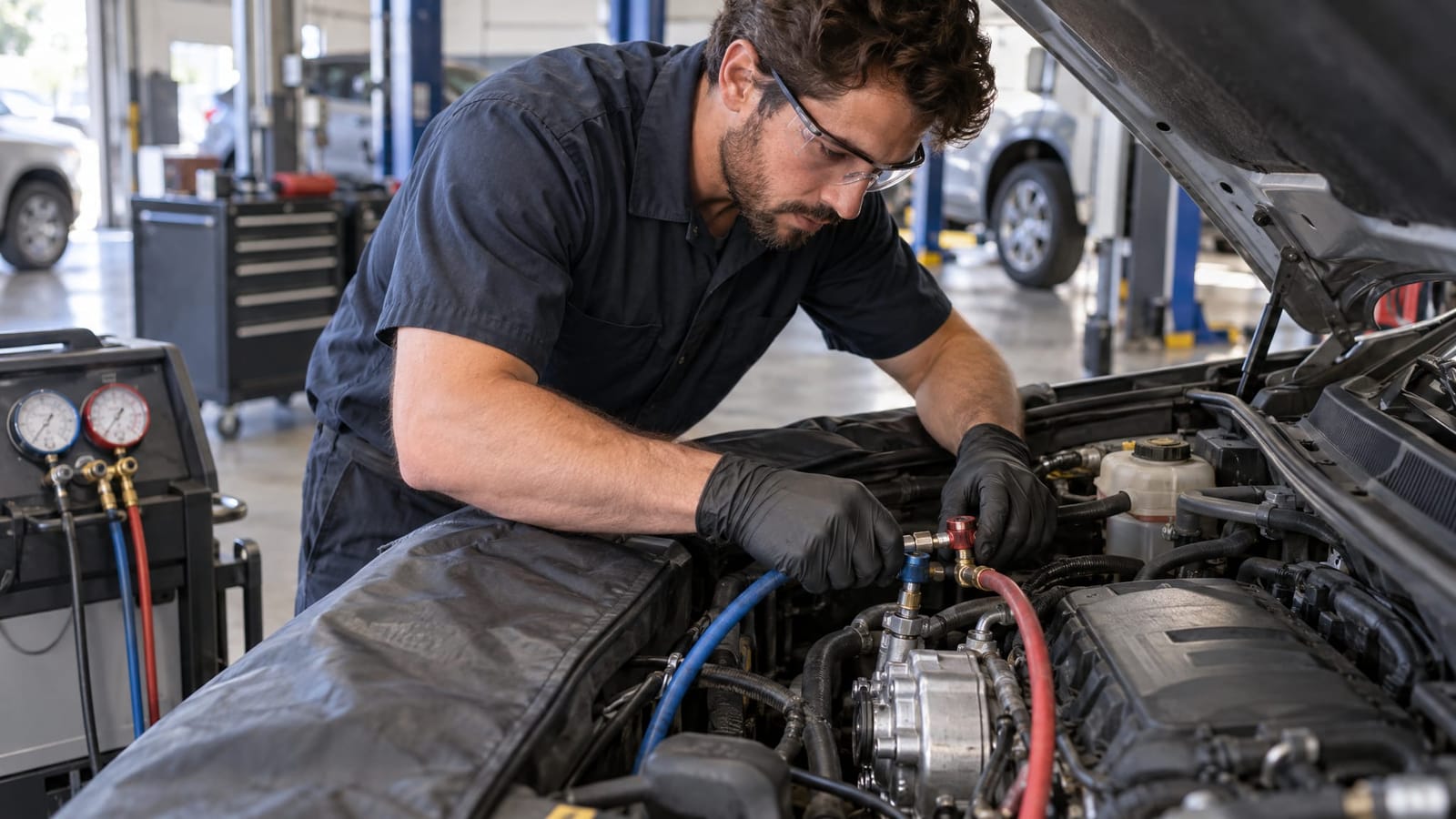
Why Is My Car AC Blowing Warm Air Even After a Recharge?

You just had your car's AC recharged, paid for the service, and drove off expecting cold air: only to feel warm air blowing through the vents within days or even hours. It's one of the most frustrating AC experiences a driver can have, especially during a Texas summer. If you're dealing with this situation, you're not alone, and there's usually a clear explanation. This guide walks through the most common reasons a car AC blows warm air after recharge, so you can understand what's really going on and make a smart decision about your next step.
A Recharge Fixes Low Refrigerant: But Not the Reason It Got Low
Here's something important to understand about how an AC recharge works: it restores the refrigerant level in your system, but it doesn't fix whatever caused the refrigerant to run low in the first place. If your system needed a recharge, that means refrigerant left the system somehow, and in a properly sealed system, that shouldn't happen on its own.
Refrigerant doesn't get "used up" the way fuel does. When a system is running low, there's almost always an active leak somewhere. Studies from automotive repair data consistently show that refrigerant leaks are the leading cause of AC failure, accounting for roughly 80% of AC system problems. If that leak isn't found and repaired before or during the recharge, the new refrigerant will escape through the same path: sometimes within days.
This is exactly why a proper AC service should include a leak test, not just a refrigerant top-off. If the shop that did your recharge didn't check for leaks, that's likely the first place to look when troubleshooting a car AC warm air after recharge situation.
Active Refrigerant Leaks: The Most Common Culprit
Even a small leak in the AC system can cause it to lose refrigerant faster than you might expect. Common leak points include the AC compressor shaft seal, the condenser (which sits at the front of the vehicle and is vulnerable to road debris), the evaporator (located inside the dashboard), hose connections, and Schrader valves: the small valve stems used to check and add refrigerant.
A slow leak might take several weeks to drain a freshly recharged system. A larger leak can cause warm air to return within 24 to 48 hours. Some leaks are visible as an oily residue around fittings or components. Others are so small they require a UV dye test or electronic leak detector to find.
If you're curious about where leaks tend to occur in relation to specific components, understanding the difference between your AC condenser and evaporator, and which one fails more often, can help you have a more informed conversation with your technician when you bring the vehicle in.
The bottom line: if your AC went warm again quickly after a recharge, assume there's an active leak until a professional confirms otherwise.
Compressor Problems That a Recharge Can't Fix
The AC compressor is the heart of the system. It pressurizes the refrigerant and keeps the cooling cycle moving. If the compressor isn't working correctly, adding more refrigerant won't restore cold air: the system simply can't function without a healthy compressor doing its job.
Compressor issues that can cause warm air even after a recharge include:
- A failing clutch: The clutch engages and disengages the compressor. If it's worn or malfunctioning, the compressor may not spin at all, which means no refrigerant circulation and no cooling.
- Internal compressor wear: Over time, internal components can wear down, reducing the compressor's ability to build adequate pressure. A system with low pressure on the high side won't cool effectively no matter how much refrigerant is present.
- Seized compressor: In more severe cases, the compressor seizes completely. This is often accompanied by a grinding noise or the AC cycling on and off rapidly.
A compressor failure is typically confirmed through a pressure test. Technicians check both the high-side and low-side pressures: normal operating pressures usually fall around 150-250 PSI on the high side and 25-45 PSI on the low side, depending on conditions. Readings outside these ranges help pinpoint what's wrong.
Blend Door Actuator and Airflow Issues
Not every warm air problem is about refrigerant or the compressor. Your car's climate control system uses a component called a blend door actuator to mix cold air from the AC system with warm air from the heater. If the blend door is stuck in the wrong position, or if the actuator controlling it has failed, cold air may never make it to your vents, regardless of how well the AC system itself is functioning.
Signs that a blend door issue might be involved include:
- Warm air on one side of the cabin, cold air on the other (common in vehicles with dual-zone climate control)
- Air temperature that doesn't change when you adjust the temperature setting
- A clicking or thumping sound from inside the dashboard when adjusting temperature controls
This is a separate mechanical issue from refrigerant problems, and it's one reason why diagnosing a car AC warm air after recharge complaint requires more than just checking refrigerant pressure. A complete system check looks at airflow, electrical components, and mechanical parts, not just refrigerant levels.
Why a Proper Leak Test Should Always Come First
A recharge without a leak test is a bit like putting air in a tire that has a nail in it: it might buy you a few days, but you'll be right back where you started. This is one of the most important things to understand if your AC keeps blowing warm after being serviced.
A proper AC diagnosis before any recharge should include:
- Visual inspection of all accessible AC components for signs of oil residue or physical damage
- Pressure testing to assess system performance on both the high and low sides
- UV dye or electronic leak detection to locate any refrigerant leaks
- Compressor operation check to confirm it's engaging and building pressure correctly
- Vent temperature verification after recharge to confirm actual cooling performance
Skipping these steps can result in a recharge that doesn't last: wasting your time and money, and leaving you with the same warm air problem in the Texas heat.
Frequently Asked Questions
How long should an AC recharge last?
In a system without any leaks, a proper recharge can last several years, often the lifetime of the vehicle. If your recharge only lasted a few weeks or months, that's a strong sign of an active refrigerant leak that needs to be found and repaired.
Can I recharge my AC myself using a store-bought kit?
DIY recharge kits are widely available, but they have real limitations. They add refrigerant without testing for leaks, and they can't diagnose compressor problems or electrical issues. They also don't measure actual system pressure accurately enough to confirm proper charge levels. For a problem that keeps returning, a professional diagnosis is the more reliable path.
Is it safe to keep driving if my AC isn't working?
A non-functioning AC isn't a safety emergency in the mechanical sense, but in Kaufman County summer temperatures that regularly exceed 100°F, it's a real comfort and health concern, especially for children, elderly passengers, or pets. If the AC compressor is making unusual noises, have it checked promptly since a seized compressor can sometimes affect the engine's accessory belt system.
How much does it cost to fix a refrigerant leak versus just recharging?
Costs vary depending on where the leak is and how significant it is. A simple O-ring or Schrader valve replacement is relatively inexpensive. Evaporator or condenser leaks involve more labor and parts. In every case, repairing the leak before recharging gives you lasting results instead of a temporary fix that fades within weeks.
The Bottom Line
When a car AC blows warm air after recharge, it almost always points to one of three things: an active refrigerant leak that wasn't addressed, a compressor that isn't functioning properly, or a blend door issue unrelated to refrigerant at all. A recharge alone doesn't fix any of these root causes: it just temporarily restores refrigerant that will escape again if the real problem isn't resolved. For Kaufman County drivers dealing with AC issues in the summer heat, the best approach is a thorough diagnosis before committing to any repair or recharge. That's how you get cold air that actually lasts.