Can a Lifted Truck Still Be Used for Towing and Hauling?
If you use your truck for work, pulling a trailer, hauling equipment, or towing boats across Kaufman County, you've probably wondered whether adding a lift kit will hurt your truck's ability to do its job. It's one of the most common questions truck owners ask before committing to a modification, and the honest answer is: it depends on the type of lift, the height, and how the installation is done. This guide breaks down exactly how lift kits interact with lifted truck towing capability so you can make a smart decision before any wrenches turn.
How Lift Height Affects Towing Stability
The core concern with lifted truck towing capability comes down to physics. When you raise a truck's ride height, you also raise its center of gravity. A higher center of gravity means the truck shifts more weight during acceleration, braking, and cornering, and those forces are amplified when you're pulling a loaded trailer behind you.
In general terms, modest lifts in the 2-inch range have a relatively minor effect on towing behavior for most trucks. Lifts in the 4- to 6-inch range start to introduce more noticeable changes in how the truck handles under load, especially with heavier trailers. Lifts above 6 inches require careful consideration of suspension geometry and may call for additional components, like a weight distribution hitch or upgraded sway control, to maintain safe towing performance.
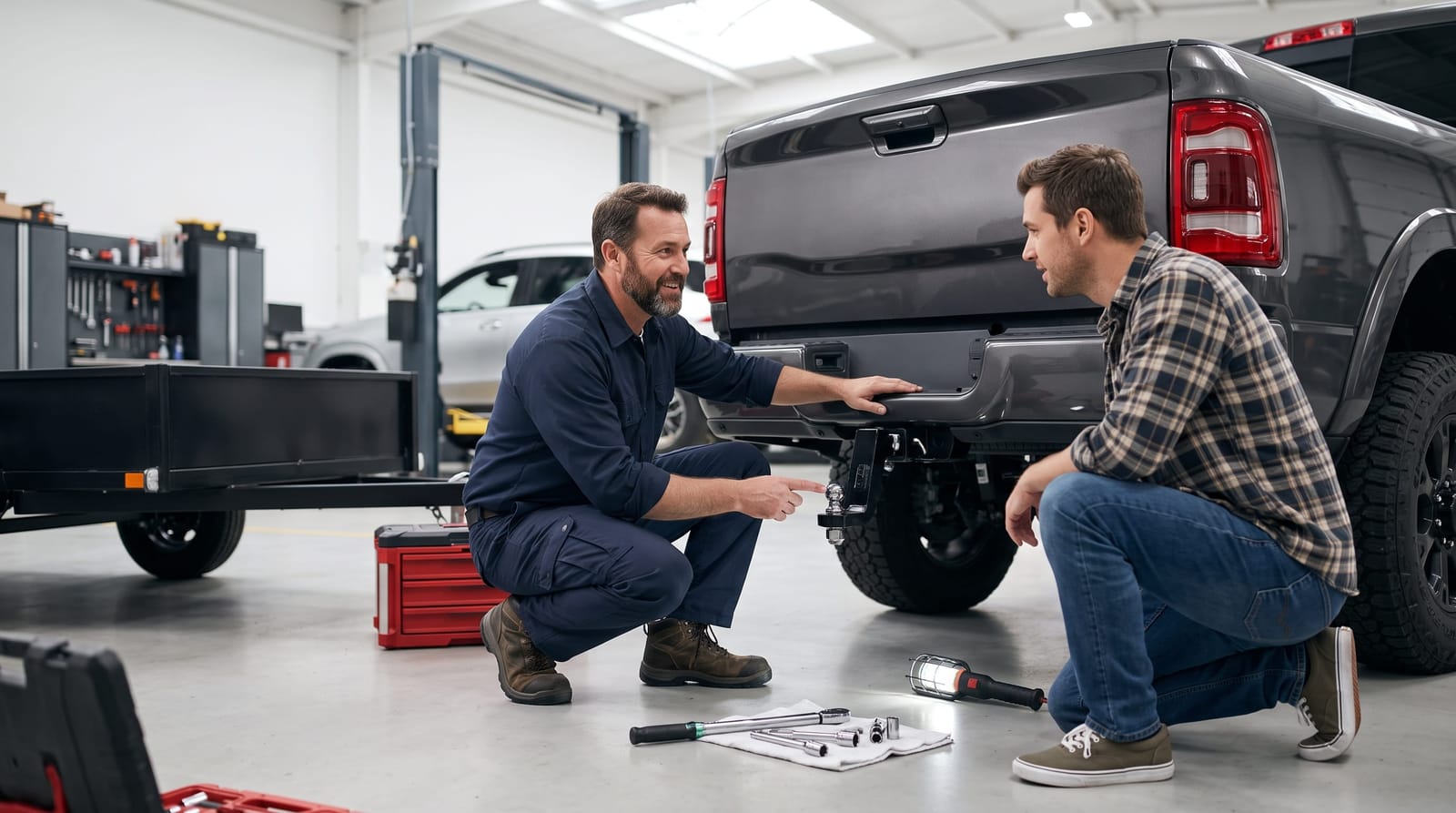
It's also worth noting that lift height affects trailer hitch angle. When the front of the truck sits higher than the rear attachment point, or vice versa, the trailer hitch may not be level. An unlevel hitch can cause trailer sway and reduce braking effectiveness. A drop hitch or adjustable ball mount is often needed after a lift to bring the hitch angle back into a safe working range.
For Kaufman County truck owners who tow regularly, whether that's livestock trailers, work equipment, or recreational vehicles, discussing hitch height adjustments with your installer before the lift goes in is an important part of the planning process.
Which Lift Types Are Most Towing-Friendly?
Not all lift kits are created equal when it comes to maintaining strong lifted truck towing capability. Here's how the three most common types compare:
Body Lift Kits
A body lift raises the truck's cab and bed off the frame using spacers, typically between 1 and 3 inches, without changing the suspension geometry at all. Because the suspension, springs, and shocks remain stock, towing dynamics are essentially unchanged. Body lifts are often considered the most towing-friendly option for drivers who want visual height without sacrificing work performance. However, they don't provide any additional ground clearance under the axles or suspension components, which limits off-road benefit.
Leveling Kits
A leveling kit corrects the factory rake, the slight forward dip that many trucks come with from the factory, by raising the front of the truck 1 to 2.5 inches. The factory rake is actually designed with towing in mind: it allows the rear of the truck to squat slightly under trailer weight and still sit level. Removing that rake with a leveling kit can mean the rear sits slightly lower than ideal under a heavy load. The effect is modest for lighter towing, but worth discussing with your installer if you regularly tow near your truck's maximum rating. For more detail on how leveling kits work and whether one fits your needs, see this breakdown of truck leveling kit explained.
Suspension Lift Kits
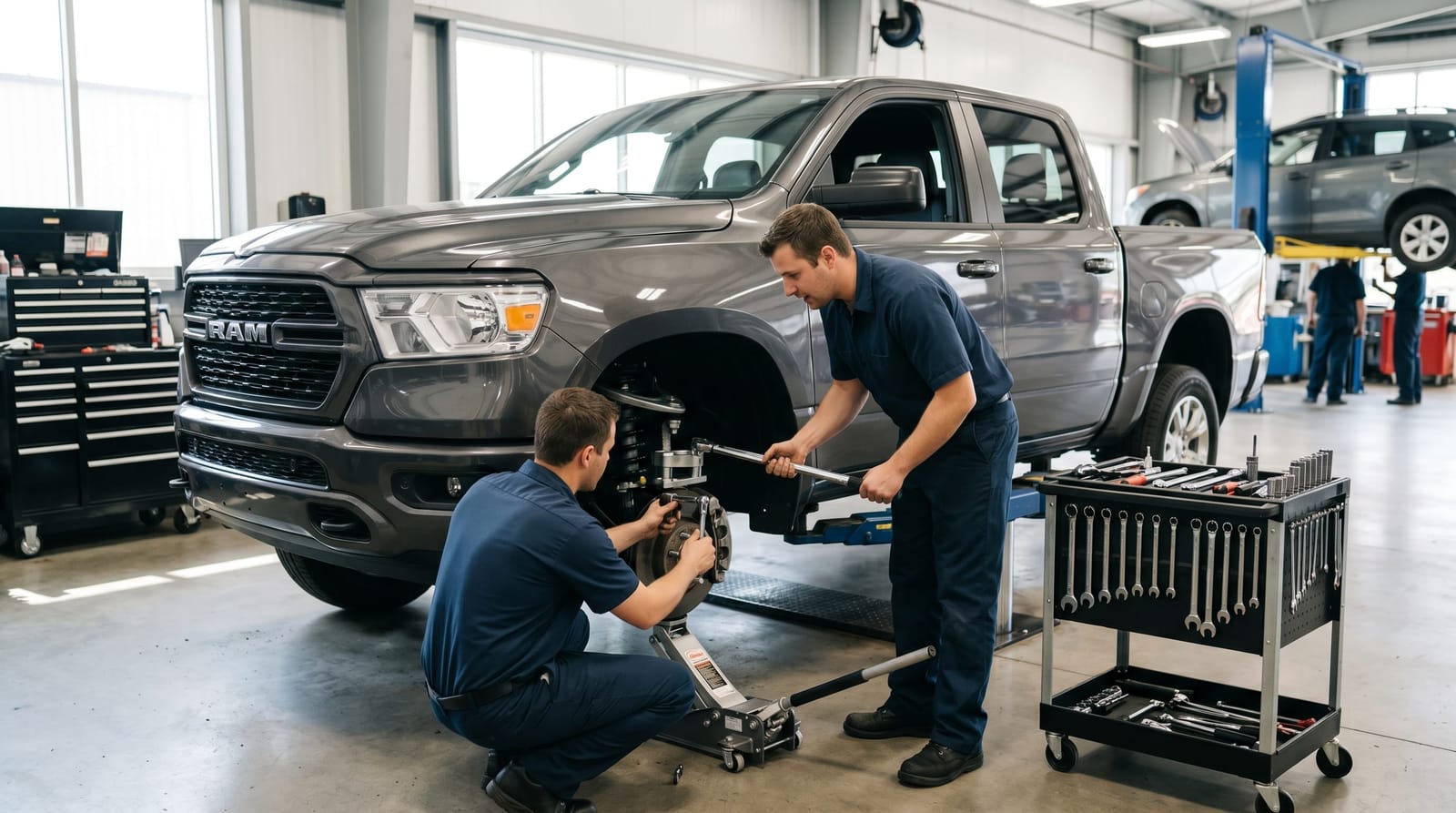
A full suspension lift replaces or modifies components throughout the suspension system. These kits offer the most dramatic height gain, commonly 4 to 8 inches, and the greatest impact on towing behavior. A quality suspension lift installed with proper geometry corrections, upgraded control arms, and appropriate shocks can preserve a meaningful portion of your factory towing capacity. A budget lift with poor geometry can introduce handling instability that's especially pronounced under tow. The difference in outcome often comes down to kit quality and installation expertise.
What Happens to Towing Capacity Numbers?
Your truck's factory towing capacity rating is set by the manufacturer based on stock configuration. That number assumes the truck is sitting at its original ride height with its original suspension geometry. Modifying the suspension technically changes the vehicle from that baseline configuration.
Research from the suspension industry indicates that a properly installed lift of 2 to 4 inches using quality components typically results in a relatively small real-world reduction in towing performance, often estimated in the range of 10 to 15 percent depending on the truck model and lift type. Lifts of 6 inches or more can have a more significant effect, particularly on lateral stability when towing at highway speeds.
What matters most is matching the lift to how you actually use the truck. A truck that tows a 5,000-pound trailer has more margin for adjustment than one that regularly operates near its 14,000-pound maximum. If you consistently tow heavy loads, conservative lift choices, such as a 2- to 3-inch suspension lift with proper geometry correction, will serve you better than aggressive lifts focused on maximum height.
Thinking about tire size after your lift? Keep in mind that larger, heavier tires can also affect how the drivetrain handles load. It's worth reviewing how tire size after 4 inch lift interacts with your truck's overall setup before finalizing any decisions.
What to Discuss with Your Installer Before Lifting a Work Truck
If your truck is a working vehicle, these are the specific questions worth raising before any installation begins:
- What is my current towing setup? Share your typical trailer type and weight. A good installer will tailor lift recommendations based on real-world use, not just aesthetics.
- Will my hitch height need adjustment? Ask whether a drop hitch or adjustable mount will be necessary after the lift to maintain a level hitch angle.
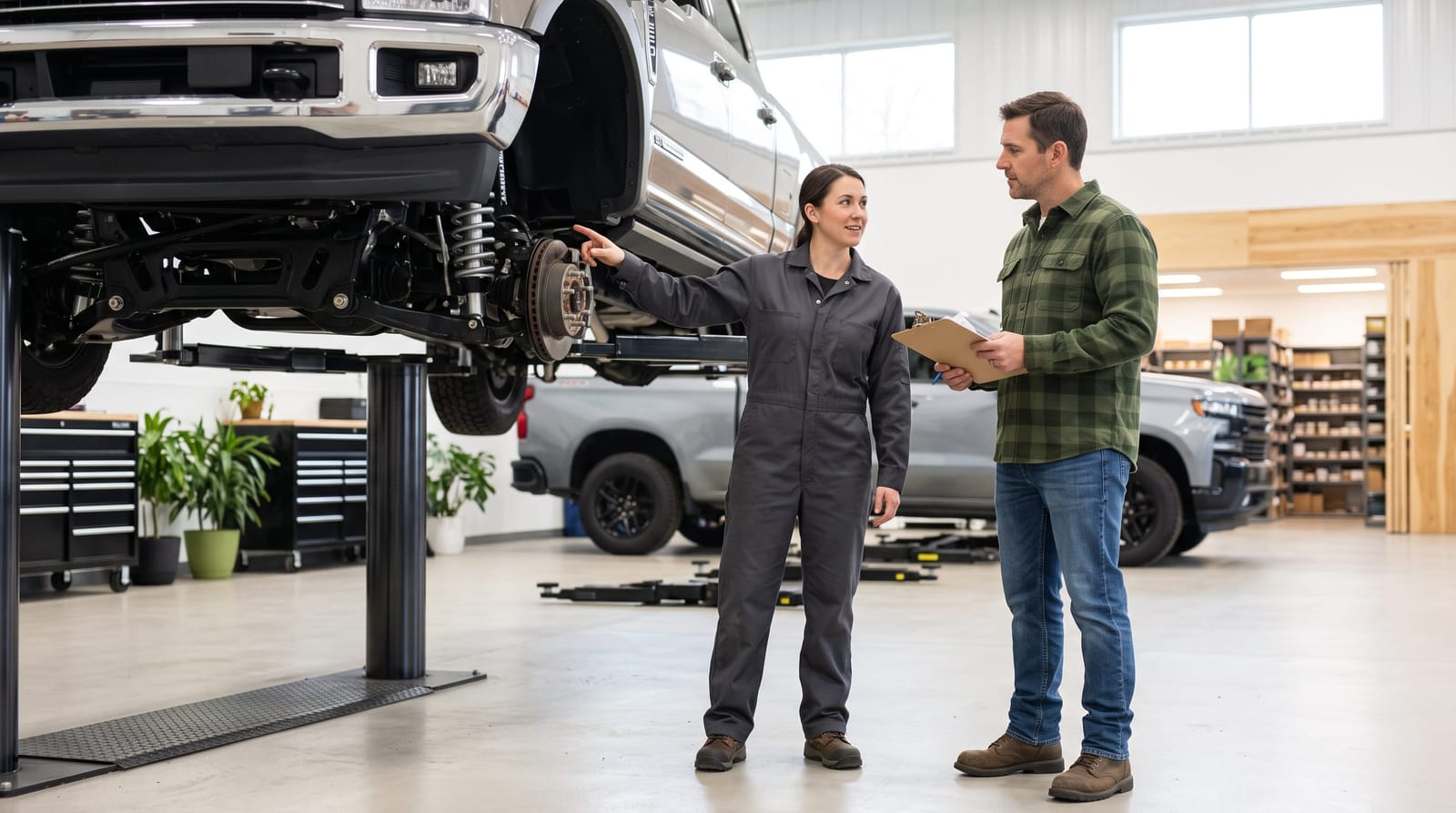
- What geometry corrections are included? For suspension lifts, ask specifically about caster correction and alignment. Improper caster angles after a lift can create handling issues that are worse under trailer load.
- What are the spring and shock recommendations? Heavier-duty springs or load-assist options can help maintain rear ride height under trailer or payload weight, especially after a leveling kit removes the factory rake.
- Are there any drivetrain angle concerns? On 4WD trucks, lifting the suspension changes the driveshaft angle. In some configurations, this can affect smooth power delivery, and a quality installer will account for this during planning.
Being upfront about how you use your truck helps your installer choose components that work with your lifestyle rather than against it.
Frequently Asked Questions
Does a body lift affect towing capacity?
Generally, no. A body lift raises the cab and bed using spacers without modifying the suspension system. Because the suspension, spring rates, and geometry remain unchanged, towing dynamics stay close to factory performance. Body lifts are one of the most towing-compatible lift options available.
How much towing capacity can I expect to lose with a 4-inch suspension lift?
There's no single universal answer because it depends on truck model, kit quality, and installation. Industry estimates commonly place the real-world reduction from a properly installed 4-inch lift somewhere in the 10 to 20 percent range relative to factory-rated capacity. A well-specced kit with proper geometry correction tends to land at the lower end of that range.
Can I still use a fifth-wheel or gooseneck hitch after lifting my truck?
Yes, but adjustments may be required. Fifth-wheel and gooseneck hitches mount inside the truck bed and their height relative to the trailer kingpin changes when the truck is lifted. Many hitches in these categories have adjustable mounting options that can compensate, but it's worth discussing specifics with your installer and the hitch manufacturer before committing to a lift height.
What's the safest lift height for a truck I use for towing every week?
For regular, heavy towing use, most experienced installers recommend keeping lifts in the 2- to 4-inch range using quality suspension components with proper geometry correction. At this range, stability is manageable and hitch adjustments are straightforward. Larger lifts are possible but require more careful component selection and a thorough conversation with your shop about your specific towing requirements.
The Bottom Line
Lifted truck towing capability isn't a simple yes or no: it's a question of how much lift, what type, and how carefully the installation is planned. A well-chosen lift at a reasonable height, installed with attention to geometry and hitch angle, can preserve most of your truck's towing ability. The key is making those decisions before the lift goes in, not after. If you're in Kaufman County and your truck works for a living, bring those questions to your installer early so the lift serves your whole life, not just the looks.