Diesel vs Gas Truck Maintenance Differences: What Forney TX Owners Should Know
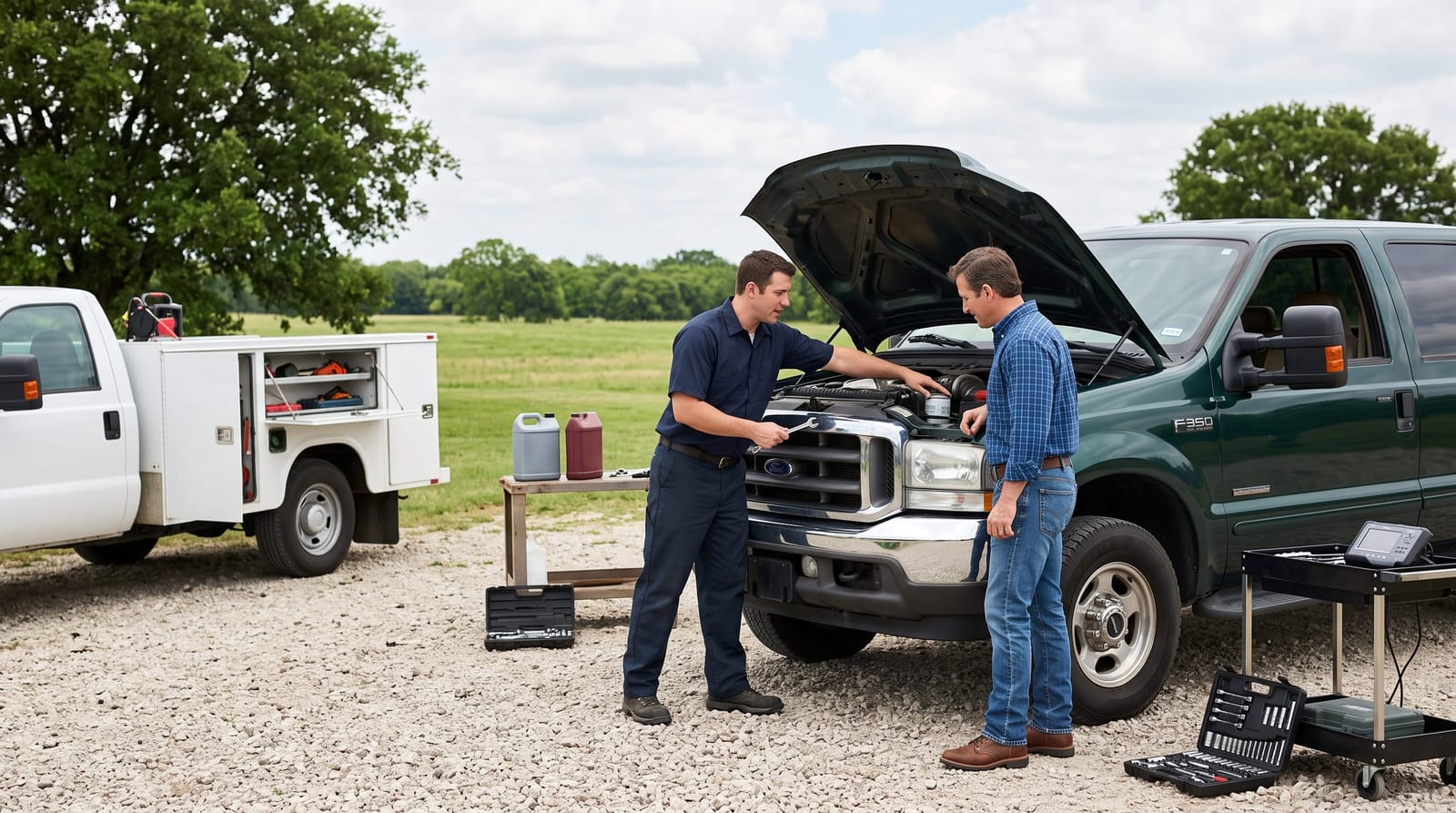
Whether you're hauling equipment across Kaufman County, pulling a trailer down US 80, or just putting in long miles between Forney and the job site, your truck's powertrain shapes nearly every maintenance decision you'll make. Diesel and gas trucks are built around fundamentally different engines, and those differences don't stop at the fuel pump. They carry through to service intervals, fluid types, filter schedules, and the kinds of problems you're most likely to see over time. This post is part of our broader complete truck and SUV performance guide for Kaufman County drivers and digs into one of the most practical questions we hear from local truck owners: does it matter which type of engine I have when it comes to maintenance? The short answer is yes, and knowing why can help you take better care of your truck no matter which powertrain you drive.
The Fundamental Difference Between Diesel and Gas Engines
To understand why maintenance schedules differ, it helps to understand why these two engines work the way they do. A gasoline engine uses spark plugs to ignite a mixture of fuel and air. A diesel engine skips the spark entirely: it compresses air so tightly that the temperature alone ignites the fuel when it's injected. That difference in combustion process has enormous downstream effects on how the engine is built and what it needs to stay healthy.
Why Diesel Engines Are Built Heavier
Because diesel engines rely on extreme compression, they're built with thicker engine blocks, stronger pistons, and more robust internal components. That construction contributes to the long service life diesel trucks are known for: many diesel pickups are still running reliably past 300,000 miles when they've been properly maintained. But that durability doesn't mean diesel trucks are lower-maintenance. It means they require a different kind of attention, with specific fluids and service intervals that are non-negotiable if you want that long engine life to actually happen.
The Role of Compression in Maintenance Planning
The high-compression environment inside a diesel engine puts more stress on engine oil, seals, and the fuel delivery system than a gas engine does under similar conditions. This is why diesel maintenance isn't just a copy-paste of a gas truck schedule with a few items swapped out. It's a genuinely different maintenance approach built around how the engine operates.
Oil Change Intervals and Oil Type: Not the Same Conversation
One of the most common misconceptions among Forney truck owners is that oil change intervals are roughly the same across diesel and gas trucks. In most cases, they're not, and the differences matter.
Diesel Oil Changes
Diesel engines typically require oil changes more frequently than modern gas trucks, though intervals vary significantly depending on the engine, the oil used, and driving conditions. Many diesel trucks, especially those used for towing, idling on job sites, or hauling heavy loads, benefit from oil changes every 5,000 to 7,500 miles. Some manufacturers specify longer intervals under ideal conditions, but Kaufman County's combination of heat, dust, and load-heavy driving often pushes diesel trucks into the more frequent category.
Equally important is the oil type. Diesel engines require oil rated specifically for diesel applications: typically labeled with a CK-4 or FA-4 API rating. These oils are formulated to handle higher heat, greater soot contamination (a byproduct of diesel combustion), and the demands of turbocharging, which most modern diesel trucks use. Using the wrong oil in a diesel engine isn't just a minor oversight: it can accelerate wear and shorten the life of internal components.
Gas Truck Oil Changes
Modern gas trucks often have extended oil change intervals, with many manufacturers recommending 7,500 to 10,000 miles under normal driving conditions, and some going as high as 15,000 miles with full synthetic oil and modern engine monitoring systems. That said, "normal driving conditions" rarely describes what working trucks in rural East Texas actually experience. If your gas truck spends time towing, running in extreme heat, or sitting at idle on a work site, shorter intervals are the smarter call.
Fuel Systems: Where Diesel Maintenance Gets More Complex
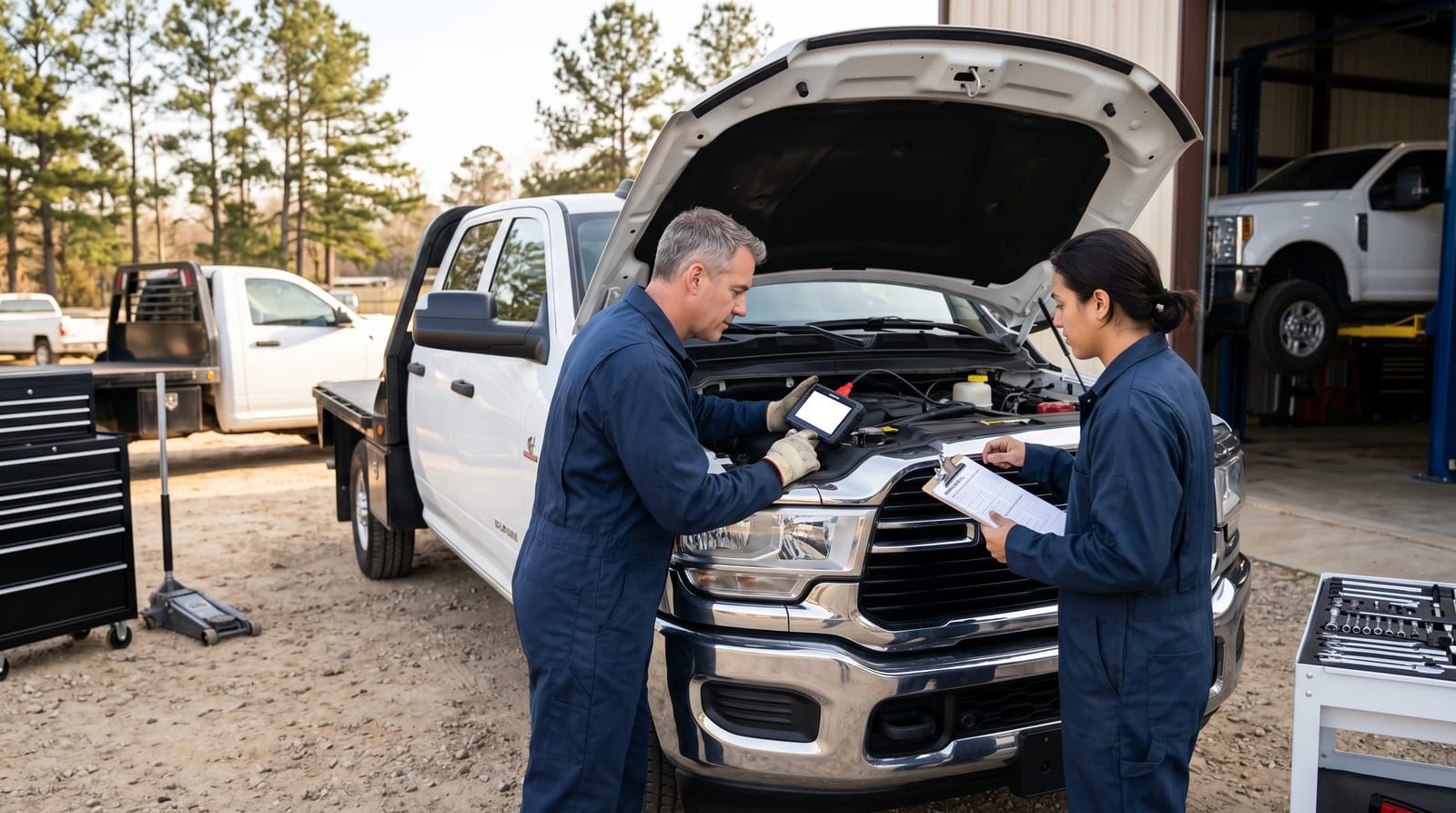
The fuel systems on diesel trucks are significantly more complex than those on gas trucks, and they require more active attention to keep running well. This is one area where having a shop familiar with diesel-specific service makes a real difference.
Fuel Filters on Diesel Trucks
Diesel engines are highly sensitive to fuel contamination. Water, debris, and particulates that a gas engine might tolerate without noticeable symptoms can cause real problems for diesel fuel injectors, which operate under extremely high pressure and tight tolerances. That's why most diesel trucks have two fuel filters: a primary filter that catches larger debris and water, and a secondary filter that handles finer contaminants before fuel reaches the injectors.
Regular fuel filter replacement is one of the most important preventative maintenance items for diesel truck owners. Neglected fuel filters can lead to reduced power, rough running, and in some cases, damage to expensive high-pressure fuel injection components. For a closer look at how to know when your filters need attention and what service intervals make sense for East Texas driving conditions, see our detailed post on diesel fuel filter replacement Terrell TX.
Gas Truck Fuel Systems
Gas trucks have simpler fuel systems with lower injection pressures. A single fuel filter, often integrated into the fuel pump assembly, is typical, and replacement intervals are generally longer. While gas fuel systems still benefit from periodic attention, they're less sensitive to contamination and don't require the same level of proactive management that diesel systems do.
Cooling Systems: Diesel Trucks Run Hotter and Require Specific Coolant
Diesel engines generate more heat than gas engines, and managing that heat is critical to long engine life. The cooling system on a diesel truck isn't just bigger: it uses different coolant chemistry that's specifically formulated for diesel applications.
Diesel Coolant Requirements
Most diesel trucks require coolant that contains Supplemental Coolant Additives, commonly called SCAs. These additives protect the cylinder liners from a type of damage called cavitation erosion: a phenomenon specific to diesel engines where vibration causes tiny bubbles in the coolant to collapse against metal surfaces, gradually pitting the liner walls. Gas engines don't experience this issue, so gas truck coolants typically don't include SCAs.
Diesel coolant also needs to be tested and refreshed at specific intervals. In many diesel trucks, SCA levels need to be checked periodically and supplemented between full coolant changes. Ignoring coolant maintenance on a diesel truck is one of the more common, and costly, oversights we see. For diesel truck owners in the greater Kaufman County area, we cover this in detail in our post on diesel truck coolant service Mesquite TX.
Gas Truck Cooling Systems
Gas trucks use conventional coolant, typically a 50/50 mix of ethylene glycol and water, and have simpler cooling requirements. Coolant flushes are still important for gas trucks, but the chemistry is more straightforward and the consequences of slightly delayed service are generally less severe than in a diesel application.
Emissions Components: DEF, DPF, and EGR Systems on Modern Diesels
If you own a diesel truck built after 2007, you're also dealing with a range of emissions-related components that gas trucks simply don't have. Understanding what these systems do, and how to keep them healthy, is an important part of modern diesel truck maintenance.
Diesel Exhaust Fluid (DEF)
Most diesel trucks built from 2010 onward use a system called Selective Catalytic Reduction, which requires Diesel Exhaust Fluid: a urea-based solution that helps reduce nitrogen oxide emissions. DEF is consumed during normal operation and needs to be topped off regularly. Running low on DEF will trigger warning lights and, if ignored long enough, can cause the truck to reduce power. It's a simple item to keep up with, but one that diesel owners sometimes overlook.
Diesel Particulate Filters (DPF)
The DPF traps soot from the exhaust and periodically burns it off through a process called regeneration. Trucks that spend a lot of time at low speeds or short idling cycles, common on job sites, can have trouble completing regeneration cycles, leading to DPF clogging over time. A clogged DPF affects performance and fuel economy and eventually needs professional cleaning or replacement. Gas trucks don't have this system.
EGR Systems
The Exhaust Gas Recirculation system channels a portion of exhaust gases back into the intake to reduce combustion temperatures and emissions. On diesel trucks, EGR systems are prone to carbon buildup over time, which can affect performance and fuel economy. Regular inspection and cleaning helps prevent more significant issues down the road.
What Both Types of Trucks Have in Common: and Why It Still Matters
Despite their differences, diesel and gas trucks share a lot of the same maintenance needs. Brakes, tires, suspension, and transmission service apply to both, and for working trucks in Kaufman County, these systems see real stress. Whether you're driving a diesel or a gas-powered truck, towing heavy loads puts added wear on your braking system. Our post on truck brake upgrade towing Forney TX covers how towing demands should factor into your brake maintenance plan.
Suspension health is another shared concern. Rural roads, rough terrain, and heavy payloads affect every truck equally. If your truck's ride has started to feel sloppy, or you're noticing uneven tire wear, it may be time to look at your suspension: something we explore in depth for working truck owners in our guide to truck suspension maintenance Kaufman County.
High-mileage trucks, diesel or gas, also benefit from regular tune-up attention. While diesel engines don't have spark plugs, they have their own set of wear items that deserve attention at higher mileages. Our post on engine tuneup high mileage truck Terrell TX breaks down what that looks like for trucks with serious miles on them.
Related Details Worth Knowing
If you want to go deeper on specific diesel maintenance topics, we've put together dedicated posts that cover two of the most important service areas in detail:
- Diesel fuel filter replacement Terrell TX: What the warning signs look like, how often filters should be replaced, and why this service matters more on a diesel than a gas truck.
- Diesel truck coolant service Mesquite TX: A closer look at SCA levels, coolant testing, and how to keep your diesel's cooling system in the condition it needs to be.
Keeping Your Truck Running Right in Forney and Kaufman County
Diesel and gas trucks aren't just different at the fuel pump: they're different in nearly every aspect of maintenance. Diesel truck owners in Forney, Terrell, and across Kaufman County need a shop that understands both powertrains and knows how to service each one correctly. The right oil, the right coolant, the right fuel filter intervals: these aren't minor details. They're the foundation of a truck that stays reliable through years of real work.
At Gregg Automotive, we service both diesel and gas trucks and understand the demands that East Texas driving puts on both. If you're not sure whether your current maintenance schedule fits your truck's powertrain, or if it's simply been a while since your last service, give us a call or stop by. We're here to help you keep your truck running the way it should, without the guesswork.