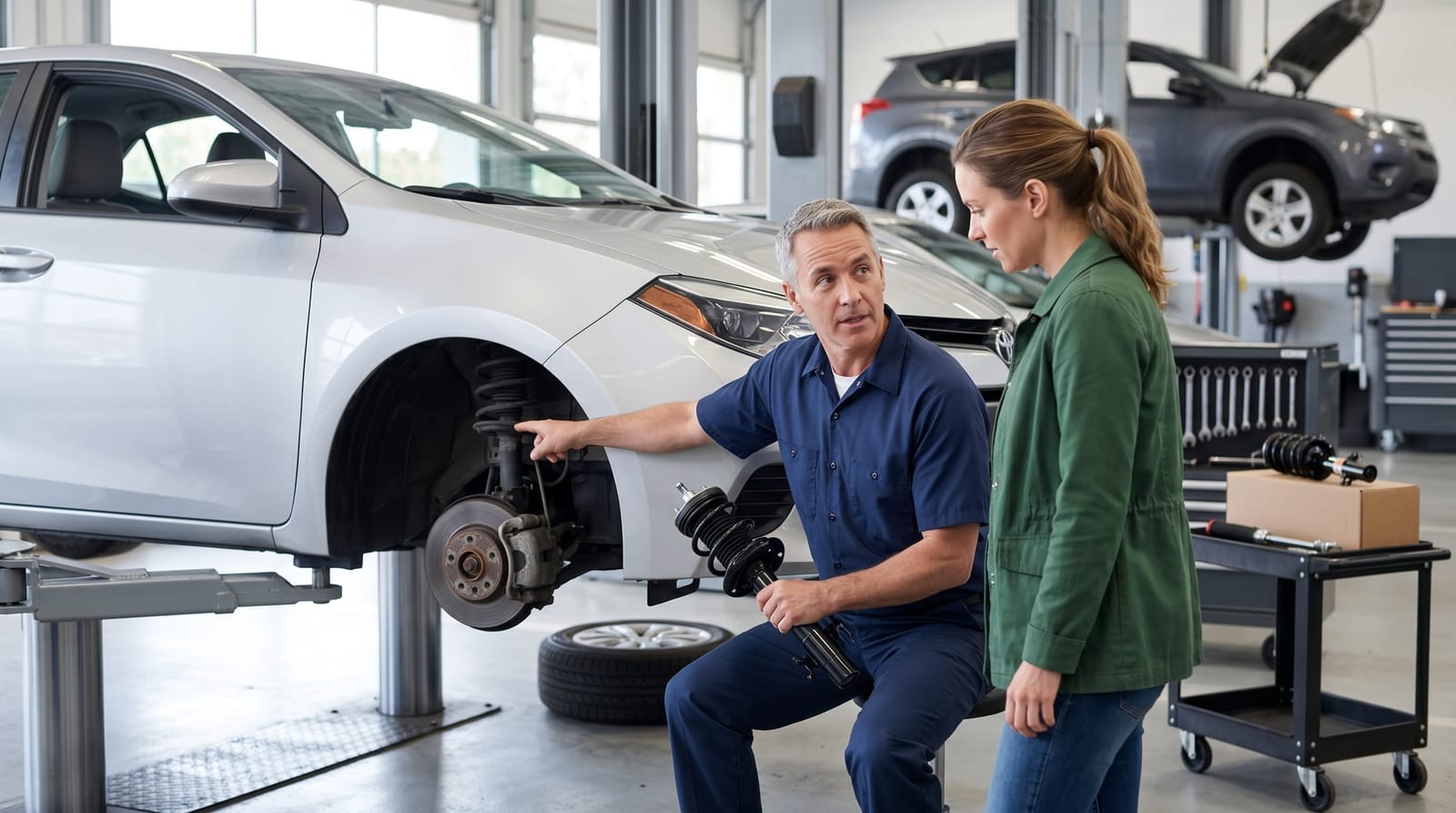
How Do I Know If My Struts Are Bad?

If your ride has started feeling rougher than usual, or your car seems to bounce more than it should after hitting a bump, you might be wondering whether your struts are wearing out. It's a fair question, and the good news is that worn struts often give you several clear warning signs before they become a serious problem. As part of understanding your vehicle's overall suspension and steering health, knowing how to spot strut trouble early can save you from bigger headaches down the road.
What Struts Actually Do (And Why They Wear Out)
Before diving into the symptoms, it helps to understand what struts are doing for your vehicle. A strut is a structural component of your front suspension, and sometimes the rear, that serves two purposes at once. It acts as a shock absorber to dampen road vibrations and bumps, and it also provides a mounting point for the wheel and helps keep your tires properly aligned with the road surface.
Struts wear out gradually over time, which is actually what makes them easy to overlook. Because the change happens slowly, many drivers adjust to the declining ride quality without realizing it. Most struts are designed to last somewhere between 50,000 and 100,000 miles, though that range varies depending on road conditions, driving habits, and vehicle type. Roads with a lot of potholes, rough gravel, or uneven surfaces, like many stretches throughout Kaufman County, can accelerate wear more quickly than smooth highway miles would.
If you're curious about how struts compare to the shocks found on other vehicles, our post on the difference between struts and shocks breaks that down in plain terms.
Physical Signs You Can See
Some of the clearest indicators of worn struts don't require a test drive: you can spot them with your own eyes during a basic walkaround of your vehicle.
Uneven Tire Wear
One of the most telling physical signs is a pattern called tire cupping or scalloping. This appears as uneven, wavy patches worn into the tire tread rather than smooth, consistent wear across the surface. When struts are working properly, they help your tires maintain steady contact with the road. When they're worn, the tires begin to bounce slightly as you drive, hitting the road unevenly and wearing down in irregular patterns. If you notice this on one or more of your tires, it's worth having your suspension inspected.
Oil or Fluid Leaking from the Strut Body
Struts contain hydraulic fluid that helps control the dampening action. When the internal seals wear out, that fluid can begin seeping out and leaving an oily residue on the outside of the strut body. If you notice a greasy, wet coating on the strut when you peek behind the wheel well, that's a reliable sign the strut is no longer functioning as it should.
Visible Rust or Physical Damage
Significant rust, dents, or bent components on the strut housing are also worth noting. While surface rust is common on older vehicles, deep corrosion or structural damage can compromise how the strut performs and holds up under driving loads.
Driving Symptoms That Point to Worn Struts
Beyond what you can see, the way your vehicle feels and behaves while driving is often the first thing that gets your attention.
Excessive Bouncing After Bumps
A healthy strut absorbs the energy from a bump and settles your vehicle back down quickly. If you hit a pothole or railroad crossing and your car continues to bounce two or three times before settling, that's a strong sign the struts have lost their dampening ability. The vehicle should feel controlled and stable, not like it's floating or rocking after road disturbances.
Nose-Diving When Braking
If the front of your vehicle dips noticeably forward when you apply the brakes, even during normal, everyday stops, that's often related to worn front struts. Struts help manage the weight transfer that happens during braking. When they're worn, that transfer becomes more dramatic, and the nose of the car drops more than it should. This affects stopping distance and overall braking stability.
Body Roll in Turns
When you take a corner or change lanes and your vehicle leans or sways more than feels comfortable, it may be a sign that your struts aren't controlling body movement effectively. You might feel like you need to slow down more than usual for curves, or that the vehicle feels less predictable when steering.
Vibration or Wandering on the Highway
Worn struts can also cause a subtle vibration through the steering wheel or a feeling that the vehicle is drifting or requires constant small corrections to stay in its lane. This is sometimes mistaken for a tire or alignment issue, and while those can certainly contribute, it's worth including the struts in any diagnostic inspection.
A Simple At-Home Test You Can Try
There's a basic test you can do in your driveway called the bounce test. Here's how it works:
- Park your vehicle on level ground and turn it off.
- Go to one corner of the vehicle, usually the front, and push down firmly on the bumper or body panel with both hands.
- Release and watch how the vehicle responds.
If the vehicle bounces once or twice and settles back to its normal position quickly, the struts are likely still doing their job. If it continues to bounce more than twice, or feels soft and slow to return, that's a sign the struts may be worn.
Keep in mind that this test gives you a general impression: it's not a substitute for a proper inspection. A mechanic can put the vehicle on a lift and evaluate the struts, mounts, and surrounding suspension components for a more complete picture. If you're also thinking about what comes next financially, our breakdown of strut replacement costs can help you understand what to expect before you schedule an appointment.
Frequently Asked Questions
Can I drive with bad struts?
Technically, a vehicle with worn struts will still move, but it's not something you should ignore for long. Worn struts reduce your vehicle's handling stability, increase stopping distances, and can cause tire wear that leads to additional costs. If your struts are showing multiple symptoms, getting them inspected soon is the sensible call.
Do struts need to be replaced in pairs?
In most cases, yes. If one strut is worn, the strut on the opposite side of the same axle has typically experienced similar use and wear. Replacing them in pairs ensures balanced handling and helps avoid uneven suspension behavior from side to side.
How long does strut replacement take?
For most vehicles, replacing a pair of struts takes roughly two to three hours in the shop. An alignment check is typically recommended afterward since strut replacement can affect your wheel angles.
Are bad strut symptoms the same as bad shock symptoms?
Many of the symptoms overlap, bouncy ride, poor handling, uneven tire wear, because both struts and shocks are responsible for dampening road forces. The key difference lies in their construction and location on the vehicle, not necessarily how their failure feels while driving.
Putting It Together
Worn struts tend to announce themselves through a combination of signs: a rougher ride, excessive bouncing, nose-diving under braking, uneven tire wear, and that general sense that your vehicle just doesn't feel as solid as it once did. Catching these symptoms early is worth your attention, not because ignoring them will cause an immediate breakdown, but because healthy struts contribute directly to how safely and predictably your vehicle handles in everyday driving situations. If several of these signs sound familiar, a suspension inspection is a straightforward next step.