
What's the Difference Between Struts and Shocks?
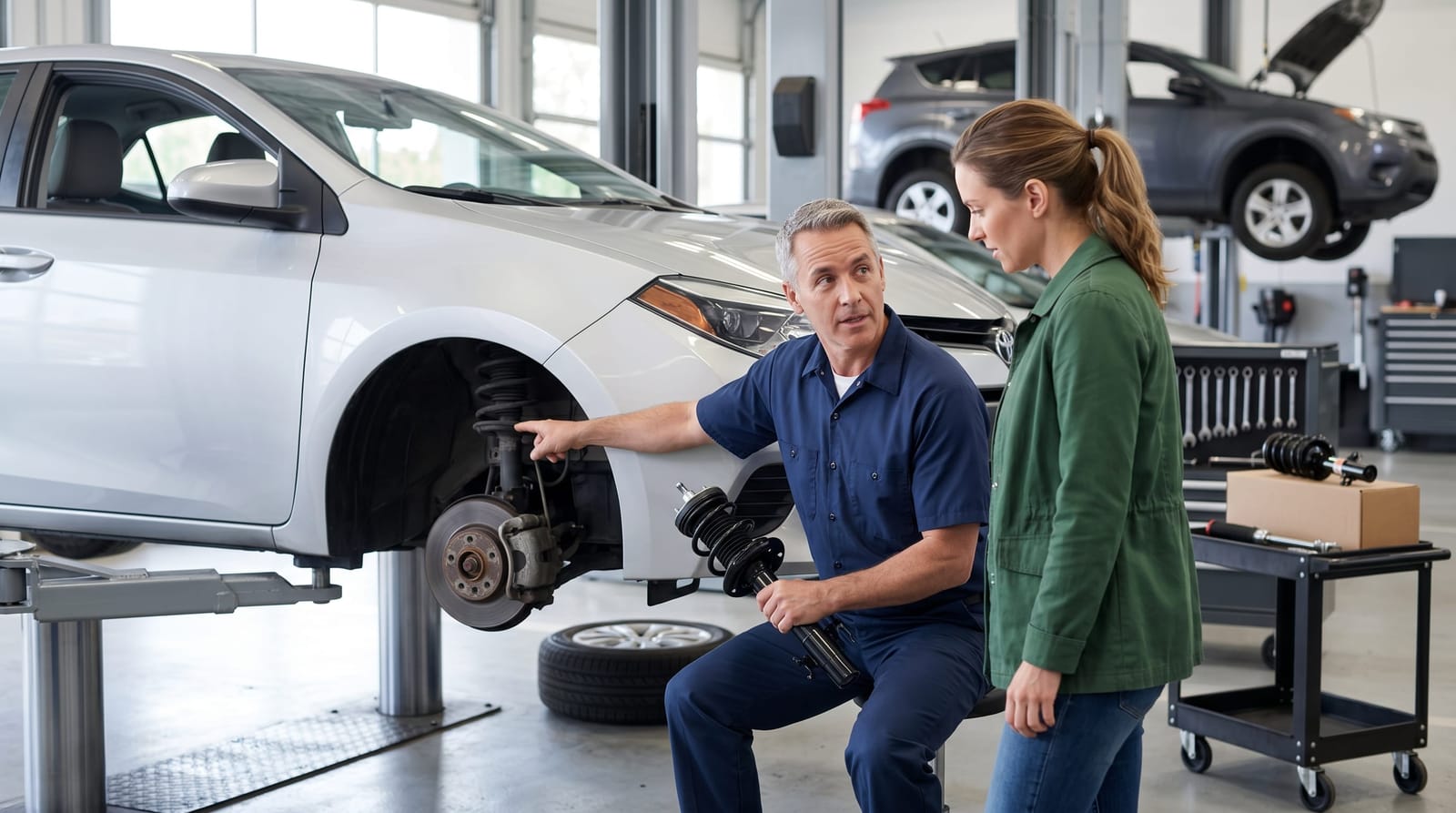
If you've ever had a mechanic mention that your struts or shocks need attention, you may have wondered whether those are two names for the same thing, or two completely different parts. It's one of the most common questions we hear from vehicle owners, and it's a great one to understand. Both components are part of your suspension system, but they work differently, serve different purposes, and aren't interchangeable. Here's a straightforward breakdown to help you make sense of it all.
The Basic Difference: Structure vs. Support
The simplest way to understand the struts vs shocks difference is this: a strut does more than just absorb bumps, it's actually a structural part of your vehicle's suspension. A shock absorber, on the other hand, is a standalone component that helps control bouncing and movement, but it doesn't carry any of the vehicle's weight or provide structural support.
Struts typically combine a spring and a shock absorber into a single integrated assembly. Because of this, they connect directly to the steering knuckle and influence how the vehicle steers and handles corners. If a strut fails, it doesn't just affect ride comfort: it can affect your ability to control the vehicle and how your tires wear over time.
Shocks (short for shock absorbers) are separate units that work alongside the vehicle's coil springs or leaf springs. Their primary job is to dampen the up-and-down movement of the suspension so your tires stay in contact with the road instead of bouncing around. They don't bear structural load, but they still play an important role in ride quality and handling stability.
Think of it this way: struts do two jobs at once (structural support plus damping), while shocks focus on one job (controlling motion). That's why the struts vs shocks difference matters when it comes to diagnosis, repair, and cost.
Which Does Your Vehicle Have?
Most modern passenger vehicles use struts on the front axle because the front suspension needs to handle both steering and load-bearing responsibilities. The rear axle on many cars also uses struts, particularly on front-wheel drive and all-wheel drive vehicles. Trucks, SUVs, and some rear-wheel drive cars are more likely to use shocks in the rear, paired with leaf springs or coil springs.
Here's something that surprises many people: your vehicle might have both. It's common for a car to have struts on the front axle and shocks on the rear axle, or vice versa. The specific setup depends on the manufacturer's suspension design for that particular vehicle. That's why the terminology matters: a repair shop needs to know which component is involved to diagnose the problem correctly and recommend the right repair.
According to industry data, roughly 75% of vehicles on the road today use struts on at least one axle, with front-strut designs being the most prevalent among sedans and crossovers. Trucks and body-on-frame SUVs remain among the most common applications for traditional shock absorbers, particularly at the rear.
If you're unsure what your specific vehicle uses, your owner's manual will have that information, or a trusted mechanic can quickly identify the setup during a visual inspection.
How Each Component Affects Your Ride
Both struts and shocks affect how your vehicle feels on the road, but in slightly different ways.
When struts wear out, you'll often notice more than just a rough ride. Worn struts can cause your vehicle to pull to one side when braking, create uneven or cupped tire wear, make clunking or knocking sounds over bumps, and reduce your ability to stop quickly. Studies suggest that worn struts can increase stopping distance by up to 10 feet at highway speeds, which is a meaningful safety consideration.
Worn shocks tend to show up as a bouncier, less controlled ride. You might feel the rear end of your vehicle sway during lane changes, notice the front dipping dramatically when you brake, or feel like the vehicle "floats" over bumps rather than tracking smoothly. If you're curious about specific warning signs, learning to recognize bad strut symptoms early can help you avoid more costly repairs down the road.
In both cases, the longer the issue goes unaddressed, the more strain gets placed on surrounding suspension and steering components, including tie rods, ball joints, and wheel bearings.
Replacement Considerations for Each Type
Because struts are structural components, replacing them is generally more involved than replacing shocks. A strut replacement often requires disconnecting steering and suspension components, compressing the spring (which requires a special tool), and realigning the vehicle afterward. This is not a DIY-friendly job for most people, and it's important to have it done by a qualified technician with the right equipment.
Shocks are typically easier to replace since they're standalone units bolted into place. That said, "easier" doesn't mean something to skip or rush: proper installation and torque specs still matter for safety and performance.
A few important points to keep in mind when it comes to replacement:
- Replace in pairs. Whether you're replacing shocks or struts, it's best practice to do both sides of the same axle at once. If one side is worn, the other is usually close behind. Replacing just one side can create an imbalance in how your vehicle handles.
- Get a wheel alignment after strut replacement. Since struts affect steering geometry, an alignment is almost always needed after the job to ensure your tires wear evenly and your vehicle tracks straight.
- Watch for mileage benchmarks. Many manufacturers recommend inspecting shocks and struts around 50,000 miles, with replacement often needed between 50,000 and 100,000 miles depending on driving conditions. Gravel roads, heavy loads, and frequent highway driving can accelerate wear.
- Consider quality parts. There's a meaningful difference between economy-grade and quality replacement parts. A reputable shop will walk you through your options honestly so you can make the right call for your vehicle and budget.
Strut replacement cost varies depending on vehicle make, labor rates in your area, and whether an alignment is included: something worth asking about upfront when getting an estimate.
Frequently Asked Questions
Can I drive with bad struts or shocks?
Technically, most vehicles will still move with worn struts or shocks, but it's not a good idea to ignore them for long. Worn components affect braking distance, handling stability, and tire wear. In more severe cases, damaged struts can compromise your vehicle's steering response. If you're noticing symptoms, it's worth having them inspected sooner rather than later.
How do I know if my vehicle has struts or shocks?
Check your owner's manual for suspension details, or simply ask a mechanic during your next oil change or inspection. A quick visual look under the vehicle can usually identify the setup right away. Many vehicles have struts up front and shocks in the rear, but it varies by make and model.
Do struts and shocks wear out at the same rate?
Not necessarily: wear depends on driving conditions, mileage, road quality, and vehicle load. That said, if your vehicle is approaching the 75,000-mile mark and you haven't had your suspension inspected recently, it's a reasonable time to have both checked, regardless of which type your vehicle uses.
Is strut replacement the same as a "strut assembly" replacement?
Not always. A strut can be replaced as a bare unit (just the shock portion, with the old spring reinstalled) or as a complete quick-strut assembly that includes a new spring, bearing plate, and shock absorber in one pre-assembled unit. Complete assemblies cost more upfront but often save on labor time and include new spring components.
Putting It All Together
Understanding the struts vs shocks difference helps you have more informed conversations with your mechanic and make better decisions about your vehicle's maintenance. Struts do double duty as both a structural suspension component and a damper, while shocks focus solely on controlling motion. Both are essential to a safe, comfortable ride, and both deserve attention when they show signs of wear. If you're experiencing handling issues or a rougher ride than usual, a suspension inspection is a practical first step toward getting answers.
For a broader look at how all of these components work together, including steering, alignment, and more, the Complete Suspension and Steering Repair Guide for Kaufman County Drivers covers everything you need to know about keeping your vehicle road-ready.