Should You Replace Brake Pads and Rotors at the Same Time?
It's one of the most common questions we hear from drivers bringing in their vehicles for brake work: "Do I really need to replace the rotors too, or just the pads?" It's a fair question, and the honest answer isn't always "replace everything." Understanding when it makes sense to replace brake pads and rotors at the same time, versus when rotor replacement is optional, can save you money and help you make smarter decisions about your vehicle's maintenance. Here's a straightforward breakdown.
Why Replacing Brake Pads and Rotors Together Is Often Recommended
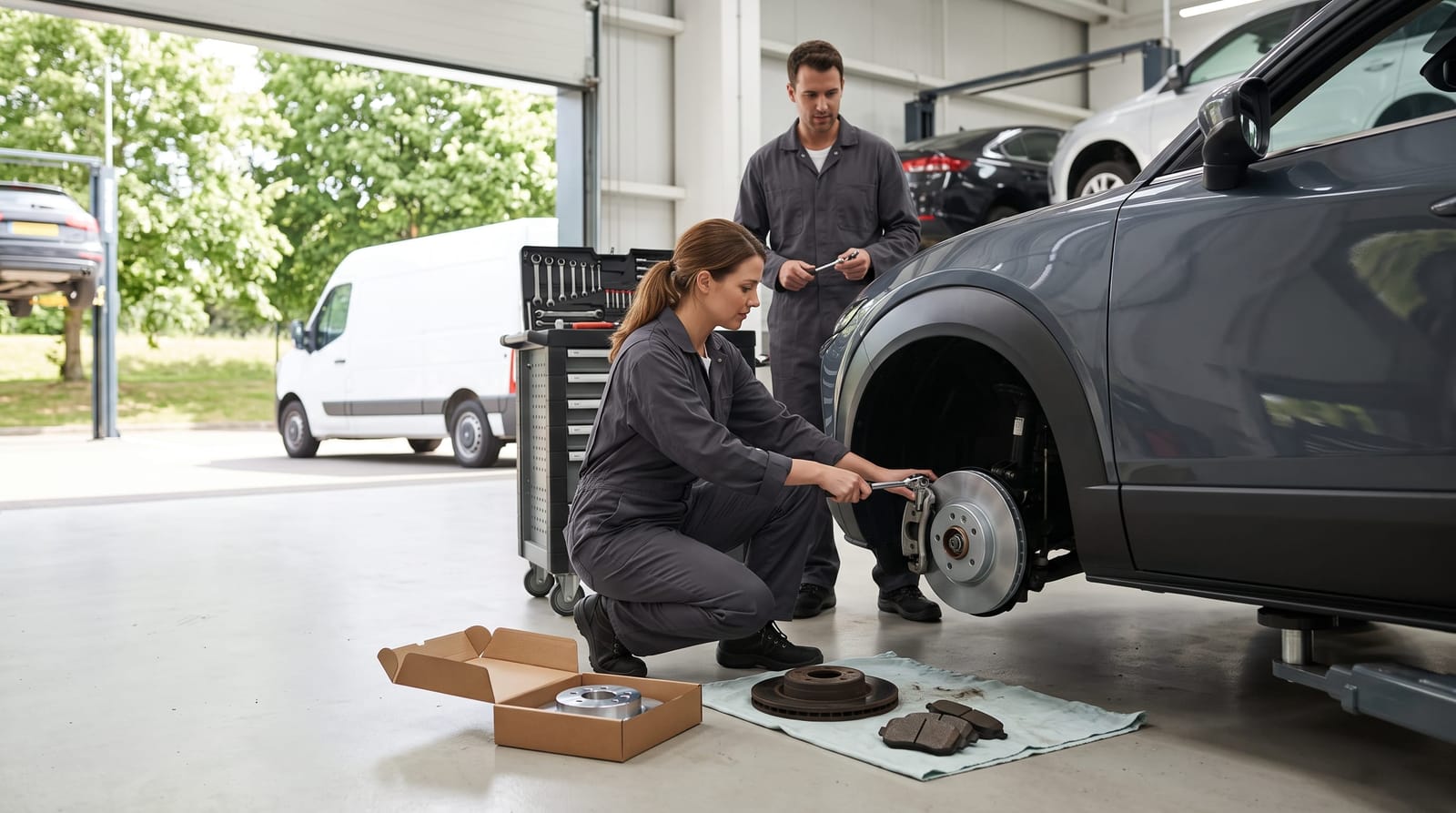
Most professional mechanics recommend replacing brake pads and rotors at the same time, and there's solid reasoning behind that advice. When brake pads wear down over time, they don't wear perfectly smooth. They create uneven contact patterns on the rotor surface. When you install fresh brake pads onto a rotor that already has those worn grooves and ridges, the new pads have to "break in" to an imperfect surface instead of making clean, even contact from the start.
The result? You can end up with reduced braking efficiency, vibration through the brake pedal, and noise during stops, even with brand-new pads. New pads also tend to wear faster when they're working against an already-compromised rotor surface.
From a performance standpoint, a matched set of new pads and fresh rotors gives your braking system a clean slate. Contact is even, stopping power is consistent, and both components wear at a predictable rate together. That's the primary reason the "replace both" recommendation exists: it's about long-term performance and value, not just upselling.
On average, brake pads last between 30,000 and 70,000 miles depending on driving habits, vehicle weight, and pad material. Rotors typically last 50,000 to 70,000 miles, though that varies as well. Because these intervals overlap significantly, it often makes practical sense to do both jobs at the same time.
When Replacing Rotors Is Truly Necessary
There are specific situations where rotor replacement isn't optional: it's required for safe braking. Knowing what to look for helps you understand why a shop might recommend new rotors even if they still look okay at a glance.
- Below minimum thickness: Every rotor has a minimum thickness specification stamped on it by the manufacturer. Once a rotor wears down to that measurement, or close to it, it no longer has enough mass to absorb and dissipate heat properly. Braking at high temperatures on thin rotors increases the risk of brake fade. This is a mandatory replacement situation.
- Deep grooves or scoring: Worn brake pads (especially those worn down to the metal backing) can gouge the rotor surface. Grooves deeper than roughly 1.5mm are generally considered too deep to resurface and indicate the rotor needs replacement.
- Warping or vibration: If you feel a pulsing sensation through the brake pedal when stopping, the rotor surface may be uneven: commonly called warping. This causes inconsistent pad contact and reduces stopping effectiveness.
- Heavy rust or corrosion: Surface rust is normal, especially after a vehicle sits for a few days. But rotors with pitting, flaking, or corrosion that has eaten into the surface won't return to smooth performance through normal driving.
- Hot spots: These appear as hard, discolored patches on the rotor surface caused by excessive heat. They create uneven braking and can't be corrected by resurfacing.
When You Might Be Able to Keep the Rotors
Here's where honest advice matters: if your rotors are in genuinely good condition, replacement may not be necessary every time you change brake pads. This is especially true on newer vehicles where the pads are being replaced early or the rotors haven't accumulated significant wear.
Rotors in good condition typically have:
- Thickness above the manufacturer's minimum specification: ideally with at least 2mm to 3mm of material remaining beyond that minimum
- A smooth surface with no significant grooves, scoring, or corrosion
- No signs of warping or vibration complaints from the driver
- Even wear across the full braking surface
In these cases, a technician can sometimes machine (resurface) the rotor to restore a clean contact surface, which is a less expensive option than full replacement. However, resurfacing is only appropriate when the rotor has enough thickness remaining after the material is removed. It's not always available as an option, and not all shops offer it.
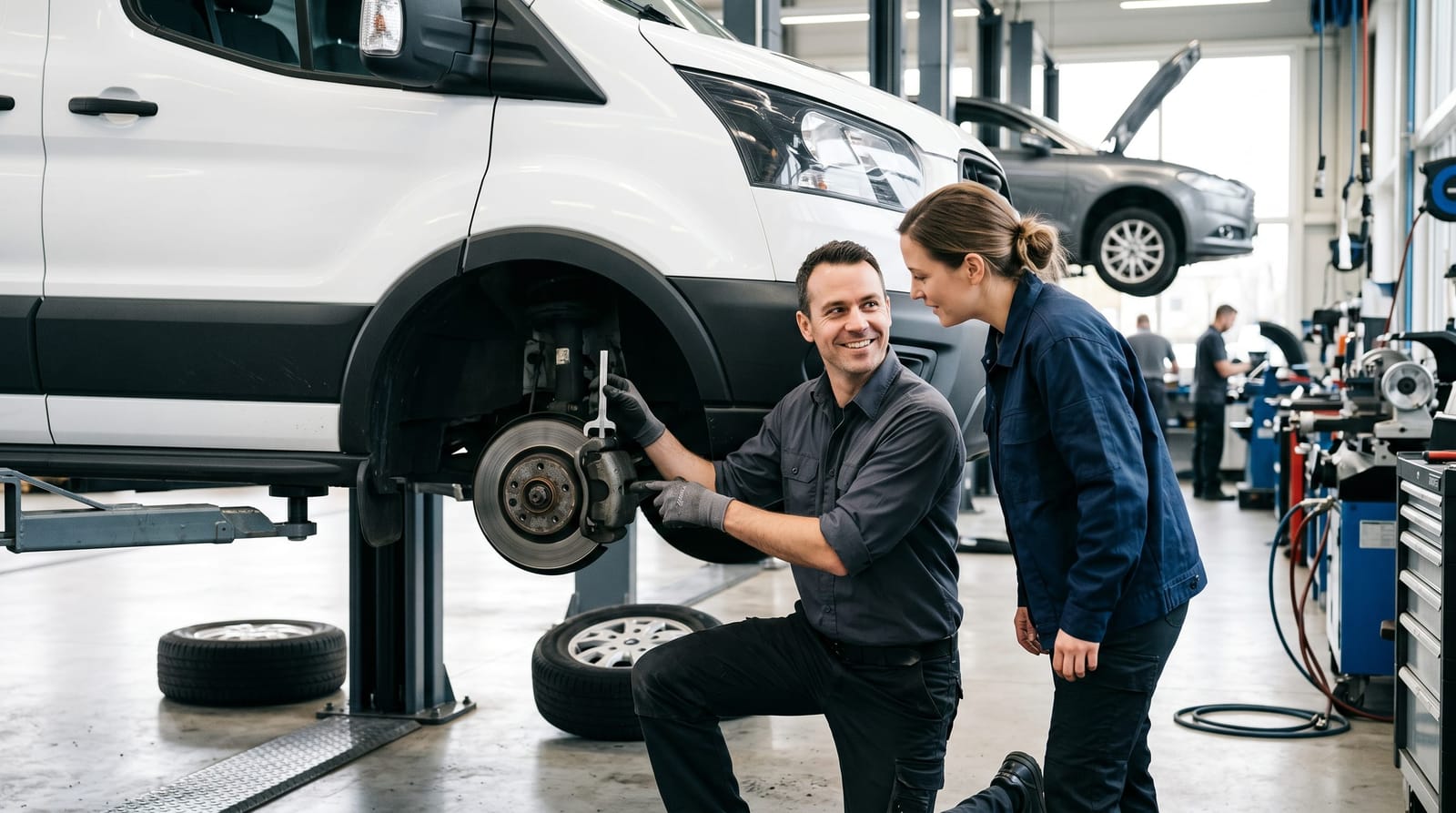
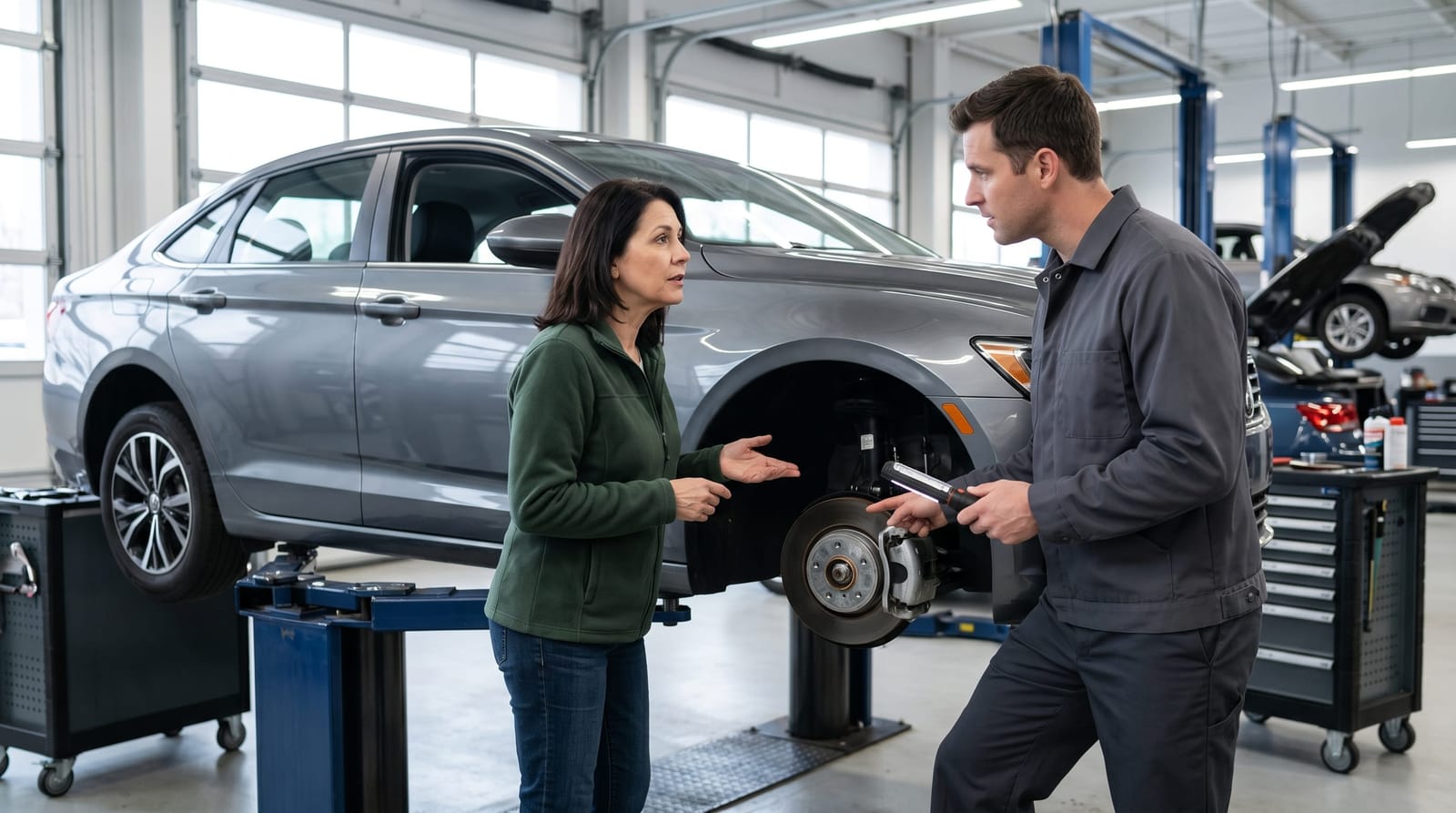
The key is getting an honest evaluation, not just a blanket recommendation. A trustworthy shop will measure your rotors, check the surface condition, and tell you what they actually found rather than assuming replacement is always the answer.
The Cost Difference: What You're Actually Deciding Between
Understanding the cost difference helps put this decision in perspective. Brake pad replacement alone typically runs between $100 and $200 per axle depending on the vehicle and pad type. Adding rotor replacement to that service generally brings the per-axle cost to $200 to $400 or more, again depending on the vehicle and parts used.
That's a meaningful difference, and it's completely reasonable to ask your shop to justify rotor replacement with specific measurements and findings. A good technician will show you the rotor thickness reading, point out any visible wear issues, and explain what they're recommending and why, without pressure.
What's worth remembering: if you skip necessary rotor replacement to save money now, you may find yourself replacing both pads and rotors again sooner than expected because the new pads wore unevenly against a damaged surface. In some cases, spending a little more upfront is genuinely the better value over time.
Getting an Honest Brake Inspection in Kaufman County
If you're trying to figure out whether you need to replace brake pads and rotors at the same time on your vehicle, the most useful starting point is an honest inspection, not a guess. Driving habits in Kaufman County, including highway commutes toward Mesquite or Dallas and stop-and-go traffic through Terrell and Forney, can affect how quickly both pads and rotors wear. A local shop familiar with your typical driving conditions can help you evaluate what your specific vehicle actually needs.
At Gregg Automotive, we measure rotor thickness, inspect the braking surface, and explain our findings before recommending any work. Our goal is to give you the information you need to make a confident decision, not to push unnecessary repairs.
Frequently Asked Questions
Can I replace just the brake pads and skip the rotors?
Yes, in some cases. If your rotors are above the minimum thickness specification and the surface is smooth with no significant grooves, warping, or corrosion, you may be able to replace only the pads. Your technician should measure the rotors and show you the findings before making a recommendation either way.
How do I know if my rotors need to be replaced?
Common signs include a pulsing or vibrating brake pedal when stopping, visible deep grooves on the rotor surface, rotor thickness that has reached or is near the manufacturer's minimum, pitting or flaking from corrosion, and braking that feels inconsistent or pulls to one side. A shop can confirm rotor condition with a simple thickness measurement.
How long do brake rotors typically last?
Most brake rotors last between 50,000 and 70,000 miles under normal driving conditions, though this varies based on vehicle type, driving habits, and whether braking is primarily highway or frequent stop-and-go. Heavier vehicles and drivers who brake aggressively may see shorter rotor life.
Is it worth resurfacing rotors instead of replacing them?
Resurfacing can be a cost-effective option when rotors have enough remaining thickness to allow material removal while staying above the minimum specification. However, if the rotor is already near its minimum thickness, resurfacing isn't safe or practical. Not every shop offers resurfacing, and for many modern vehicles, replacement is often the more reliable long-term choice.
The Bottom Line
Replacing brake pads and rotors at the same time is often the smartest move, but it isn't always mandatory. What matters most is an honest evaluation of your rotors' actual condition, not a default recommendation. When rotors show real wear, damage, or thinning, replacing both components together gives you the best results. When rotors are genuinely in good shape, keeping them is a reasonable option. Understanding this distinction helps you have a more confident conversation with your shop and make decisions that actually fit your situation and your budget.