
What Is a Cabin Air Filter and Does It Affect AC Performance?
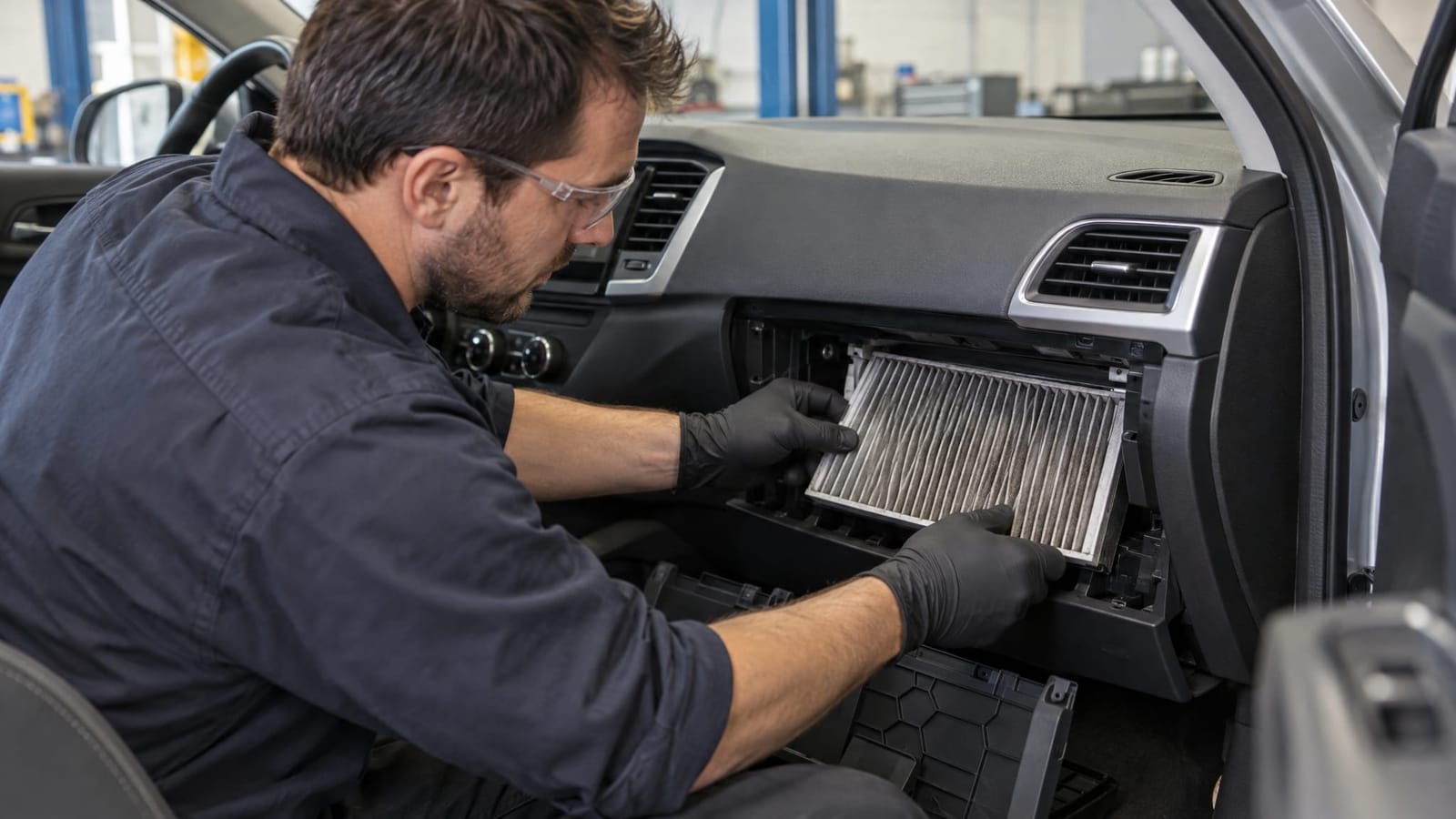
A cabin air filter traps dust, pollen, leaves, and other particles before they circulate through your vehicle’s vents. Yes, it can affect AC performance: a clogged filter restricts airflow, so less cooled air reaches the cabin. The AC may still produce cold air, but the interior can take longer to feel comfortable.
Replacing a dirty filter can help when restricted airflow is the problem. It will not fix a refrigerant leak, a faulty compressor, or every cause of warm air. The key is separating weak airflow from air that simply is not cold.
What the Cabin Air Filter Does
The cabin air filter sits in the vehicle’s heating, ventilation, and air conditioning system. Depending on the vehicle, it may be behind the glove box, beneath the dashboard, or near the base of the windshield. Not every vehicle has a replaceable cabin filter, so the owner’s manual is the best starting point.
Its job is filtration, not refrigeration. The AC system cools air as it passes over a cold component called the evaporator. The blower fan moves that air through the vents, and the filter helps keep airborne debris out of the airflow.
As particles collect in the filter, air has a harder time passing through. That restriction can affect both cooling and heating because they use the same ventilation system.
How to Tell Whether the Filter Could Be the Problem
Before deciding on a filter replacement or AC repair, compare the strength of the airflow with its temperature.
- Weak airflow that still feels cool: A clogged filter is worth checking. For example, the fan may sound busy on a high setting while only a small amount of air reaches the cabin.
- Strong airflow that stays warm: The filter is less likely to be the main cause. Refrigerant-system problems or a temperature-control door inside the dashboard can produce this pattern.
- A fan that only works on certain settings: This points more toward a blower or control problem than a dirty filter alone.
These patterns help narrow the next step, but they do not identify the fault by themselves. Weak airflow can also come from a blower problem, blocked intake, or another restriction.
Odor is another clue, though not proof. Debris in a filter can contribute to unpleasant smells, but a musty smell when your car AC starts can also come from moisture elsewhere in the ventilation system. A new filter may not resolve that cause.
At Gregg Automotive in Forney, we offer maintenance and air conditioning system service. Distinguishing an airflow restriction from a cooling problem helps separate a maintenance need from an AC repair.
How Often Does a Cabin Air Filter Need Replacement?
Follow the replacement schedule in your vehicle’s owner’s manual rather than treating one interval as right for every car. Some schedules use mileage, elapsed time, or both. When both are listed, the schedule generally specifies whichever comes first.
Driving conditions can make an earlier inspection useful, especially with:
- Frequent travel on dusty roads or through construction areas.
- Parking beneath trees where leaves collect near the fresh-air intake.
- A noticeable decline in vent airflow before the scheduled replacement.
A lightly discolored filter is not automatically clogged. Look for heavy dust buildup, debris packed between the folds, damage, or dampness. A wet filter also gives a reason to investigate how moisture entered the housing instead of treating replacement as the whole repair.
Recording the replacement date and mileage makes the next maintenance decision easier.
How to Check or Replace the Filter
Some cabin filters are easy to reach; others require more trim removal. The vehicle’s instructions determine whether this is a straightforward home maintenance task.
- Find the vehicle-specific procedure. Check the owner’s manual for the location, access method, and correct replacement filter.
- Turn off the vehicle and blower. Open the access panel as directed. Glove-box stops, dampers, and clips vary, so avoid forcing parts that resist movement.
- Remove the filter carefully. Keep loose leaves and dirt from falling farther into the housing. Inspect the filter and remove accessible loose debris around it.
- Install the correct filter in the correct direction. An “AIR FLOW” arrow indicates airflow direction, which is not necessarily upward. Follow the vehicle instructions and distinguish it from a marking that says “UP.”
- Close the housing and compare airflow. Use the same fan setting and vent positions as before. If airflow remains weak, another restriction or blower issue may be involved.
A filter that fits poorly or an access cover that does not close properly can let air bypass the filter. Matching the vehicle’s specified fit matters more than choosing the thickest-looking option.
What Affects Cabin Air Filter Replacement Cost?
Cost depends mainly on the filter type and the work needed to reach it. A standard particulate filter typically costs less than a comparable filter with added odor-control material. An easily accessible housing also involves less labor than one behind several trim pieces.
For an estimate, separate the price of the filter from installation labor. If the complaint is weak or warm AC, distinguish routine filter replacement from diagnostic work as well. Installing a filter and finding the cause of a cooling problem are different tasks.
A straightforward filter replacement is generally a smaller job than repairing the refrigerant system. Still, replacing a clean filter is not a useful shortcut when the symptoms point elsewhere. An AC recharge does not clear a clogged filter, and a new filter does not correct low refrigerant.
Frequently Asked Questions
Is the cabin air filter the same as the engine air filter?
No. The cabin filter cleans air entering the passenger ventilation system. The engine air filter cleans air used by the engine. Replacing one does not replace the other.
Can I wash or vacuum a cabin air filter instead of replacing it?
Most disposable cabin filters are intended for replacement, not washing. Vacuuming may remove loose surface debris without clearing particles trapped deeper in the material. Only clean a reusable filter according to its manufacturer’s instructions.
Is an activated-carbon cabin filter worth choosing?
Activated-carbon filters can reduce some odors as well as trap particles. They may be useful when outside odors are a frequent annoyance, but they do not repair moisture problems or eliminate every smell. Correct fit remains essential.
The Bottom Line
A clogged cabin air filter can make a working AC system feel less effective by limiting airflow. Checking it is a practical first step for weak vents. If airflow is strong but warm, or stays weak after replacement, the problem needs a different explanation.