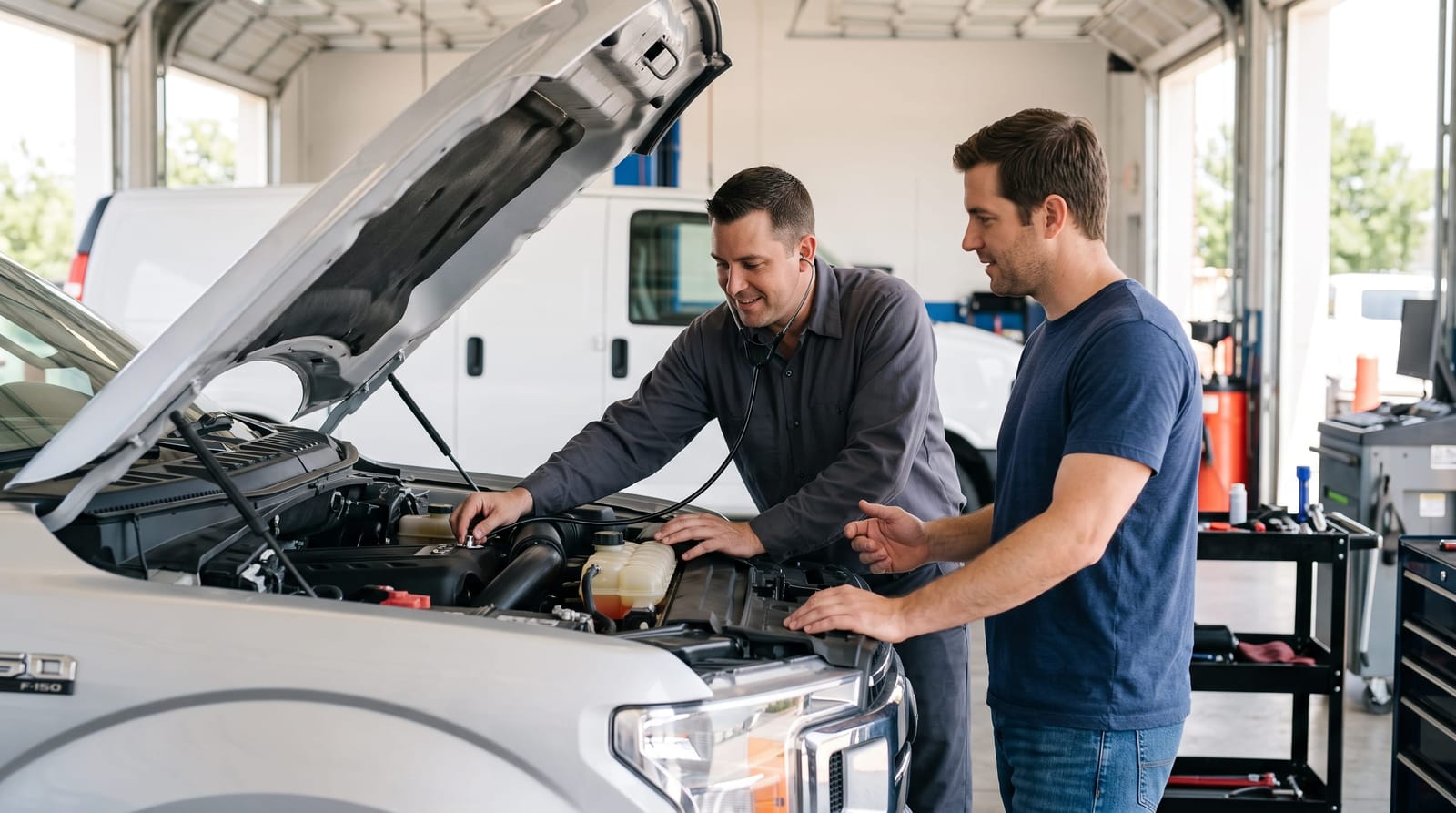
Sweet Smell from My Car Engine: Coolant Leak Signs for Terrell TX Drivers

If you've noticed a sweet, almost syrupy smell coming from your engine, especially after driving around Terrell or anywhere else in Kaufman County during a hot Texas afternoon, your car is sending you a clear signal. That distinctive scent is one of the most recognizable warning signs vehicle owners encounter, and it almost always points to a coolant leak. Understanding what that smell means, where it might be coming from, and why it matters is an important part of broader car warning signs diagnosis that keeps you and your vehicle safe. This guide gives you straightforward answers so you know exactly what to do next.
Why a Sweet Smell Usually Means a Coolant Leak
Engine coolant, also called antifreeze, contains a chemical called ethylene glycol. When coolant heats up and escapes from where it shouldn't, it produces a warm, sweet vapor that many drivers describe as smelling like maple syrup or candy. It's noticeably different from the sharp smell of burning oil or the acrid odor of an overheating belt. Coolant's sweet smell is softer, more vapor-like, similar to steam rising from a boiling pot rather than actual smoke.
The reason this smell stands out is that ethylene glycol has a relatively low boiling point under normal pressure, meaning even a small leak can vaporize quickly on a hot engine surface and fill your engine bay, or even your car's interior, with that telltale scent. For drivers in Terrell TX dealing with the sweet smell engine coolant leak issue, the warm climate makes this even more noticeable because ambient temperatures accelerate coolant evaporation.
It's worth knowing that coolant comes in several colors, green, orange, pink, and even blue, depending on the type and brand. If you spot a small puddle under your car that isn't oil (which is darker and slicker), it could very well be coolant. Fresh coolant puddles often appear slightly shiny and feel slightly slippery between your fingers.
Common Places Coolant Leaks Happen
Coolant circulates through several interconnected components in your vehicle's cooling system. Any one of them can develop a leak over time, especially as vehicles age and Texas heat puts extra stress on rubber and metal parts. Here are the most common culprits:
- Radiator: The radiator is the front-line component that dissipates heat from your coolant. Radiator leaks are among the most frequent causes of coolant loss, often starting as small cracks or pinhole failures in the radiator core or around the plastic end tanks. Approximately 30% of cooling system failures involve the radiator directly.
- Coolant hoses: Your engine uses upper and lower radiator hoses to move coolant between the engine and radiator. These hoses are made of rubber and can crack, swell, or develop soft spots after years of heat cycling. A hose that looks fine on the outside may already be deteriorating on the inside.
- Water pump: The water pump circulates coolant through the entire system. A failing water pump may develop a leak at its shaft seal or gasket, allowing coolant to drip from the front of the engine. Water pumps typically last between 60,000 and 90,000 miles, though this varies by vehicle.
- Heater core: The heater core is a small radiator-like component located inside your dashboard that warms cabin air in the winter. A heater core leak is especially concerning because it can release coolant vapor directly into your passenger cabin. If the sweet smell is strongest inside your car, rather than under the hood, a heater core leak is a strong possibility.
- Overflow reservoir and radiator cap: Sometimes the source is as simple as a cracked overflow tank or a radiator cap that no longer holds pressure properly. The cooling system is a pressurized system, and a faulty cap, which is inexpensive to replace, can allow coolant to escape consistently.
External Leaks vs. Internal Leaks: What's the Difference?
Not all coolant leaks are visible from the outside, and that distinction matters a lot for how urgent the situation is.
External Coolant Leaks
An external leak is one you can potentially see: a puddle under the car, wet spots around a hose connection, crusty residue near the radiator, or visible moisture around the water pump. These leaks are losing coolant to the ground or engine bay. They're serious and need attention, but they're also more straightforward to identify and repair.
To do a basic check at home: park your car on a clean, dry surface, let it cool completely, then pop the hood and look for any wet areas, dried residue (often a whitish or rust-colored crust), or visible cracks in hoses. Check your coolant reservoir level against the MIN and MAX markings: a consistently dropping level even without a visible puddle is worth investigating.
Internal Coolant Leaks
An internal leak is when coolant enters parts of the engine where it doesn't belong: specifically, the combustion chamber or the engine oil. This happens most often when a head gasket fails. Signs of an internal coolant leak include white smoke from the exhaust that persists after the engine warms up, a milky or frothy appearance to the oil on your dipstick, or rapidly rising coolant temperature without any visible puddle outside the engine.
Internal leaks are more complex and require professional diagnosis. If your oil dipstick shows anything that looks like chocolate milk, a brownish, creamy mixture, stop driving the vehicle and have it towed for inspection. Running an engine with oil contaminated by coolant causes rapid internal wear.
Why Coolant Leaks Are Especially Urgent in Texas Summer Heat
Texas summers are genuinely tough on cooling systems. Terrell and the surrounding Kaufman County area regularly see temperatures well above 95°F, and engine compartments can reach 200°F or more during normal operation. Your cooling system is designed to handle that heat, but only when it's full and functioning properly.
When coolant level drops due to a leak, your engine loses its primary defense against overheating. Engines are designed to operate within a specific temperature range, typically between 195°F and 220°F. When cooling capacity is reduced and ambient temperatures are already high, engines can reach dangerous temperatures surprisingly quickly: sometimes within just a few minutes of driving.
Overheating isn't just an inconvenience. It can warp cylinder heads, damage gaskets, and lead to repairs that are significantly more involved than a simple hose replacement or radiator fix. Catching a sweet smell early and getting it looked at is the kind of proactive step that keeps a manageable repair from becoming a much larger one. If you're also noticing unusual smells from other vehicle systems, it may be worth reading about burning smell car AC Mesquite TX to understand how different odors point to different problems across your vehicle.
What To Do If You Smell Coolant
Here's a simple, practical approach if you notice that sweet smell coming from your engine:
- Don't ignore it. The smell is your car communicating a real problem. Even if your temperature gauge looks normal, the leak may be slow and gradual.
- Check your coolant level when the engine is cold. Never open a radiator cap on a hot engine: pressurized hot coolant can cause serious burns. Wait at least 30 minutes after driving before checking.
- Look for visible signs. Check around hose connections, underneath the vehicle, and near the front of the engine for any wet spots, staining, or puddles.
- Monitor your temperature gauge closely. If it climbs toward the red zone while driving, pull over safely, turn off the engine, and let the car cool before continuing.
- Have it diagnosed by a professional. Cooling system leaks can originate from multiple locations, and proper pressure testing is the most reliable way to pinpoint the source accurately.
Frequently Asked Questions
Is a sweet smell from my engine always a coolant leak?
A sweet smell is almost always associated with coolant containing ethylene glycol. While other fluids can produce faint odors, the distinctive sweet, warm, vapor-like scent is strongly associated with coolant leaks. It's different from the sharp or acrid smells produced by burning oil or overheated rubber, making it one of the easier engine smells to identify.
Can I drive my car if I smell coolant but the temperature gauge is normal?
A normal temperature gauge is a good sign, but it doesn't mean the leak is harmless. A slow coolant leak can go unnoticed on the gauge until the level drops significantly. It's generally better to have the vehicle checked as soon as possible rather than waiting for a more obvious symptom to appear. Short, necessary trips may be fine, but avoid extended highway driving until the source is identified.
How much does a coolant leak repair typically cost?
Repair costs vary widely depending on the source. A simple hose replacement is one of the more straightforward cooling system repairs, while a heater core or water pump replacement involves more labor. Getting a proper diagnosis first is the most reliable way to understand what's involved: many shops can perform a cooling system pressure test to locate the leak accurately before any work begins.
Why does the sweet smell sometimes come through my car's vents?
If you're smelling coolant inside the cabin, especially through the heating and ventilation system, the heater core is the most likely suspect. The heater core is located inside the dashboard and connected to the same coolant loop as the rest of your cooling system. A small leak there can introduce coolant vapor directly into the air flowing through your vents. This type of leak should be addressed promptly, as coolant vapors in the cabin are not healthy to breathe over extended periods.
The Bottom Line for Terrell TX Drivers
A sweet smell from your engine is one of the clearest warning signs your vehicle can give you, and for drivers in Terrell TX and across Kaufman County, it's especially important to take it seriously during the warmer months. The sweet smell engine coolant leak connection is well established: ethylene glycol in your coolant has a distinctive odor that's hard to miss once you know what to look for. Whether the source is a hose, radiator, water pump, or heater core, getting a proper diagnosis early keeps a small problem from becoming a larger one. At Gregg Automotive, we're here to help you understand what your vehicle is telling you and keep it running reliably through every Texas season.