What Does a Clunking Noise When Turning Mean on a Kaufman County TX Car?
That clunking sound when you turn into your driveway or navigate a parking lot isn't something to brush off or turn up the radio to ignore. It's your vehicle's way of flagging that something in the steering or suspension system needs attention. As part of understanding the broader warning signs your car can send, clunking during turns is one of the more specific symptoms that can point to several different causes: some minor, some genuinely important to address. Here's what's likely going on and what it means for your vehicle.
The Most Common Causes of a Clunking Noise When Turning
A clunking sound during turns typically comes from one of four areas: the CV joints, ball joints, sway bar links, or strut mounts. Each has its own feel and pattern, and knowing the difference can help you describe the problem clearly when you bring your vehicle in for a diagnosis.
CV Joint Wear
CV joints, short for constant velocity joints, are part of the drivetrain on front-wheel-drive and all-wheel-drive vehicles. They transfer power from the transmission to the wheels while allowing the suspension to move and the wheels to turn. When a CV joint wears out, the most telling sign is a rhythmic clicking or clunking that gets louder during slow, tight turns, like when you're pulling into a parking space or making a U-turn. If you hear this sound mainly at low speeds during sharp turns, a worn CV joint is a strong candidate. Left unaddressed, a failing CV joint can eventually stop transferring power to the wheel entirely, which is why it's worth getting checked sooner rather than later.
Worn Ball Joints
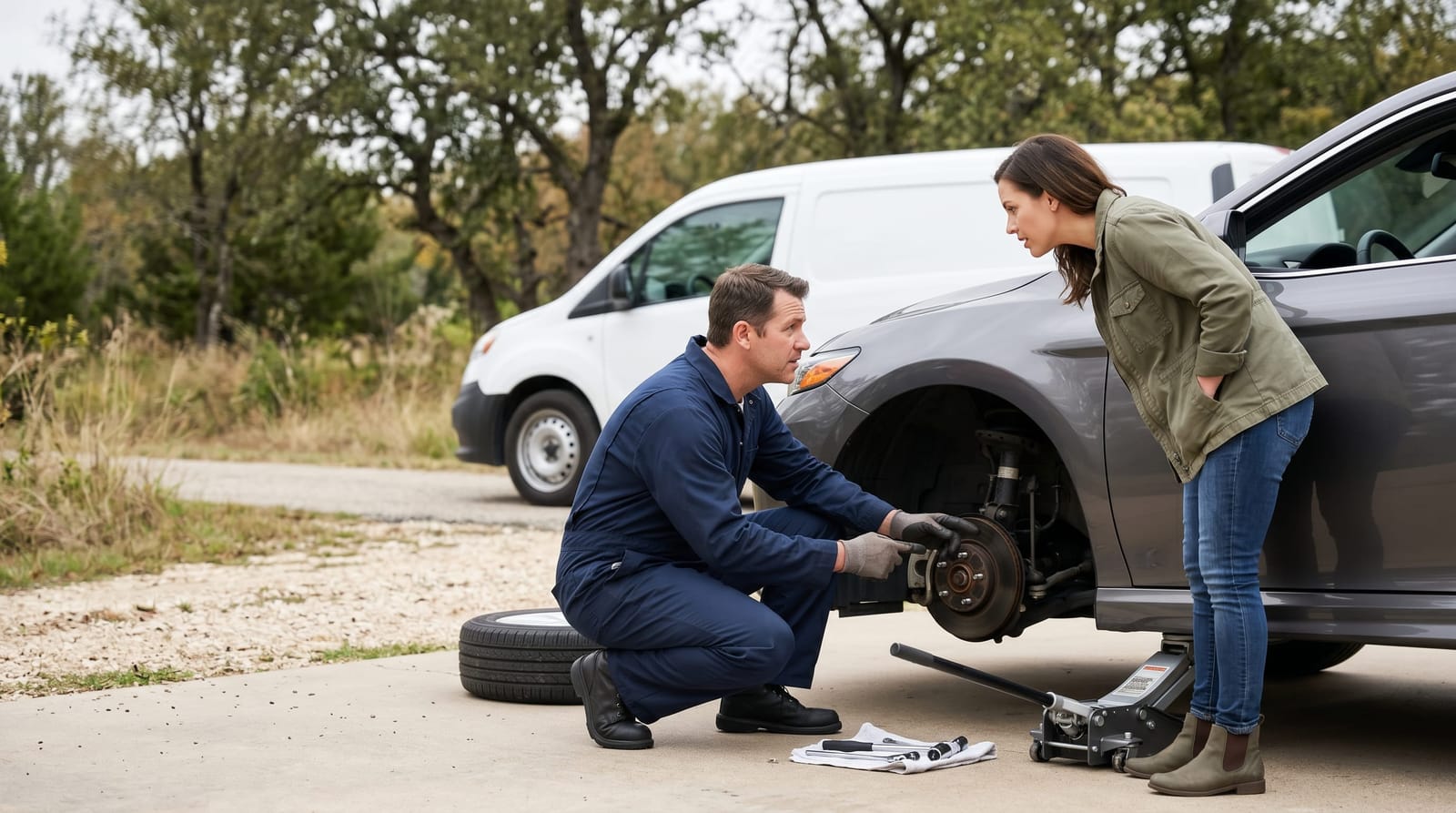
Ball joints connect your vehicle's wheel hubs to the suspension arms and allow for smooth movement as the suspension travels up and down and as you steer side to side. When they wear out, you'll often hear a clunking or knocking sound when turning or driving over uneven pavement. The sound tends to be less rhythmic than a CV joint noise: more of a random thud when weight shifts during a turn. Worn ball joints are worth taking seriously because they play a direct role in how your tires make contact with the road. A severely worn ball joint can affect your vehicle's steering feel and handling stability, which is why it's one of the components mechanics prioritize during a front-end inspection.
Sway Bar Links and Strut Mounts: Two More Clunking Culprits
Loose or Worn Sway Bar Links
The sway bar (also called an anti-roll bar) helps keep your vehicle from leaning excessively when cornering. Sway bar end links are the small connectors that attach the sway bar to the suspension at each wheel. When these links wear out or become loose, they produce a clunking or rattling noise, often most noticeable when turning or going over a bump. The good news is that sway bar end links are among the more affordable suspension repairs. Replacement parts are relatively inexpensive, and the labor involved is straightforward for an experienced shop. If the clunking you're hearing is paired with more noticeable body lean when you take corners, worn sway bar links are a logical place to start the diagnosis.
Strut Mount Wear
Strut mounts sit at the top of your front strut assemblies and serve two purposes: they support the weight of the front end and they allow the struts to rotate as you steer. Over time, the bearing inside the strut mount can wear out, leading to a clunking or grinding noise when you turn the steering wheel, especially when the vehicle is sitting still or moving slowly. You might also notice a slight resistance or grinding sensation through the steering wheel. Strut mount replacement is a moderate repair that often makes sense to address alongside strut replacement if both are worn, since the labor overlaps significantly.
Which of These Are Safety-Critical?
Not every clunking sound is an emergency, but some deserve quicker attention than others. Here's a straightforward way to think about urgency:
- Ball joints: High priority. Severely worn ball joints can affect steering control and tire wear patterns. If you notice the clunking is accompanied by pulling, wandering, or uneven tire wear, get it checked promptly.
- CV joints: Moderate to high priority. A clicking CV joint can worsen over time, and a completely failed CV joint can leave you without drive power to that wheel. The earlier it's caught, sometimes only the CV boot needs replacement rather than the full joint: a less costly repair.
- Strut mounts: Moderate priority. Worn strut mounts affect steering feel and comfort. They won't cause sudden failure, but ignoring them can accelerate wear on surrounding components.
- Sway bar links: Lower urgency, but worth fixing. They don't pose the same immediate risk as ball joints, but worn sway bar links reduce cornering stability and can create stress on other suspension parts.
If you're also noticing grinding sounds when you apply the brakes during a turn, that's a separate system worth looking into: the kind of noise described in posts covering grinding noise when braking Forney TX is a different symptom with its own causes.
What Does This Repair Typically Cost in the Kaufman County Area?
Repair costs vary depending on the make and model of your vehicle and which component needs attention. Here's a general range to give you a realistic starting point for the Kaufman County, TX area:
- CV axle shaft replacement: Typically $200-$400 per side, parts and labor included. If only the boot is torn and the joint itself is still in good shape, a boot replacement can run $80-$150.
- Ball joint replacement: Usually $150-$350 per joint depending on the vehicle. Some vehicles require alignment afterward, which adds to the total.
- Sway bar end links: Generally $80-$150 per side: one of the more affordable front-end repairs.
- Strut mount replacement: Typically $150-$300 per side. When done alongside strut replacement, the combined labor saves money overall.
These are general estimates. An accurate quote for your specific vehicle requires an in-person inspection, which any reputable shop in the area will provide before any work begins.
Frequently Asked Questions
Is it safe to keep driving with a clunking noise when turning?
It depends on the cause. A worn sway bar link is less urgent than a failing ball joint. If the clunking is new, getting louder, or accompanied by pulling, vibration, or unusual tire wear, it's a good idea to have it inspected before your next long drive. Driving short distances locally while you arrange a shop visit is usually fine, but prolonged driving on a worn ball joint or failing CV joint can lead to more extensive wear on surrounding components.
Why does my car only clunk when turning slowly?
Slow, tight turns put the most stress on CV joints because the joint is at its maximum angle. If the clunking is most noticeable when you're maneuvering at low speed, backing out of a driveway or turning in a parking lot, a worn CV joint is one of the more likely explanations. A mechanic can confirm this with a quick inspection.
Can a clunking noise when turning cause my car to fail a Texas inspection?
Texas vehicle inspections include a check of steering and suspension components. Severely worn ball joints or other safety-related components may result in a failed inspection. Addressing suspension wear before your inspection date is always a practical approach.
How do I know if it's a suspension issue or a steering issue?
Both systems are interconnected, which is why a physical inspection is the most reliable way to pinpoint the source. Generally, noises that change with steering wheel movement point toward steering components or strut mounts, while noises that follow wheel rotation or road bumps are more likely suspension-related. A technician can narrow it down quickly by listening and checking for play in the joints.
The Bottom Line for Kaufman County Drivers
A clunking noise when turning is your suspension or drivetrain asking for attention. Whether it turns out to be a CV joint, ball joint, sway bar link, or strut mount, the diagnosis process is straightforward for an experienced technician. Catching these issues early often means a simpler, less costly repair, and it keeps your vehicle handling the way it should on Kaufman County roads. If you're noticing this kind of noise, bringing your car in for an inspection is the most sensible next step, and it connects directly to the broader principle of listening to what your vehicle is telling you before a small issue becomes a larger one.