Why Do My Brakes Squeal When I Stop?
That high-pitched squeal every time you press the brake pedal is hard to ignore, and you shouldn't. Brake squealing is one of the most common concerns vehicle owners bring to us here in Forney, and the good news is that it's usually something with a straightforward explanation. Sometimes it's a simple fix. Other times, it's your vehicle's way of telling you that the brakes need attention before they become a more serious issue. This guide covers the most common causes of brake squealing noise, when to be concerned, and what repair solutions look like.
The Most Common Reasons Your Brakes Are Squealing
Brake squealing noise can come from several different sources, and pinpointing the cause makes a big difference in how it's addressed. Here are the most frequent culprits:
Worn Brake Pads
This is the number one cause of brake squealing. Most brake pads are designed with a small metal wear indicator tab built directly into the pad. When the pad material wears down to a certain thickness, typically around 2-3 millimeters, that metal tab makes contact with the rotor and produces that familiar high-pitched squeal. Think of it as a built-in warning system. It's doing exactly what it's designed to do: getting your attention before the pads wear completely through.
If you're hearing this sound consistently every time you stop, there's a good chance it's time for new brake pads. Most brake pads are designed to last between 30,000 and 70,000 miles depending on driving habits, vehicle type, and road conditions, so the lifespan varies quite a bit from driver to driver.
Morning Squealing from Surface Rust
If your brakes only squeal for the first few stops of the day, especially on damp or humid mornings, that's almost always just light surface rust forming on the rotors overnight. This is completely normal. As the brake pads press against the rotors during those first few stops, the rust gets scraped away, and the noise disappears within a minute or two. No repair is needed. In fact, this is one of the most common sources of brake squealing noise that vehicle owners worry about unnecessarily.
Debris Caught Between the Pad and Rotor
Small pieces of debris, a tiny pebble, a bit of gravel, even a small twig, can occasionally get lodged between the brake pad and the rotor. When that happens, it creates a grinding or squealing sound that may come and go unpredictably. In many cases, the debris works itself free on its own. But if the noise persists for more than a day or two, it's worth having it inspected so nothing is scoring the surface of your rotors.
Low-Quality or Glazed Brake Pads
Not all brake pads are created equal. Some lower-cost pads contain harder metal compounds that are more prone to squealing against rotors. Additionally, if brakes are overheated, from riding the brakes down a long hill, for example, the pad surface can become "glazed," creating a hardened, slick surface that squeals during stops. This kind of brake squealing noise repair typically involves replacing the glazed pads and sometimes resurfacing or replacing the rotors.
When Brake Squealing Signals a More Serious Problem
Most brake squealing is an early warning, not an emergency. But there are situations where the noise indicates something that needs prompt attention.
If squealing has progressed to a grinding, metal-on-metal sound, that's a sign the brake pads may be completely worn through. At that point, the metal backing plate is contacting the rotor directly, which can damage the rotor quickly and significantly increase your stopping distance. According to brake safety data, stopping distance can increase by 20-30% or more when brake pads are severely worn, which is a meaningful difference in an emergency stop situation.
You should also pay attention to whether the squealing is accompanied by:
- Vibration or pulsing through the brake pedal
- The vehicle pulling to one side when braking
- A soft or spongy feeling in the brake pedal
- Longer stopping distances than usual
Any of these symptoms alongside squealing suggests it's time for a professional inspection rather than a wait-and-see approach. Brakes are one of the few vehicle systems where catching a problem early can genuinely save you money: a simple brake pad replacement is considerably less expensive than replacing damaged rotors.
If you're unsure whether what you're hearing is early-stage wear or something more urgent, it helps to review the brake pad warning signs that indicate replacement is needed: there are several reliable indicators beyond sound alone.
What Brake Squealing Noise Repair Actually Involves
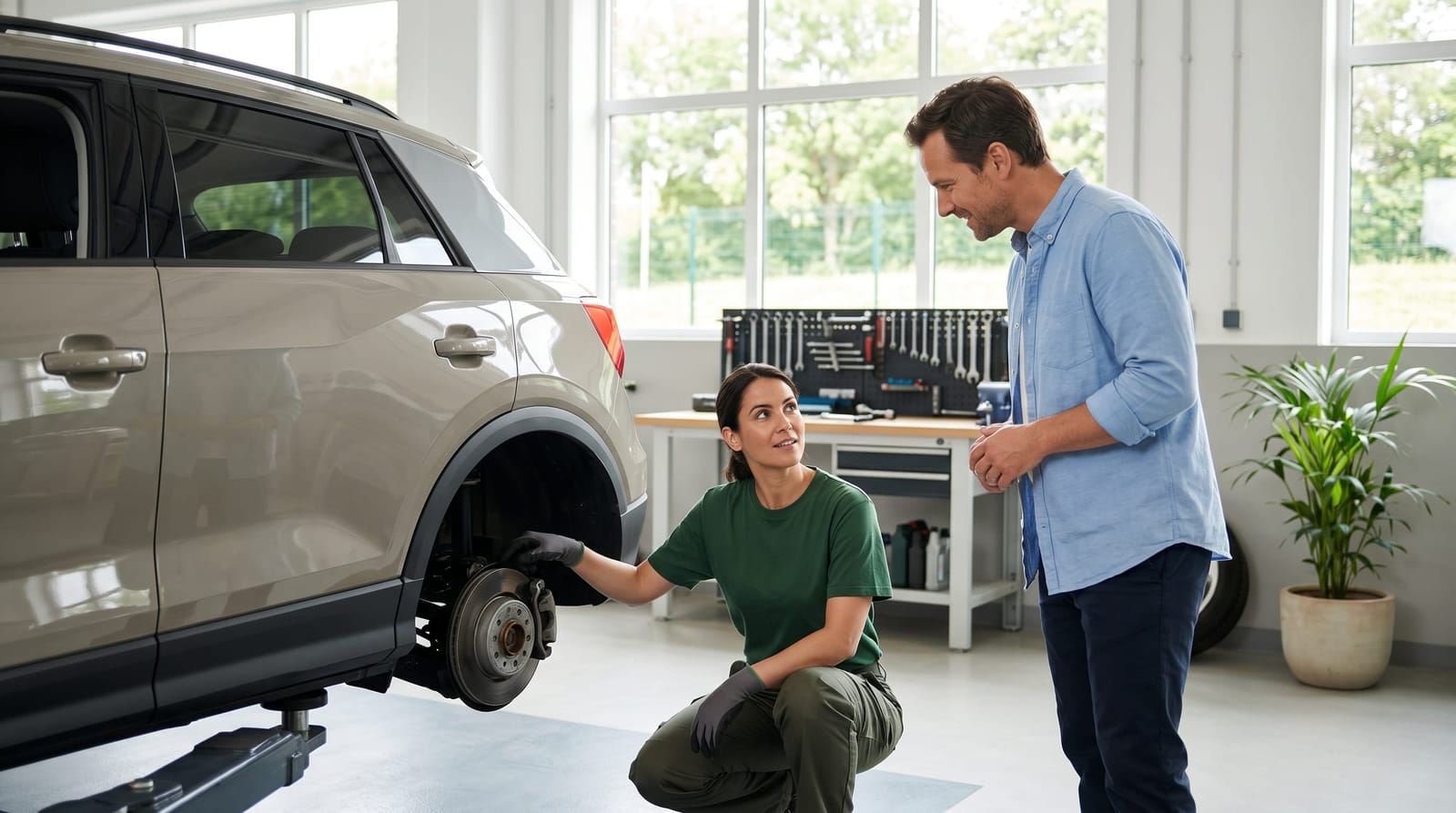
When you bring a squealing brake concern to a shop, here's what a thorough inspection and repair typically includes:
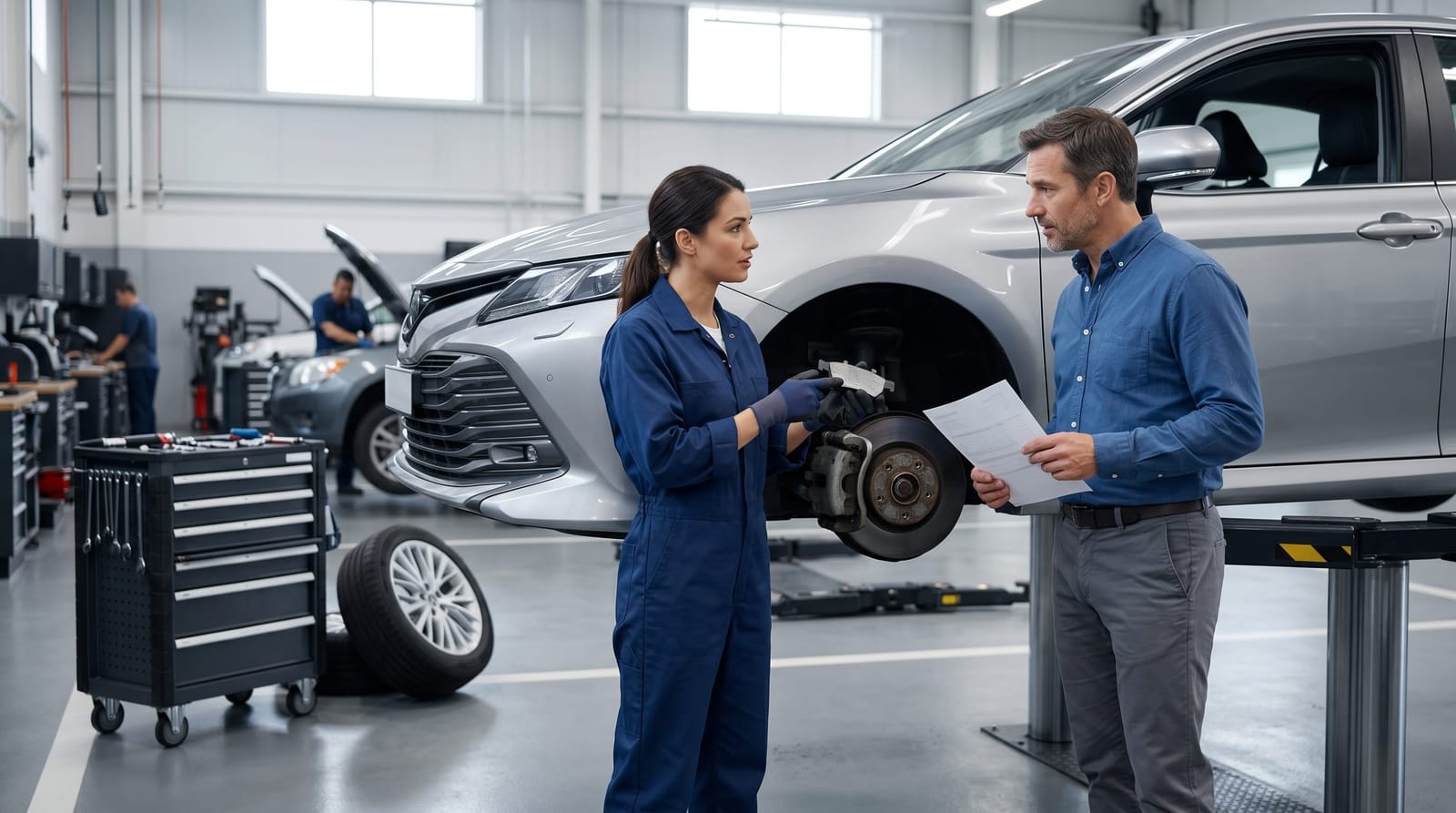
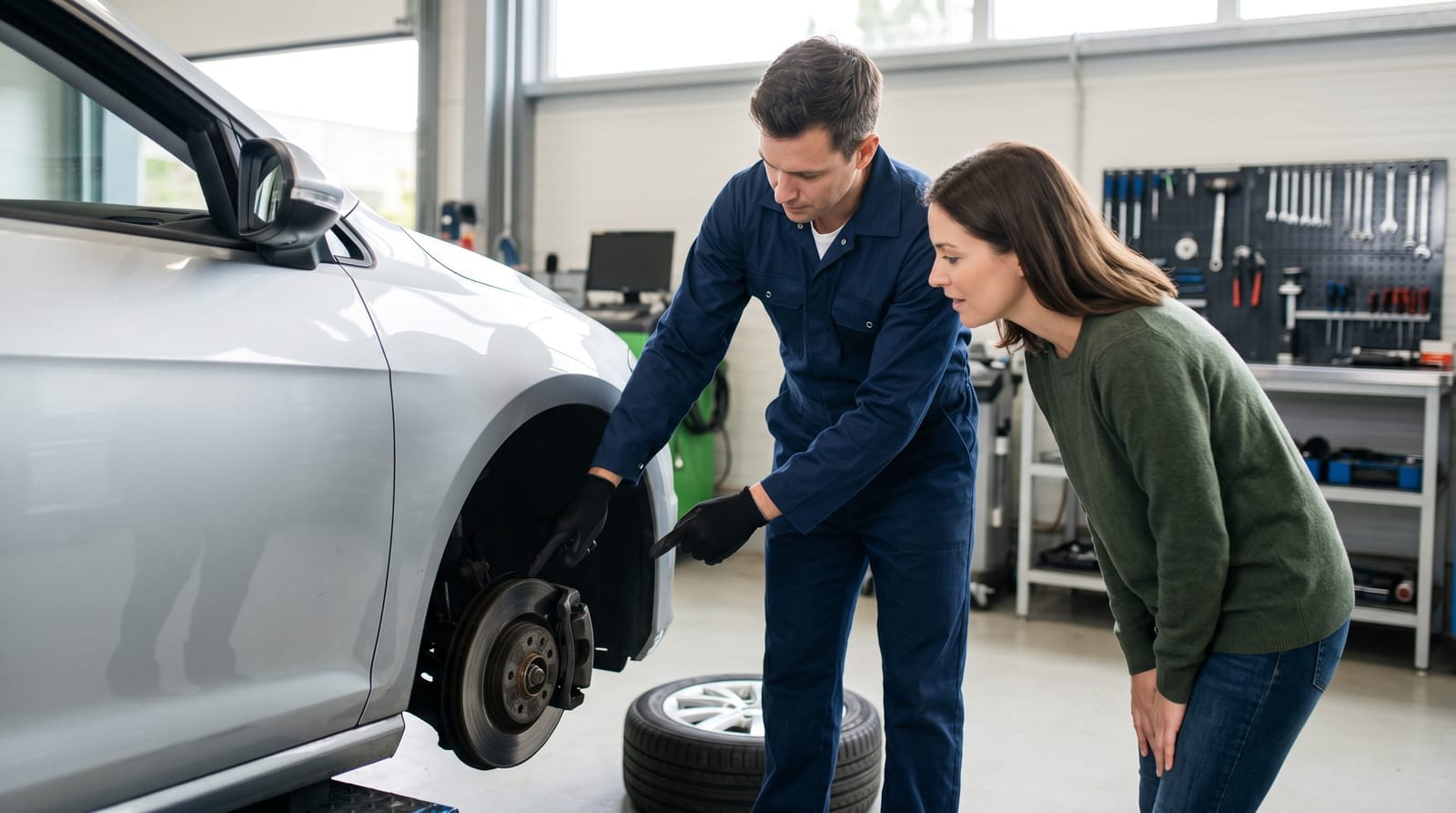
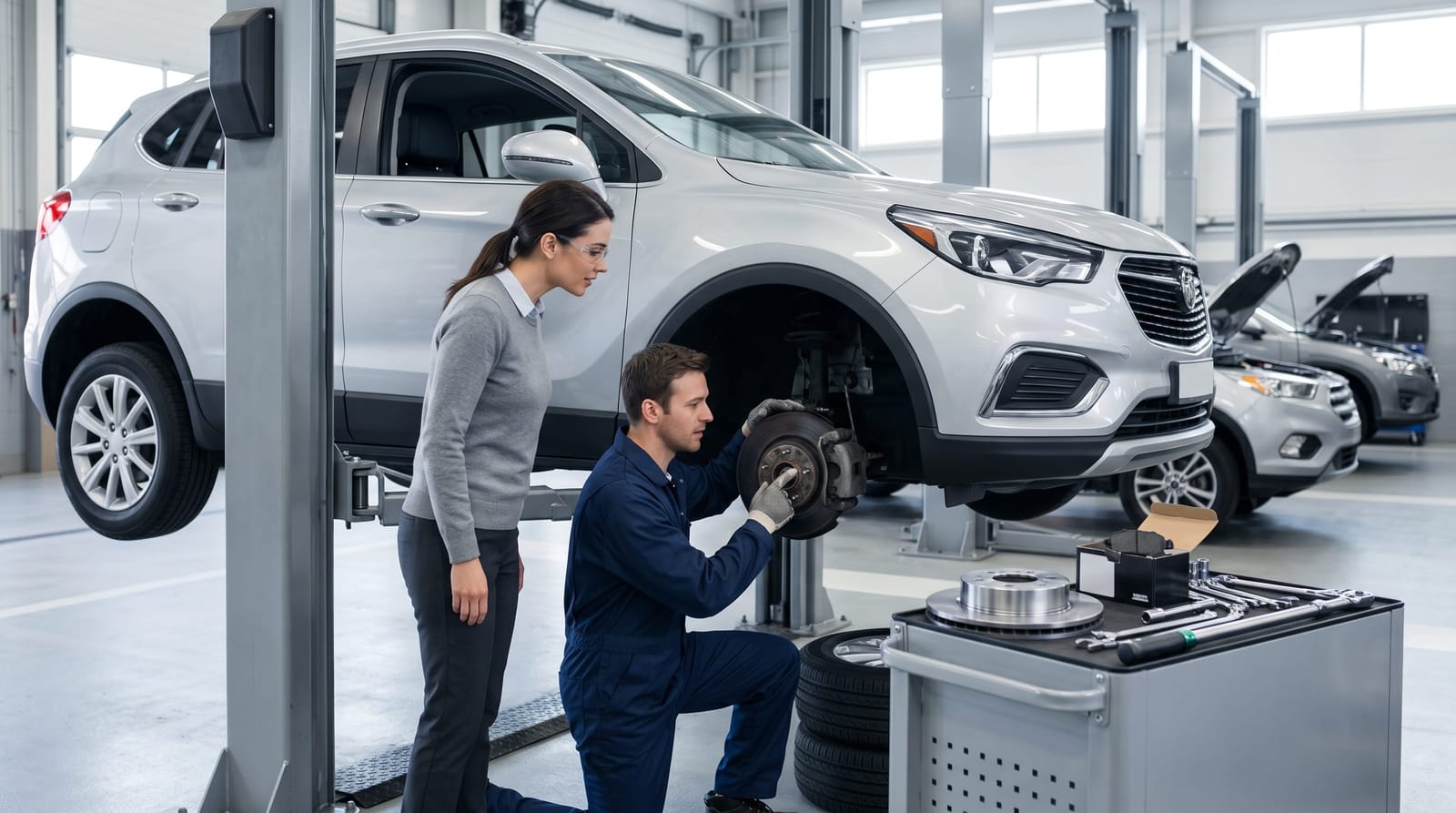
- Visual and physical inspection: A technician removes the wheels to inspect the brake pads, rotors, calipers, and hardware. Pad thickness is measured: most shops recommend replacement when pads reach 3mm or less.
- Rotor evaluation: Rotors are checked for wear, scoring, thickness variation, and whether they can be resurfaced or need replacement. A rotor that's too thin to resurface safely will need to be replaced.
- Hardware check: Brake hardware, the small clips and shims that hold the pads in place, can wear out or lose tension over time. Worn hardware is a frequently overlooked cause of brake noise. Replacing these components is a standard part of quality brake service.
- Lubrication: Specific contact points on the brake assembly require proper lubrication to prevent noise. This is applied carefully to the right areas during installation, not to the pad surface itself.
- Test drive: After the repair, a test drive confirms the noise is resolved and the brakes feel and perform correctly.
Wondering what this kind of service costs? You can find a practical breakdown of what affects pricing in our guide to brake pad replacement cost Forney drivers can expect at a local shop.
Can You Drive with Squealing Brakes?
In most cases, if your brakes have just started squealing and the pedal feels normal and firm, you can drive carefully for a short period while scheduling an inspection. However, "a short period" means days, not weeks. The wear indicator tab that's causing the squeal won't wait indefinitely: once the pad wears past it, the next sound you'll hear is metal grinding on metal.
As a general rule: squealing brakes that are consistent and happen on every stop should be inspected within one to two weeks. Grinding, pulling, or a soft pedal should be addressed much sooner: within a day or two. Approximately 22% of vehicles on the road at any given time have brake issues that need attention, according to vehicle safety inspection data. Many of those drivers simply got used to a noise that started small.
Frequently Asked Questions
Is it normal for new brakes to squeal?
Yes, some mild squealing in the first 100-200 miles after new brake pads are installed is normal. New pads need a break-in period where the pad material seats properly against the rotor surface. This is sometimes called "bedding in" the brakes, and the noise typically fades on its own as the pads settle.
Why do my brakes squeal only when it's cold or wet outside?
Cold temperatures cause brake pad materials to become temporarily stiffer, and moisture on rotors creates light surface rust overnight. Both conditions commonly cause brief squealing during the first few stops of the day. If the noise goes away after a minute or two of driving, it's generally not a concern. If it persists throughout your drive, have it checked.
How long do brake pads typically last before they start squealing?
Most brake pads last between 30,000 and 70,000 miles, with city driving typically causing faster wear than highway driving. The wear indicator tab usually triggers the squealing sound when about 2-3mm of pad material remains, so you generally have a reasonable window to schedule service after the noise begins.
Will the squealing go away on its own?
It depends on the cause. Morning squealing from surface rust almost always disappears within the first few stops. Squealing caused by debris may resolve once the debris works free. But squealing caused by worn brake pads will not go away on its own: it will get worse over time and eventually progress to grinding if not addressed.
The Bottom Line
Brake squealing noise is your vehicle communicating with you, and most of the time it's sending an early, manageable message rather than an urgent crisis. Whether it's worn pads triggering a built-in wear indicator, a bit of surface rust on a damp morning, or debris briefly caught in the wrong place: there's almost always a clear explanation and a straightforward repair solution. The key is not ignoring persistent squealing. If the noise has been happening consistently for more than a week or two, getting it inspected is the right call. Keeping your brakes in good working order is one of the most important parts of overall vehicle maintenance, and it's something the team at Gregg Automotive is happy to help with.