Why Does My Car Shake at Highway Speed on I-20 Near Forney TX?

If you've ever merged onto I-20 near Forney and felt your steering wheel start buzzing or your seat vibrating as your speed climbs past 60 mph, you're not alone. Highway speed vibration is one of the most common complaints drivers bring to repair shops, and one of the most misunderstood. The good news is that most causes are fixable, and identifying the right one early can save you money and keep your drive safer. This post breaks down exactly what causes that shaking, how mechanics diagnose it, and what the repair typically involves. If you're dealing with a car shakes at highway speed Forney TX situation, here's what you need to know.
Why Speed Matters for Diagnosis
The fact that your car shakes specifically at highway speed, and not in a parking lot or on city streets, is actually useful information. It tells a mechanic a great deal before they even lift the vehicle. Vibration that only appears above 55-70 mph points to a different set of causes than vibration that's present at all speeds.
Here's why: at low speeds, small imbalances or irregularities in your tires and wheels don't generate enough rotational force to feel noticeable. But as speed increases, those tiny imperfections get amplified. Think of a ceiling fan with one blade slightly heavier than the others, at low speed it's fine, but crank it up and the whole unit wobbles.
Mechanics use the speed at which the vibration peaks as a diagnostic clue. Vibration that appears around 60 mph and smooths out above 70 mph points strongly toward a tire balance problem. Vibration that gets progressively worse as speed increases tends to suggest a tire with a damaged internal belt or a bent wheel. Vibration that comes through the floorboard rather than the steering wheel often points toward rear components rather than the front axle.
This is why describing your symptoms clearly, where you feel it, at what speed, and whether it gets better or worse as you accelerate, helps your mechanic skip unnecessary steps and get to the real cause faster.
The Most Common Culprits Behind Highway Vibration
Research consistently points to tire and wheel issues as the number one cause of car shaking at highway speeds. Studies from automotive service data suggest that roughly 70% of highway vibration complaints trace back to something tire or wheel-related. Here's a breakdown of the most frequent causes:
Unbalanced Tires
This is the single most common cause. Even a weight imbalance as small as a quarter-ounce can create noticeable vibration at highway speeds. Tires lose their balance over time as the small balancing weights on your wheels shift, corrode, or fall off. A standard wheel balance service costs relatively little and often resolves the problem completely. Most mechanics recommend balancing your tires every 5,000-7,500 miles or any time you rotate them.
Damaged or Worn Tires
If a tire has a broken internal belt, a steel or fabric layer inside the tire, it creates a flat spot or bulge that causes a repeating thump or vibration. This is sometimes called a "separated" tire. Unlike a balance issue, a tire with a broken belt cannot be fixed with balancing; the tire needs to be replaced. Tires with significant uneven wear patterns (like cupping or scalloping) can also cause shimmy at speed. The National Highway Traffic Safety Administration estimates that tire-related issues contribute to thousands of vehicle incidents annually, which is one reason prompt attention matters.
Bent or Damaged Wheels
Pothole-heavy roads, and anyone who regularly drives Texas highways knows the condition they can be in, bend wheels more often than people realize. Even a wheel that looks fine to the naked eye can have a slight warp that causes vibration above 55 mph. A technician can measure wheel runout on a balancing machine to spot this quickly.
Worn Suspension Components
Components like tie rod ends, ball joints, and wheel bearings all play a role in keeping your tire pointed straight and moving smoothly. When any of these wear out, they can allow small amounts of play that become noticeable as highway-speed vibration. A wheel bearing going bad, for example, often produces a vibration that changes as you gently swerve left or right at speed: a quick test a mechanic may perform during a road evaluation.
Brake Rotor Issues
If your vibration is strongest when you're applying the brakes at highway speed rather than simply cruising, warped brake rotors are a likely cause. Rotors can develop uneven thickness over time, especially if brakes are applied hard while hot. This type of vibration is very specific to braking and is usually straightforward to diagnose.
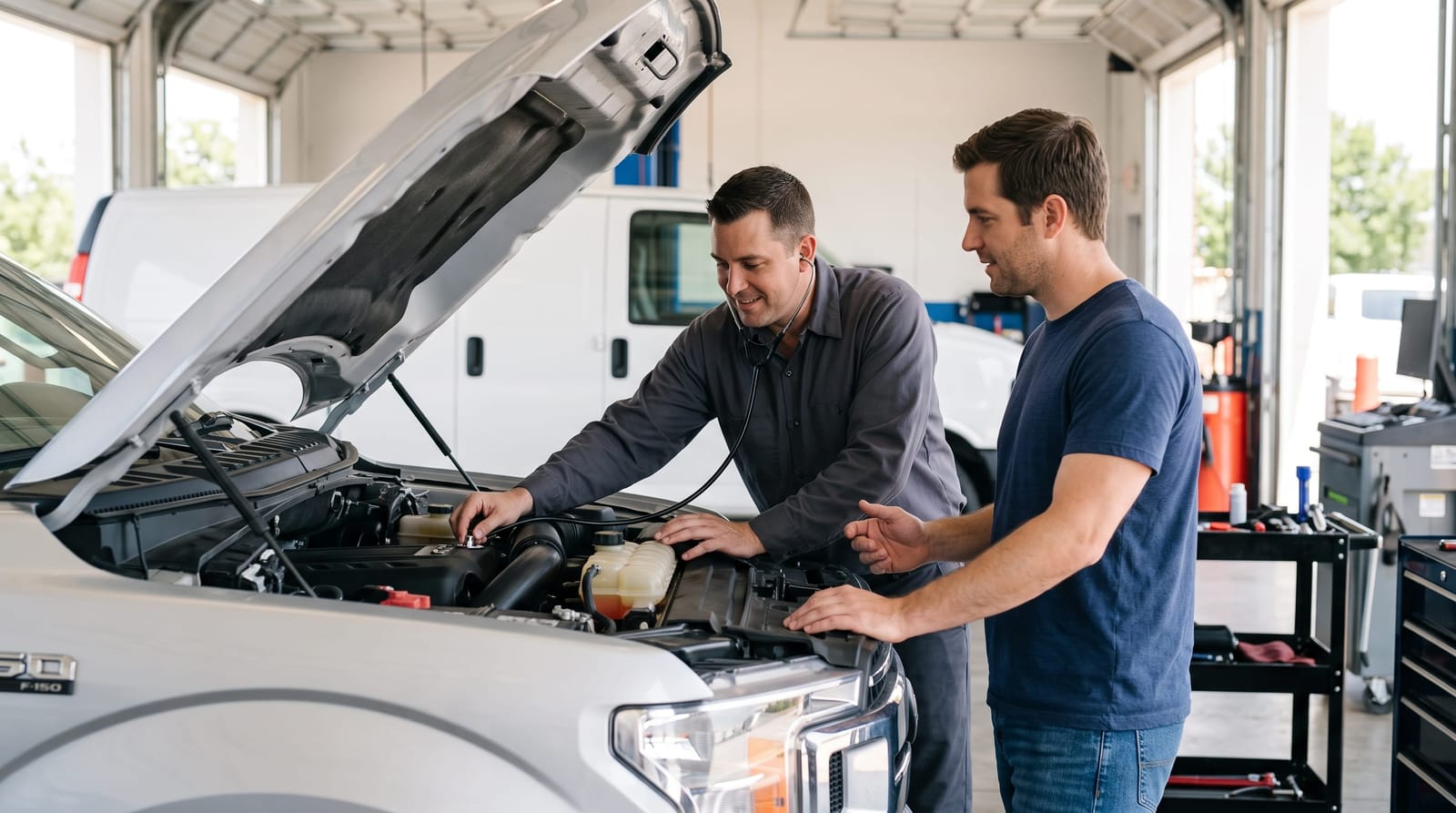
How a Shop Diagnoses the Problem
When you bring your vehicle in for a highway vibration complaint, here's a general idea of what a diagnostic process looks like:
- Gather your symptom details. A technician will ask when it happens, where you feel it (steering wheel, seat, floorboard), and at what speed it peaks.
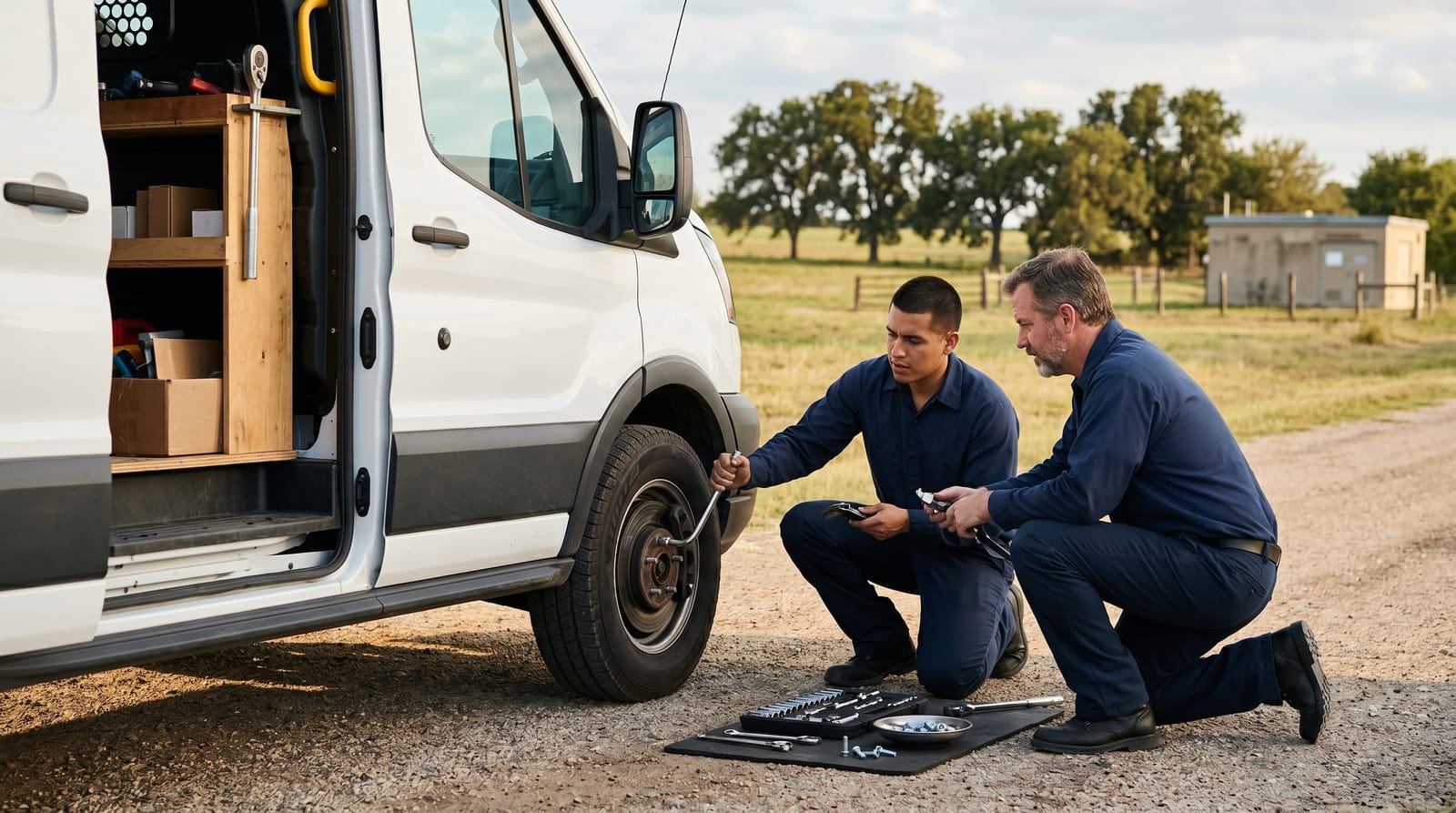
- Visual inspection. The technician will look at tire condition, check for obvious bulges, uneven wear, or visible damage to wheels.
- Road test. Many shops will drive the vehicle on a highway-speed road to feel the vibration firsthand. This also helps isolate whether it's front or rear, speed-dependent, or brake-related.
- Wheel balance check. The wheels are spun on a balancing machine to measure weight distribution. Even a slight imbalance shows up clearly.
- Suspension inspection. Tie rod ends, ball joints, and wheel bearings are checked for play or wear.
- Rotor measurement. If braking is involved, rotor thickness variation is measured with a micrometer.
In most cases, the cause is identified within this process without requiring extensive disassembly or expensive diagnostic equipment.
What the Fix Typically Looks Like
The repair depends entirely on what's causing the vibration:
- Tire balance: A quick, inexpensive service that takes 30-45 minutes in most shops.
- Tire replacement: Required if belts are broken, wear is severe, or the tire has a bubble. Depending on your vehicle, tires are typically replaced in pairs to maintain even handling.
- Wheel straightening or replacement: Minor bends can sometimes be corrected; more severe damage requires a replacement wheel.
- Suspension parts: Tie rod ends, ball joints, or wheel bearings are replaced as needed. These repairs restore both comfort and steering precision.
- Brake rotors: Rotors can sometimes be machined (resurfaced) if thickness allows, or replaced if they've worn too thin.
Getting the right diagnosis first matters because misidentifying the cause leads to unnecessary parts and costs. That's why a proper road test and inspection is worth doing before authorizing any work.
Frequently Asked Questions
Is it safe to keep driving on I-20 if my car is shaking at highway speed?
It depends on the cause. A minor tire balance issue may be drivable for a short period, but a tire with a broken belt, a failing wheel bearing, or worn suspension components can become a safety concern at highway speeds. If the vibration is sudden, severe, or getting worse, it's worth having it checked before taking long highway drives.
Can a bad alignment cause my car to shake at highway speed?
Alignment itself typically causes pulling to one side or uneven tire wear rather than vibration. However, poor alignment accelerates tire wear, which can eventually lead to the kind of tire irregularities that do cause vibration. If your tires have worn unevenly, alignment should be checked and corrected when new tires are installed.
How often should I have my tires balanced?
Most manufacturers and tire companies recommend balancing every 5,000-7,500 miles. Many shops include a balance check with every tire rotation. If you hit a significant pothole or curb, it's reasonable to have balance, and wheel condition, checked sooner.
My car only shakes between 65-70 mph but feels fine above 75 mph. Is that normal?
This is a classic sign of a tire balance issue. Balance problems often cause vibration within a specific speed range because the imbalance resonates at a particular frequency. Above that speed, the vibration can lessen or feel different. A wheel balance service will typically resolve this pattern.
The Bottom Line
Highway vibration is a symptom that's hard to ignore, especially on a stretch of road like I-20 near Forney where you're regularly hitting 65-75 mph. The good news is that most causes of car shakes at highway speed in Forney TX are well-understood and fixable. Tire balance, tire condition, wheel damage, and worn suspension parts account for the vast majority of cases. The key is getting the right diagnosis before spending money on parts that don't address the actual problem. For a broader look at how different vehicle symptoms connect to specific systems, the complete warning signs diagnosis guide for Kaufman County drivers is a helpful starting point.