Complete Guide to Suspension Symptoms, Diagnosis, and Repair for Kaufman County Drivers
Your vehicle's suspension system works hard every single day: absorbing bumps, keeping your tires in contact with the road, and helping you steer with confidence. Most drivers don't think about it until something feels wrong. Maybe your car started pulling to the right on the highway. Maybe there's a new clunking sound every time you hit a pothole on FM 548. Maybe your steering wheel is harder to turn than it used to be, and you're not sure if that's normal or a warning sign.
If any of those situations sound familiar, you're not alone. According to the Car Care Council, approximately 1 in 3 vehicles on the road in the United States has a suspension system that needs attention, yet many drivers delay getting it checked simply because they don't know what the symptoms mean or how urgent they are.
This guide was written for Kaufman County drivers, people in Forney, Terrell, Kaufman, Crandall, Mesquite, and surrounding areas, who want straight answers about suspension symptoms, diagnosis, and repair without the confusing jargon or the pressure of a hard sell. By the time you finish reading, you'll know exactly what your vehicle is trying to tell you, which components are likely involved, when to act, and why working with a trusted local shop like Gregg Automotive makes more sense than most alternatives.
Let's walk through it step by step.
Step 1: Understand What Your Suspension System Actually Does
Before you can recognize a problem, it helps to understand what the suspension is designed to do in the first place. Think of your suspension system as the buffer between your vehicle's frame and the road surface. Without it, every crack, dip, and bump in the pavement would transfer directly into your steering wheel, your seat, and your passengers.
The suspension system serves three core functions:
- Ride comfort: Absorbing road irregularities so occupants aren't jolted around
- Vehicle control: Keeping all four tires properly planted on the road surface during turns, braking, and acceleration
- Structural alignment: Maintaining the correct geometry so your wheels point in the right direction and your tires wear evenly
When any part of this system wears out or becomes damaged, it affects all three functions at once, which is why suspension problems tend to show up as multiple symptoms at the same time.
Key Components You Should Know
Shocks and struts are the most commonly discussed suspension parts. Both control how much your vehicle bounces, but they're built differently and not every vehicle uses both. Struts are a structural component built into the suspension itself, while shocks are separate dampening units. Understanding the difference matters when it comes to repair costs and what's actually wrong with your vehicle.
Control arms and ball joints connect the wheel hub to the vehicle frame and allow the wheels to move up and down with the road surface. Ball joints are pivot points: small but critical. According to the National Highway Traffic Safety Administration (NHTSA), worn ball joints are a contributing factor in thousands of vehicle crashes each year because a failed ball joint can cause sudden, complete loss of vehicle control.
Tie rods and sway bar links are part of the steering and stabilization systems that work alongside your suspension. When these wear out, you'll often notice steering instability, unusual tire wear, or a clunking sensation in turns.
Springs, either coil springs or leaf springs depending on your vehicle, support the weight of the vehicle. A broken or sagging spring will cause uneven ride height and can accelerate wear on nearly every other suspension component.
Step 2: Recognize the Most Common Suspension Warning Signs
This is where most drivers need the most help. Suspension symptoms can be subtle at first, and it's easy to dismiss them as "the road" or "just how the car drives." Here are the warning signs worth paying attention to, and what they typically mean.
Your Vehicle Pulls to One Side
If your car or truck drifts to the left or right when you're driving straight on a flat road, and you have to constantly correct it, that's a pull. A mild pull might point to something as simple as uneven tire pressure or tires that need rotation. But a more consistent or aggressive pull often indicates wheel alignment problems, a worn tie rod, or uneven strut wear. Left unaddressed, a pulling vehicle puts additional strain on your tires and steering components and can make emergency maneuvers much harder to execute safely.
Excessive Bouncing or a Rough Ride
If your vehicle bounces more than once or twice after hitting a bump, or if your daily commute on roads around Kaufman County suddenly feels like riding in a wagon, your shocks or struts are likely worn. A simple test: push down firmly on the front or rear of your vehicle and release. If it bounces more than once before settling, your shocks or struts may no longer be dampening properly. The American Automobile Association (AAA) estimates that worn shocks and struts can increase stopping distance by up to 10 feet at highway speeds: a significant safety consideration.
Clunking or Knocking Noises Over Bumps
A clunk, knock, or rattle that happens specifically when you hit a bump, pothole, or railroad crossing is one of the clearest suspension signals. This sound usually points to worn or loose components: commonly ball joints, sway bar end links, strut mounts, or control arm bushings. The noise happens because parts that should be snug and controlled are now moving in ways they shouldn't. In Forney and surrounding Kaufman County areas, where some roads haven't been resurfaced in years, these noises can appear gradually and get worse over time.
Hard or Stiff Steering
If turning your steering wheel, especially at lower speeds or when parking, requires noticeably more effort than it used to, that's worth investigating. While power steering fluid issues and pump problems can cause stiffness, so can worn suspension components that affect steering geometry. A hard steering wheel problem is one of the more uncomfortable symptoms to drive with daily and one that tends to get worse rather than better on its own.
Uneven Tire Wear
Your tires are one of the best visual indicators of suspension health. Normal wear happens fairly evenly across the tread surface. If you're seeing wear that's heavier on one edge, cupping (scalloped dips around the tire tread), or dramatic differences between front and rear tires, your suspension geometry or dampening is likely off. Cupping in particular is strongly associated with worn shock absorbers that allow the tire to bounce and skip across the road surface rather than rolling smoothly.
Vehicle Sitting Unevenly
Park on flat ground and step back to look at your vehicle from a distance. All four corners should sit at approximately the same height. If one corner is noticeably lower than the others, a spring may be broken, collapsed, or sagging. This affects not just ride quality but also headlight aim, braking performance, and how weight distributes during turns.
Drifting or Swaying in Turns
A vehicle that leans or sways more than expected when navigating a curve or highway on-ramp may have worn sway bar components or deteriorated struts. These parts work together to resist body roll and keep the vehicle stable during directional changes. When they wear out, the vehicle's weight shifts more dramatically, which reduces grip and makes the vehicle feel less planted and predictable.
Step 3: Know When Symptoms Become Safety Issues
Not every suspension symptom demands same-day repair, but some combinations or severities cross a line from inconvenient into genuinely unsafe territory. Here's how to think about urgency.
Act quickly if you notice:
- A sudden, dramatic change in how the vehicle handles, especially after hitting something
- Pulling that requires constant steering correction to hold a straight line
- A clunking sound that's gotten louder or more frequent over a short period
- Steering that feels loose, vague, or disconnected
- Visible damage to suspension components after a curb strike, pothole impact, or off-road incident
These symptoms suggest the suspension may be compromised enough that a sudden component failure, a ball joint separating, for instance, could occur while driving. That's not something to schedule for "whenever it's convenient."
Monitor and schedule soon for:
- A ride that's gradually gotten rougher over several months
- Mild pulling that only appears on certain road surfaces
- A single clunk that happens infrequently
- Slightly uneven tire wear you noticed at your last rotation
These symptoms usually indicate wear that's progressing rather than an imminent failure, but they still deserve a professional inspection within a reasonable timeframe, because worn suspension components stress other parts of the system and can accelerate additional wear.
Step 4: Learn How Suspension Diagnosis Actually Works
Many drivers in the Forney and Kaufman County area have had the experience of describing a symptom and being handed a long repair estimate without a clear explanation of how the shop arrived at that conclusion. Understanding the diagnostic process helps you ask better questions and feel more confident in the answers you receive.
A thorough suspension diagnosis at a qualified shop should include at minimum:
Visual Inspection
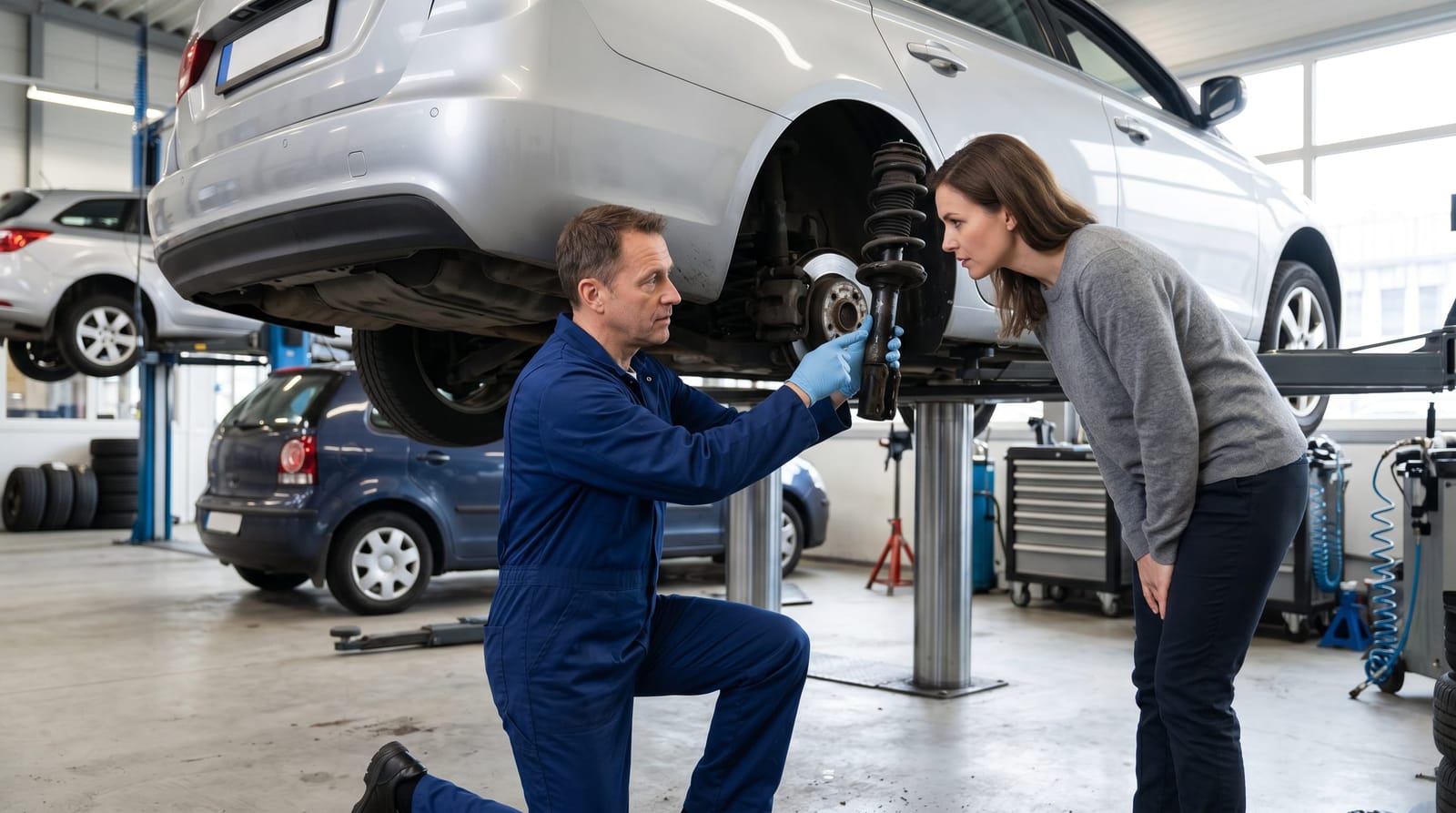
A technician lifts the vehicle and visually examines each suspension component: looking for visible damage, corrosion, cracked or torn rubber bushings, fluid leaks from shocks or struts, and any obvious structural issues. This is the starting point, not the entire diagnostic.
Physical Component Testing
With the vehicle raised, a technician will physically check components for movement or looseness they shouldn't have. Ball joints are checked by rocking the wheel at the top and bottom. Tie rod ends are checked by pushing and pulling the wheel side to side. Sway bar links and control arm bushings are checked for play or noise under manual stress. This hands-on process identifies components that may look acceptable but are already compromised.
Road Test
A proper diagnosis almost always includes a road test: driving the vehicle over different road surfaces and through turns to reproduce the symptoms firsthand. This helps confirm what the visual and physical inspection found and can reveal symptoms that only appear under real driving load.
Alignment Check
Because many suspension components directly affect wheel alignment, and because misalignment accelerates wear on everything else, a good diagnostic process typically includes checking alignment angles. Modern alignment equipment measures camber, caster, and toe angles precisely and compares them against the manufacturer's specifications for your specific vehicle.
At Gregg Automotive, the diagnostic process follows this same methodical approach, because guessing at suspension problems wastes your time and money. The goal is to find what's actually wrong, explain it clearly, and give you an honest picture of what needs to happen and why.
Step 5: Understand Your Repair Options and What to Expect
Suspension repair costs vary widely depending on what's actually wrong, what type of vehicle you drive, and where you take it. Here's a realistic look at common repairs:
Shock and Strut Replacement
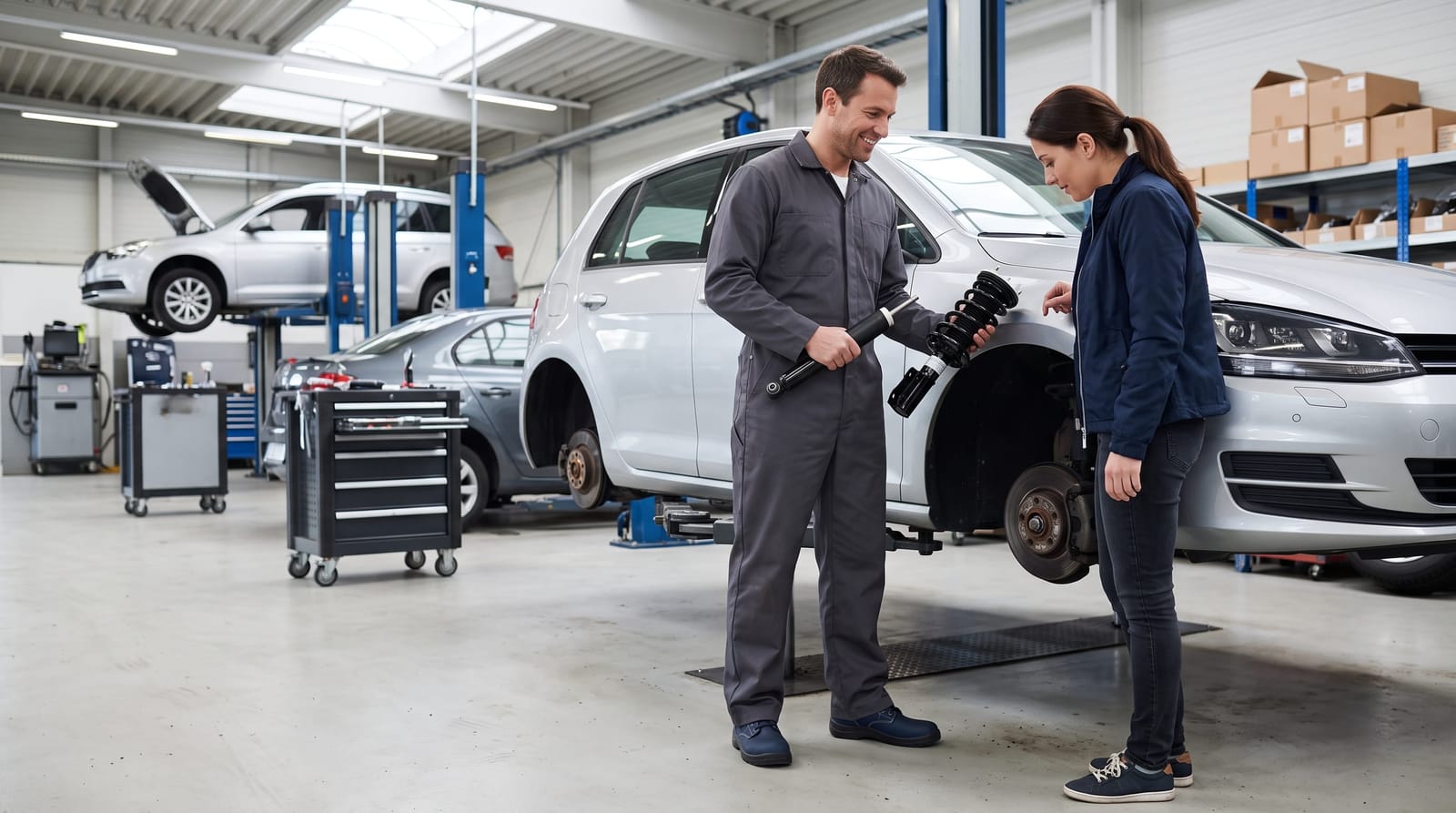
This is one of the most common suspension repairs. Shocks and struts don't last forever: most manufacturers recommend inspection around 50,000 miles, though actual wear depends heavily on road conditions and driving habits. On Kaufman County's mix of highways, farm roads, and construction zones, wear can happen faster than the textbook timeline suggests. Replacing shocks or struts almost always improves ride quality immediately and noticeably.
For drivers who want to understand the technical distinction between these two components before their appointment, the comparison between struts vs shocks difference is worth reviewing: knowing which your vehicle has helps you understand the repair scope.
Ball Joint and Control Arm Service
Ball joints and control arm bushings are wear items that don't get replaced on a fixed schedule: they're replaced when inspection shows they've worn beyond acceptable limits. Costs vary based on vehicle make, but the important thing to understand is that these are load-bearing components. Replacing them restores predictable handling and removes the risk of component failure under driving stress.
Tie Rod Replacement
Tie rods connect the steering rack to the wheel hub and directly affect how steering input translates to wheel movement. Worn tie rods show up as loose steering, pulling, and uneven tire wear. They're almost always followed by a wheel alignment because the alignment angles shift when tie rods are changed.
Wheel Alignment
An alignment by itself isn't a suspension repair: it's a calibration. But it's a necessary follow-up after many suspension repairs, and it's also a useful diagnostic tool. Most vehicle manufacturers recommend an alignment check once a year or any time you replace steering or suspension components. In Kaufman County, where roads can be rough and curb strikes happen, an annual alignment check is a reasonable habit.
Step 6: Compare Your Service Options: Local Shop vs. Dealership
One of the most common questions Kaufman County drivers have is whether to take their vehicle to the dealership or a local independent shop. The honest answer depends on your priorities, but there are a few factors worth understanding.
Dealerships charge what's called "book rate" labor: a set number of labor hours per repair that doesn't change regardless of how long the actual job takes. For common suspension repairs, this often means paying for more labor than the repair actually requires. Parts pricing at dealerships is also typically higher because they're required to stock and use OEM (original equipment manufacturer) parts exclusively.
Independent shops like Gregg Automotive have more flexibility to use quality aftermarket parts that meet or exceed original specifications at lower cost, and labor rates are generally more competitive. The difference can be significant: the National Automobile Dealers Association reports that independent shops typically charge 30-40% less for comparable service than franchised dealerships.
For drivers in Forney, Terrell, Kaufman, Crandall, and Mesquite, the added convenience of a local shop, shorter drive, easier scheduling, and the ability to build a relationship with technicians who know your specific vehicle, adds practical value beyond just cost savings.
Gregg Automotive serves the full Kaufman County area, with a focus on straightforward, honest service for everyday drivers. The goal isn't to maximize the invoice: it's to accurately identify what's wrong and fix it properly the first time.
Step 7: Stay Ahead of Suspension Problems with Preventive Habits
The best suspension repair is the one you avoid by catching problems early. Here are practical habits that help Kaufman County drivers stay on top of suspension health without spending a lot of extra money:
- Get an annual alignment check. It's a relatively inexpensive service that catches developing suspension and steering issues early and protects your tires from premature wear.
- Pay attention to changes in how your vehicle feels. You drive your vehicle every day. If something feels different, stiffer, bouncier, noisier, trust that instinct and have it looked at rather than adapting to the new normal.
- Don't ignore tire wear patterns. Uneven wear is one of the most reliable early indicators of suspension problems. Ask your tire shop or mechanic to explain any unusual patterns at your next rotation.
- Have suspension components visually inspected when your oil is changed. Many quality shops, including Gregg Automotive, include a courtesy inspection that covers suspension components as part of a routine visit. This takes minutes and can catch developing issues before they become bigger repairs.
- Be realistic about Kaufman County road conditions. Rough roads, construction debris, and unpaved sections put more stress on suspension components than smooth highways. If your regular commute involves a lot of rough surfaces, it makes sense to have your suspension inspected more frequently than the general recommendation.
Step 8: Explore These Deep Dive Topics for More Specific Answers
This guide is designed to give you a solid foundation for understanding suspension symptoms diagnosis in Forney, TX and throughout Kaufman County. But depending on what your vehicle is doing, you may need more specific information. The following posts go deeper on individual topics within this cluster:
- Hard Steering Wheel Problems: If turning your wheel takes noticeably more effort than it should, this could involve your power steering system or suspension geometry. Learn what's behind a hard steering wheel problem and what it takes to fix it correctly.
- Struts vs. Shocks: What's the Real Difference: Before your appointment, it helps to understand which dampening system your vehicle actually uses and why it matters for your repair options. This overview of struts vs shocks difference explains the distinction in plain language.
- Which Does Your Vehicle Need: Struts or Shocks: Going a step further, this post helps you understand not just the difference but also how to determine what your specific vehicle is equipped with and what that means at the shop. Get a clearer picture of the struts vs shocks difference in terms of what your vehicle actually needs.
- Why Your Car Pulls to One Side: Pulling is one of the most common and misunderstood suspension symptoms. Multiple different issues can cause it, and the fix varies depending on the root cause. Find out the full range of car pulls to one side causes so you go into your diagnostic appointment already informed.
- Bad Strut Symptoms Every Driver Should Know: Struts wear out gradually, which means it's easy to adapt to the change without realizing how far they've deteriorated. This post covers the specific bad strut symptoms that signal it's time to stop waiting and schedule an inspection.
Conclusion: What Kaufman County Drivers Should Take Away From This Guide
Your suspension system does a lot of quiet, invisible work to keep your vehicle safe and comfortable on the road. When it starts showing signs of wear, pulling, bouncing, clunking, hard steering, uneven tire wear, those symptoms are worth understanding, not ignoring.
The key takeaways from this guide:
- Suspension problems rarely fix themselves, and most get worse gradually over time
- Some symptoms are urgent; others allow you a reasonable window to schedule service
- A proper diagnosis involves more than just a visual look: it includes physical component testing and a road test
- Local independent shops typically offer more competitive pricing than dealerships for suspension work without sacrificing quality
- Annual alignment checks and routine inspections are the most practical way to catch issues early
If you're noticing any of the symptoms described in this guide, or if you're a driver in Forney, Terrell, Kaufman, Crandall, or Mesquite who just wants a professional set of eyes on your suspension before a long trip, Gregg Automotive is here to help. Give us a call or stop by to schedule an inspection. No pressure, no confusion, just an honest look at what your vehicle needs and a clear explanation of your options.