Do Coilovers Improve Ride Quality or Make It Worse?
It's one of the most common questions we hear from drivers considering a suspension upgrade: will coilovers actually make my ride better, or am I going to feel every crack in the road? The honest answer is: it depends on what you buy, how it's set up, and what you're asking your vehicle to do. For truck and car owners in Kaufman County researching coilovers ride quality improvement, this post breaks down what you can realistically expect before you spend a dollar.
What Coilovers Actually Do (And What They Don't)
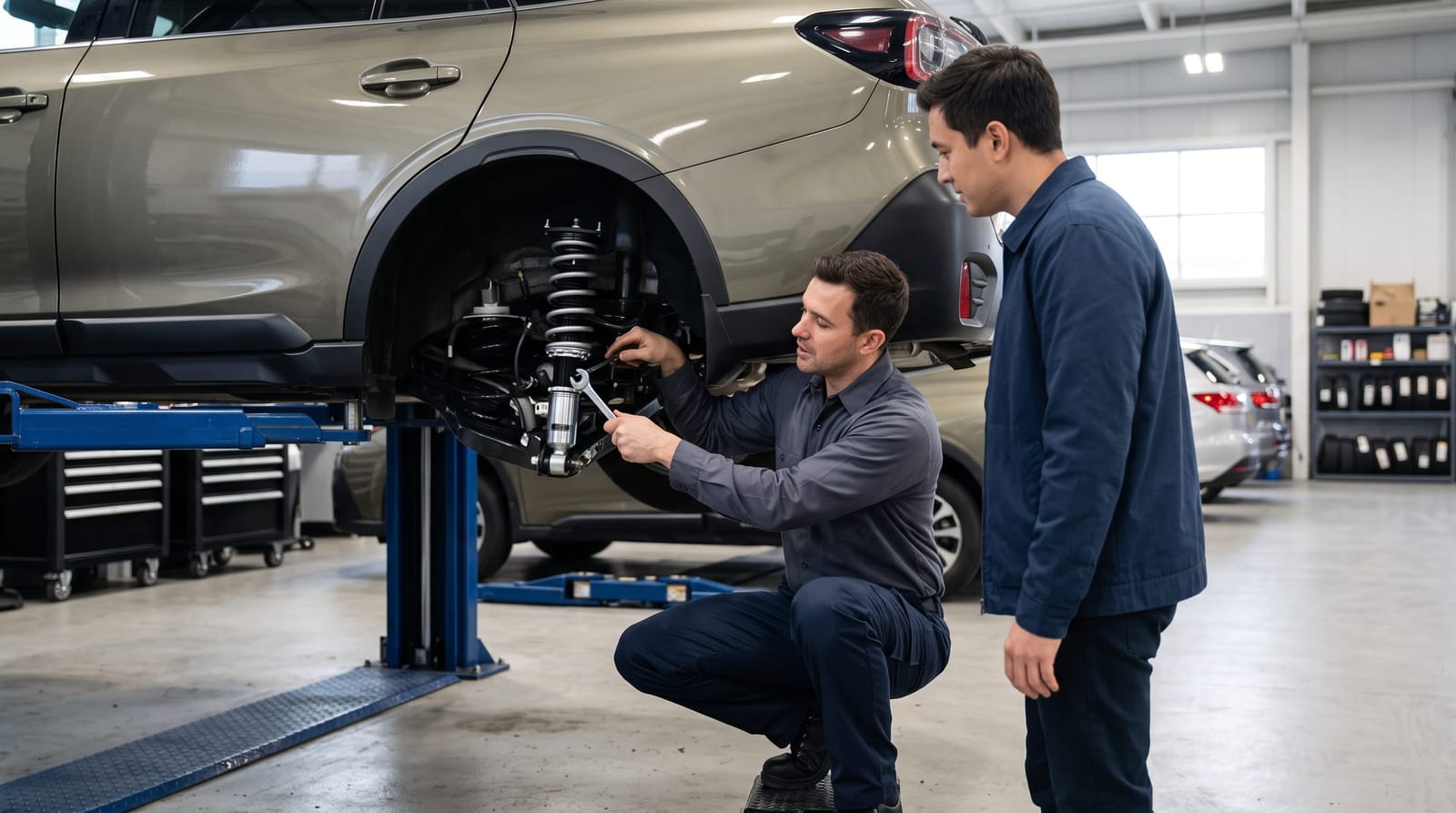
A coilover is a single suspension unit that combines a coil spring and a shock absorber into one component. They replace your factory strut or shock setup entirely. The main advantage is that both pieces are engineered to work together, which gives you better control over how your vehicle responds to the road.
Stock factory suspension is designed to balance comfort across a wide range of driving situations. It's a compromise: tuned to feel acceptable for most drivers in most conditions. Coilovers, on the other hand, can be tuned more precisely for your specific vehicle weight, driving style, and road conditions.
That said, coilovers are not a magic upgrade that automatically makes everything smoother. The quality of the components and the setup choices matter enormously. A budget coilover kit with a stiff spring rate installed on a vehicle driven mostly on rough county roads could actually make your ride feel worse than stock. A quality set properly matched to your vehicle and adjusted correctly? That's a different experience entirely.
Understanding this distinction is a big part of the truck lift and lowering modification guide for Kaufman County drivers, which walks through how suspension choices affect daily drivability across different vehicle types.
Spring Rate: The Single Biggest Factor in Daily Comfort
Spring rate is measured in pounds per inch (lb/in) and tells you how stiff the spring is: specifically, how many pounds of force it takes to compress the spring one inch. This number has a direct impact on ride feel, and it's where most drivers either succeed or go wrong with coilovers.
For reference, a typical factory front spring rate on a midsize sedan might fall somewhere between 200 and 350 lb/in. Performance-oriented coilover kits for street use often run in the 400 to 600 lb/in range. Track-focused setups can push 800 lb/in or higher, which is genuinely uncomfortable on public roads.
For Kaufman County driving, which includes a mix of highway miles, two-lane farm roads, and neighborhoods with older pavement, a street-tuned spring rate in the moderate range tends to work best for everyday drivers who aren't heading to a track on weekends. The goal should be improved handling feel without turning every pothole into a jarring impact.
When you're comparing coilovers to lowering springs, keep this in mind: lowering springs drop your vehicle's ride height by replacing the factory spring with a shorter, slightly stiffer one, but they reuse your existing shocks. Coilovers replace the whole assembly. That means coilovers typically offer better long-term performance and more adjustability, but lowering springs can be a lower-cost option if your factory shocks are still in good shape.
Adjustable Damping: What It Means for Your Ride
Many coilover kits include adjustable damping, which controls how quickly the shock absorber responds to bumps and road movement. Damping adjustment is usually measured in "clicks": a dial or knob that lets you stiffen or soften the shock response without changing the spring.
A coilover set to its softest damping setting on a moderate spring rate can feel surprisingly close to factory comfort for most daily driving. Turn it toward the stiffer end of the range and you'll feel sharper, more connected handling, but road imperfections will come through more noticeably.
This adjustability is one of the strongest arguments for coilovers over fixed lowering springs. If you find your initial setup is too firm for your commute, you can dial it back without replacing parts. That kind of fine-tuning is especially valuable if you drive a variety of roads regularly.
Studies on suspension setup for street use consistently show that adjustable damping significantly improves driver satisfaction compared to fixed-rate alternatives. Drivers who could fine-tune their damping reported noticeably higher comfort ratings on the same road surfaces compared to those with non-adjustable setups.
What to Expect on Kaufman County Roads After Installation
Kaufman County roads vary quite a bit. Highways like US-175 are generally smooth and well-maintained. But rural routes, older residential streets in Terrell, and farm-to-market roads can have uneven surfaces, patched asphalt, and expansion joints that feel different under a modified suspension.
Here's a realistic breakdown of what drivers typically experience after a quality coilover installation:
- Highway driving: Most drivers report a noticeably more planted, stable feel at highway speeds. Body roll in lane changes is reduced, and the vehicle tracks more confidently. This is one of the clearest coilovers ride quality improvement benefits.
- City streets and neighborhoods: Moderate spring rates feel comparable to stock on smoother city streets. Stiffer setups will transmit more road texture through the seat and steering wheel.
- Rural and farm roads: This is where setup matters most. A well-tuned coilover on a reasonable spring rate handles these roads acceptably. An overly stiff setup will feel punishing over rough chip-seal or gravel transitions.
- Speed bumps and sharp dips: These will always feel firmer than stock on a lowered coilover setup. That's normal and expected: the tradeoff for lower ride height.
Setting realistic expectations before installation makes a big difference in how satisfied you'll be with the result. A local shop that understands your specific roads and how you use your vehicle daily can help you select a spring rate that fits your situation rather than just your budget.
Coilovers vs. Lowering Springs: A Side-by-Side Comparison
If you're weighing coilovers against lowering springs, here's a straightforward comparison to guide your thinking:
- Adjustability: Coilovers: yes (height and often damping). Lowering springs: no.
- Component replacement: Coilovers replace everything. Lowering springs only replace the spring.
- Ride quality control: Coilovers give you more control. Lowering springs rely on your existing shocks, which may wear faster with a stiffer spring.
- Cost: Coilovers typically run $500 to $2,000+ for the kit depending on brand and vehicle. Lowering springs are often $150 to $400.
- Longevity: A quality coilover set installed properly can last 50,000 to 80,000 miles or more with no major issues.
For drivers who plan to keep their vehicle long-term and want flexibility, coilovers are generally the better investment. For someone looking to lower their daily driver modestly without a large upfront cost, quality lowering springs are worth considering: provided the shocks are in good condition.
Frequently Asked Questions
Will coilovers make my car ride rougher than stock?
Not necessarily. Coilovers with a moderate spring rate and adjustable damping can match or come close to factory ride quality in many situations. The ride will feel firmer than stock on rough surfaces, but quality coilovers set up correctly don't have to feel harsh for everyday driving. The key is choosing the right spring rate for how and where you drive.
How much does ride quality change when you lower a vehicle with coilovers?
The lower you go, the less suspension travel you have to absorb bumps. A modest drop of 1 to 1.5 inches on a quality coilover setup typically feels acceptable for daily use. Drops of 2.5 inches or more on stiff springs will feel significantly firmer and may require careful attention to spring rate selection to remain drivable on regular roads.
Are coilovers a good choice for a truck used for daily driving in Kaufman County?
Coilovers are more common on cars and SUVs than on full-size trucks, which often use different suspension geometries. That said, coilover options do exist for certain truck applications. For most Kaufman County truck owners, the more common decision involves choosing between leveling kits, lift kits, or lowering blocks. A local shop can walk you through what makes sense for your specific truck and how you use it.
How do I know what spring rate is right for my vehicle?
Spring rate selection depends on your vehicle's weight, the type of driving you do most, and how much you're lowering the vehicle. A shop experienced in suspension work can look at your specific vehicle and driving habits and recommend a spring rate range that balances the look you want with the ride quality you'll actually enjoy day to day.
The Bottom Line on Coilovers and Ride Quality
Coilovers can absolutely improve ride quality: better handling feel, reduced body roll, and a more connected driving experience are real benefits that quality coilovers deliver. But they can also make your ride worse if the spring rate is too stiff for your roads or the setup doesn't match your daily use. For Kaufman County drivers, the goal is finding the balance between the look and feel you want and the drivability your commute requires. If you're still working through the decision, the broader vehicle lift and lowering modification guide is a good place to continue building your understanding before committing to a direction.