Does Texas Cold Weather Affect My Brakes? What Terrell TX Drivers Should Know
Most Texans don't spend much time thinking about winter vehicle care, and honestly, most years, the weather doesn't demand it. But anyone who's driven through Terrell on a 28-degree morning after an overnight ice event knows that cold weather can change how your vehicle handles almost instantly. One area that doesn't always get enough attention is your brakes. Cold weather brake performance in Terrell TX is a real concern, and understanding how temperature affects your braking system can help you stay safer when conditions turn unpredictable. This post walks through what actually happens to your brakes in the cold and what a smart pre-winter check should include.
Why Cold Weather and Brakes Don't Always Get Along
Brakes are engineered to handle heat: that's literally how they work. Friction between the brake pad and rotor creates the stopping force your vehicle needs. The problem is that cold temperatures introduce a different kind of stress that most drivers in warmer climates aren't prepared for.
Here's what's actually happening when temperatures drop:
- Brake fluid thickens slightly. Brake fluid is hygroscopic, meaning it naturally absorbs moisture from the air over time. In cold weather, that moisture-contaminated fluid can behave differently under pressure, which can affect how quickly and evenly your brakes respond. Fresh, clean brake fluid has a dry boiling point of around 401°F or higher, but contaminated fluid can drop significantly, and cold-weather moisture absorption accelerates this degradation.
- Rotors can develop surface rust overnight. After a cold, damp night, a thin layer of surface rust can form on your brake rotors. You may notice a brief grinding or squealing sound the first time you brake in the morning: this usually clears after a few gentle stops, but it's worth paying attention to. If the noise doesn't go away quickly, something else may be going on.
- Brake pads can harden temporarily. Extremely cold temperatures can cause brake pad compounds to stiffen. This means pads may not make full, even contact with the rotor right away, slightly reducing stopping efficiency during those first moments of driving: exactly when you may be navigating icy residential streets or a slick FM road.
None of this means your brakes are going to fail on the way to work. But it does mean that brakes already showing signs of wear or age are more vulnerable when cold weather hits.
Stuck Calipers: A Cold Weather Problem Worth Knowing About
One of the more common cold weather brake issues, and one that often catches drivers off guard, involves the brake caliper. Calipers are the hydraulic clamps that squeeze your brake pads against the rotor. They're built to slide and release smoothly, but over time, the sliding pins and seals inside a caliper can corrode, stiffen, or partially seize.
Cold temperatures make this worse. When a caliper doesn't release fully after you lift your foot off the brake pedal, the pad continues rubbing against the rotor. This causes:
- Uneven wear on brake pads and rotors
- Pulling to one side when braking
- A burning smell after driving, especially noticeable after slower traffic or parking
- Reduced fuel efficiency, because the drag adds resistance
Studies suggest that partially seized calipers are among the leading causes of premature brake pad wear: some estimates indicate pads may wear out 30 to 50 percent faster when a caliper isn't releasing properly. In a place like Terrell, where most drivers don't think about winterizing their brakes, a sticky caliper can quietly eat through a set of pads well before they're due for replacement.
If your vehicle pulls to one side when you brake, or if you notice uneven braking response on cold mornings, that's a signal worth getting checked out before conditions get worse.
Ice Events and What They Mean for Your Stopping Distance
Terrell doesn't get extended winter weather the way northern cities do, but ice events, sometimes called "Texas ice", can arrive fast and leave roads dangerously slick for 12 to 48 hours. In these situations, your brakes work correctly, but the surface they're working with doesn't cooperate.
On dry pavement, most passenger vehicles can come to a complete stop from 60 mph in roughly 130 to 140 feet. On ice, that stopping distance can increase by 300 to 400 percent depending on the vehicle, tire condition, and road surface. That's the length of a football field, or more.
Your brakes can only do so much. If your brake pads are already worn thin, your rotors are uneven, or your calipers aren't operating smoothly, even modern ABS (anti-lock braking systems) can't fully compensate. ABS prevents wheel lockup, but it still needs functioning brake components to have anything to work with.
This is why a brake inspection before winter weather season, roughly October through February in East Texas, makes practical sense. It's not about worst-case scenarios; it's about knowing your system is working at its best before conditions take it out of your control. Similar cold-weather effects apply to your steering and suspension components, which is worth reading about separately for a complete picture of how winter weather affects your vehicle's handling.
What a Pre-Winter Brake Inspection Should Cover in Terrell TX
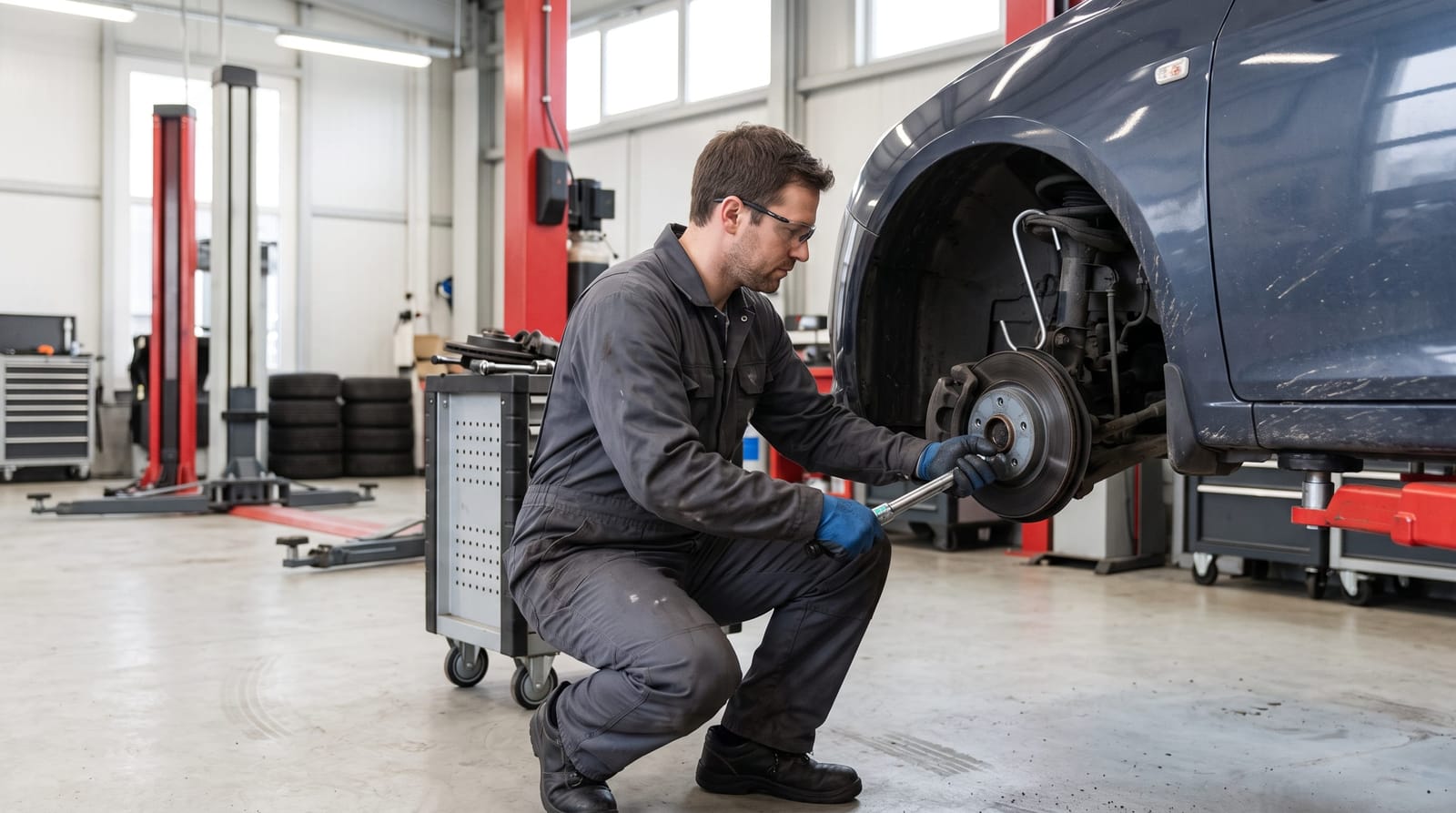
A thorough brake inspection isn't just a quick look. When a trusted shop checks your brakes ahead of cold weather season, here's what should be included:
- Brake pad thickness measurement. Pads are typically measured in millimeters. Most shops recommend replacement when pads reach 3mm or less; 2mm is generally considered the minimum safe threshold. A tech should give you an actual measurement, not just "they look okay."
- Rotor condition and thickness. Rotors wear down and can warp over time. A technician should measure rotor thickness and check for scoring, grooves, or uneven wear that could reduce stopping efficiency.
- Caliper inspection and movement check. Sliding pins should move freely. Seized or corroded pins are a common issue in vehicles that have seen a lot of stop-and-go driving or aren't serviced regularly.
- Brake fluid condition check. Fresh brake fluid is typically a light amber color. Darker, cloudy, or visibly contaminated fluid may benefit from a flush. Some shops use a moisture test strip to check contamination levels: this is especially relevant heading into cold weather months.
- Brake lines and hoses visual inspection. Cracks, soft spots, or corrosion on brake lines can develop slowly over years of heat cycling: exactly the kind of wear that's common in Texas vehicles that experience both summer extremes and occasional cold snaps.
Getting this kind of thorough inspection done locally, by a shop familiar with Kaufman County driving conditions and East Texas roads, means you're working with someone who understands the specific stresses your vehicle faces year-round.
Frequently Asked Questions
Does cold weather actually cause brake failure?
True brake failure from cold weather alone is uncommon. However, cold temperatures can reduce braking efficiency, especially if components are already worn. Partially seized calipers, hardened brake pad compounds, and moisture-contaminated brake fluid are all more likely to cause problems in cold conditions than in warm ones. A pre-winter inspection helps identify vulnerabilities before they become safety concerns on icy roads.
Why do my brakes make noise on cold mornings?
A brief grinding or squealing sound when you first start driving on a cold morning is often caused by a thin layer of surface rust that forms on the rotors overnight. This usually clears up after a few gentle brake applications. If the noise continues beyond the first minute or two of driving, or if it happens every time you brake, it's worth having your brakes inspected: it may indicate pad wear, rotor damage, or a stuck caliper.
How often should brake fluid be replaced?
Most manufacturers recommend replacing brake fluid every 2 to 3 years, though this can vary depending on your vehicle and driving conditions. Because brake fluid absorbs moisture over time, older fluid is more susceptible to performance issues in cold weather. Your technician can check the current condition of your fluid during a routine inspection and recommend replacement if needed.
Is a brake inspection worth it if my brakes feel fine?
Yes, and this is especially true heading into winter. Brake wear is gradual, and drivers often don't notice declining performance until something obvious happens. Pad thickness, rotor condition, and caliper function can all be suboptimal without producing clear symptoms. A professional inspection takes the guesswork out of it and gives you an accurate picture of where your brakes actually stand.
The Bottom Line for Terrell TX Drivers
Cold weather brake performance in Terrell TX may not be a daily concern, but when a Texas ice event hits, you want your brakes to be at their best. From brake fluid moisture absorption to stiff pads and sluggish calipers, cold temperatures can quietly reduce the effectiveness of a system that's critical to your safety. A pre-winter brake inspection is one of the simplest, most practical steps you can take as part of your broader seasonal vehicle care routine. If you're already thinking about year-round vehicle maintenance for Texas conditions, brakes belong near the top of that list.