Texas Winter Car Prep: What Kaufman County Drivers Actually Need to Do
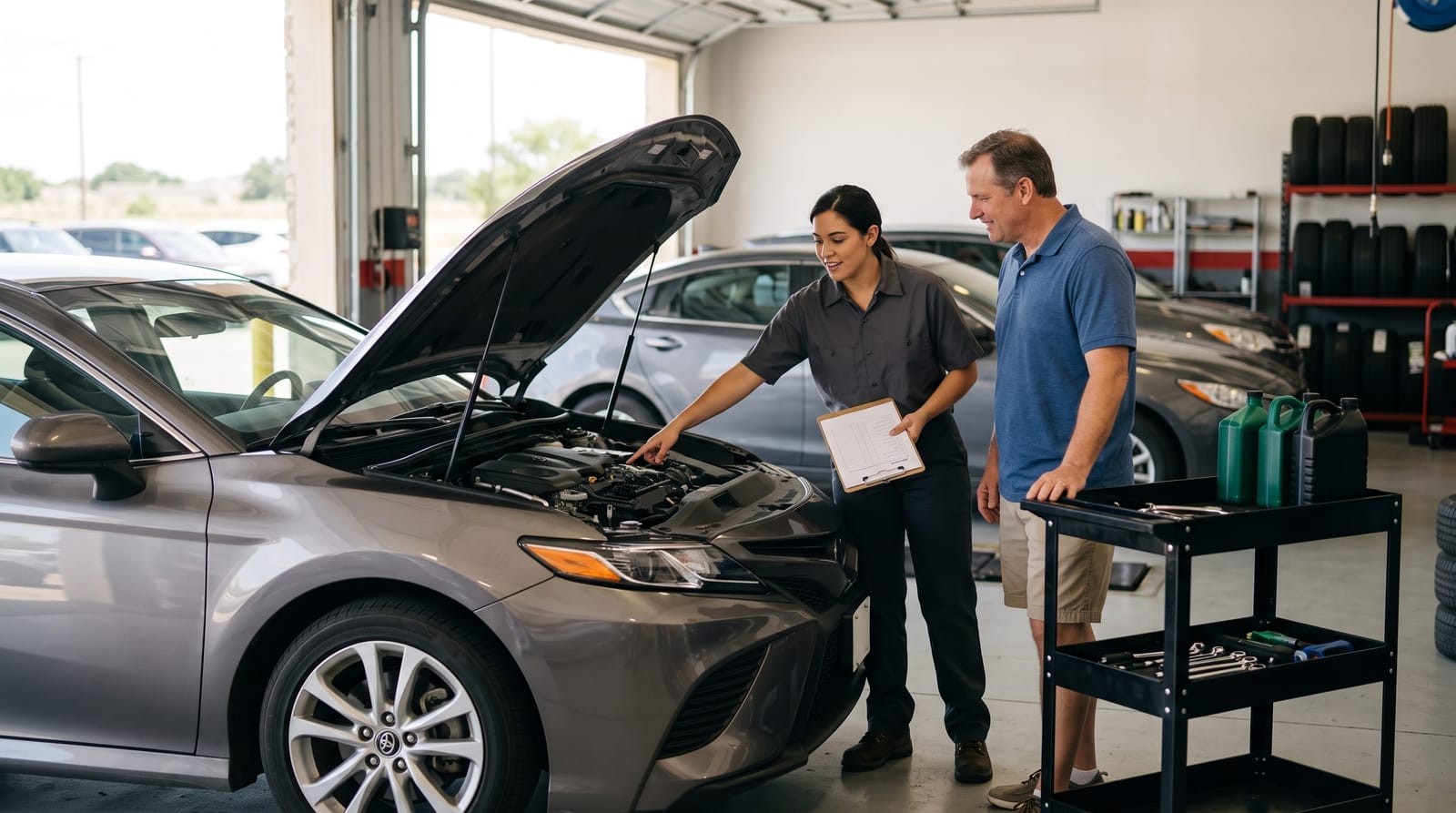
Winter in Kaufman County doesn't look like winter in Minnesota, and that's exactly why generic cold-weather car prep advice can mislead local drivers. When you're planning your winter car preparation in Kaufman County, TX, you're not dealing with months of snow and sub-zero temperatures. You're dealing with something trickier: unpredictable cold snaps, the occasional ice storm, and wide daily temperature swings that put real stress on vehicle systems. Our broader year-round vehicle maintenance guide for Texas drivers covers the full seasonal picture, but this post goes deep on winter specifically: what it actually means for your vehicle in this part of East Texas, and what you can realistically do before the next ice event catches you off guard on the Forney-Terrell corridor.
Why Texas Winters Are a Unique Challenge for Your Vehicle
Most national "winter car prep" guides are written with northern climates in mind: places where temperatures stay below freezing for weeks and drivers swap to snow tires every November. Kaufman County drivers face a different reality. Winters here are mild most of the time, punctuated by brief but intense cold events. That pattern is actually harder on certain vehicle systems than consistent cold weather is.
Here's why: when temperatures stay consistently cold, your vehicle stabilizes. But when temps swing from 70°F one afternoon to 25°F the next morning, which is a genuine occurrence in North Texas, your battery, fluids, and rubber components go through repeated expansion and contraction cycles that wear them down faster than most drivers realize.
According to AAA, car batteries are 35% less effective at 32°F than at 77°F, and at 0°F they lose up to 60% of their cranking power. Even if Kaufman County rarely sees 0°F temperatures, a battery that's already weakened from a long Texas summer can fail the first time temps dip into the 20s. Understanding this regional pattern is the first step in building a prep strategy that actually fits where you live and drive.
Battery Testing: The Most Important Step in Winter Car Preparation for Kaufman County Drivers
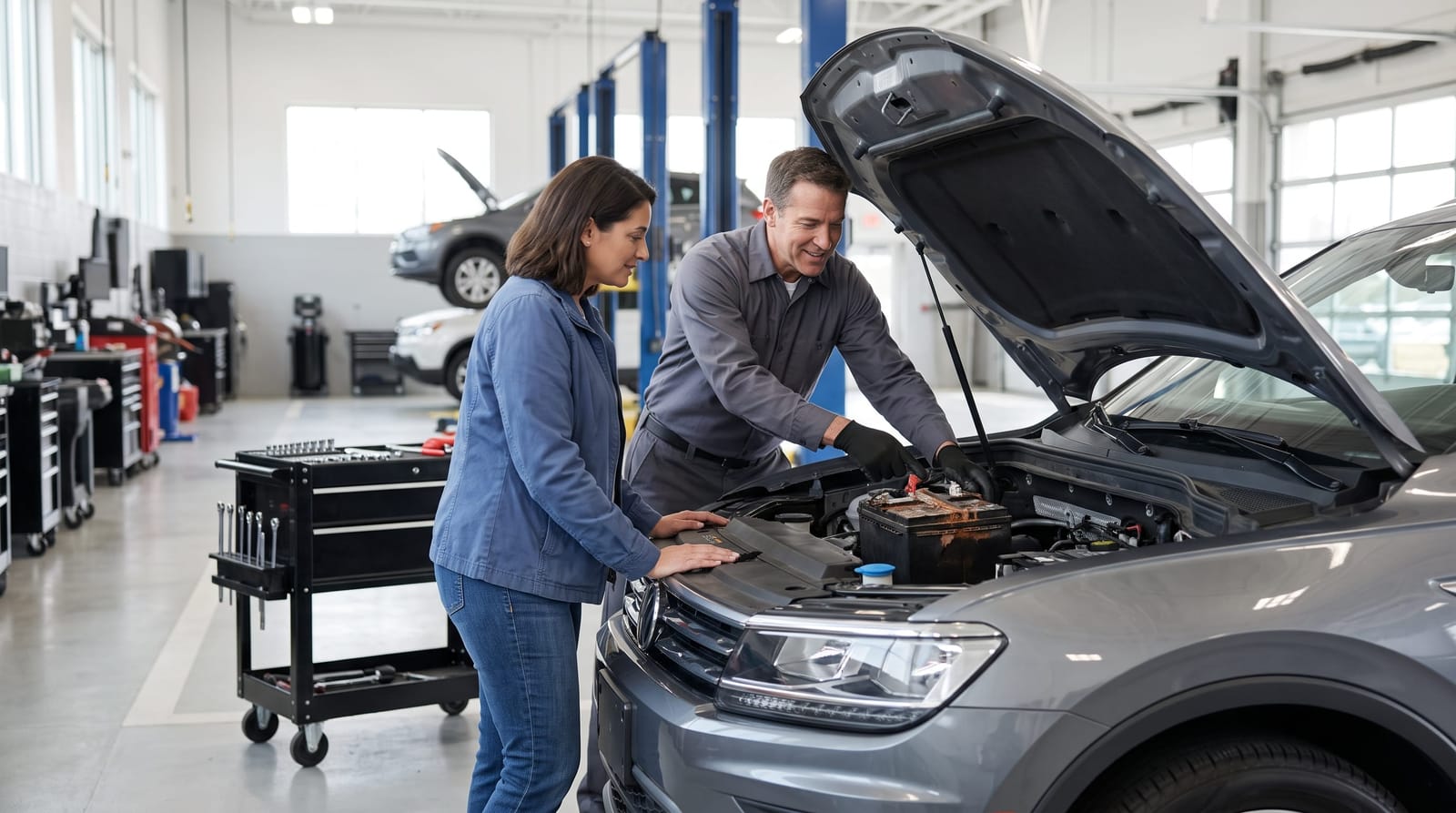
If there's one thing you do before winter arrives, make it a battery test. Texas summers are brutal on car batteries: months of heat above 100°F degrade battery fluid and accelerate internal corrosion. By the time October rolls around, many batteries in this region are already working harder than they should be.
What Battery Testing Actually Tells You
A basic load test measures whether your battery can deliver sufficient voltage under the electrical demand of starting your engine. This is different from just checking whether the battery holds a surface charge. A battery can read 12.6 volts at rest and still fail under load, which is exactly what happens on a cold January morning when you're trying to get to work. Most reputable shops can perform this test in just a few minutes.
When to Replace vs. When to Wait
Most automotive batteries have a service life of 3 to 5 years. If yours is approaching that range and you're heading into winter, a proactive replacement is often the smarter move. A failed battery rarely gives much warning, and a tow on a cold night costs far more than a planned swap during a routine visit. Ask your shop to check the battery's cold cranking amp (CCA) rating against what your vehicle requires: this number matters a lot more in cold weather than the basic voltage reading.
Antifreeze Concentration: It's Not Just About Freezing
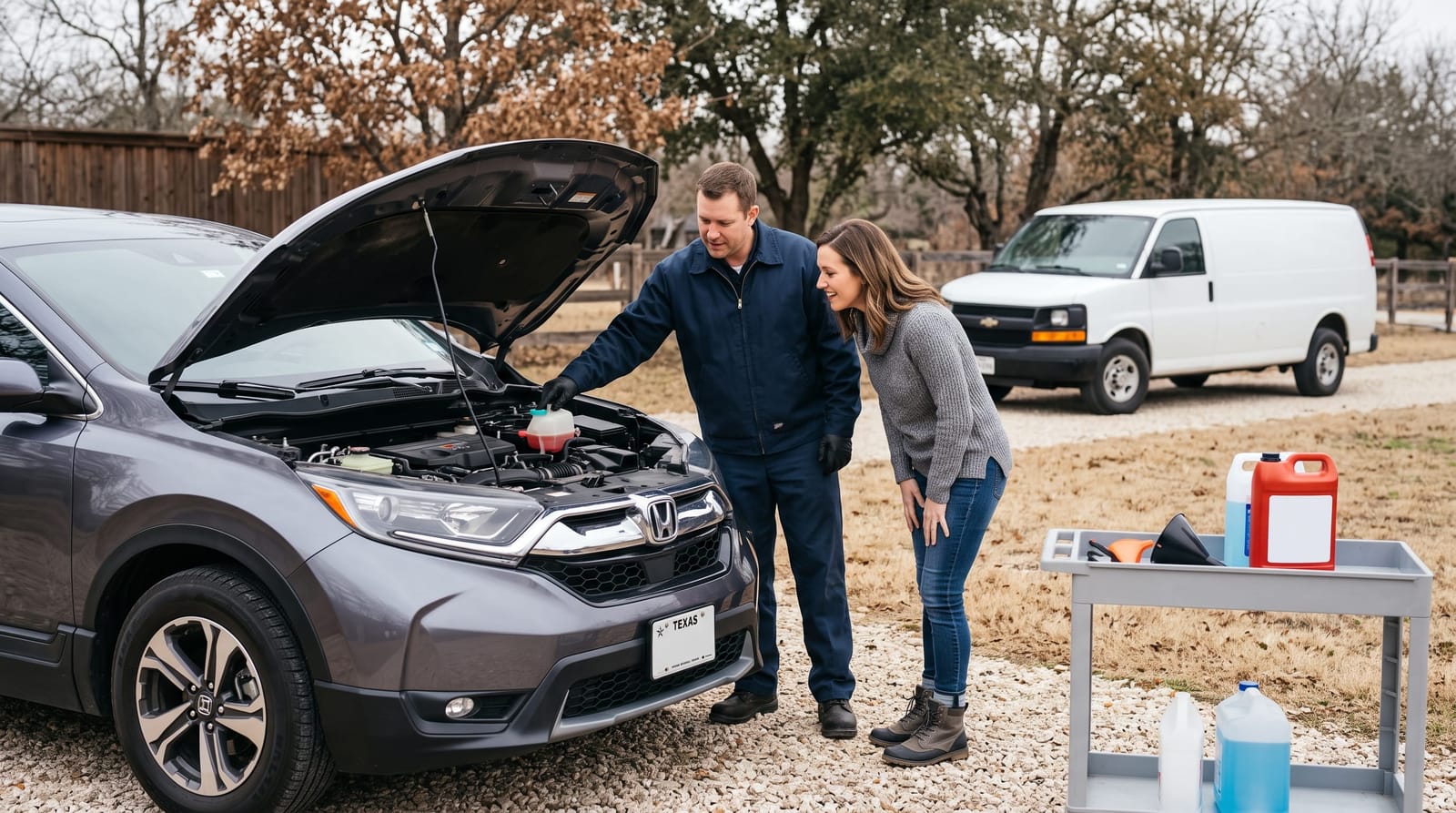
Many drivers assume antifreeze (coolant) is only relevant if you live somewhere that sees serious cold. That's a common misconception. Antifreeze serves two functions: it lowers the freezing point of your coolant and raises its boiling point. In Texas, the boiling-point protection matters just as much as freeze protection given our summers. But before winter, what you want to verify is that the concentration ratio is correct for temperatures Kaufman County might actually reach.
The Right Concentration Ratio
Coolant is typically mixed with water in a 50/50 ratio, which provides freeze protection down to approximately -34°F and boiling protection up to around 265°F. In most cases, a 50/50 mix is perfectly appropriate for North Texas winters. Some drivers assume pure antifreeze is better, but straight antifreeze actually has a higher freezing point than a properly mixed 50/50 solution, so more isn't always better. A simple coolant tester or refractometer can verify the concentration in about 30 seconds at a shop visit.
Don't Ignore Coolant Condition
Beyond concentration, old coolant can become acidic over time, which contributes to corrosion inside the cooling system. Most manufacturers recommend flushing and replacing coolant every 2 to 5 years depending on the type used. If your coolant is discolored or hasn't been changed in several years, winter is a good time to address it.
Wiper Blades and Washer Fluid: Small Details, Big Visibility Impact
Wiper blades don't get much respect until the moment you desperately need them. During a rare Kaufman County ice event, the ability to clear your windshield quickly isn't a convenience: it's a safety factor. Standard wiper blades are designed for rain, not ice, and they can struggle or smear when temperatures drop.
Choosing the Right Blades for Texas Winters
Beam-style wiper blades (sometimes called bracketless wipers) tend to perform better in mixed cold-weather conditions because they distribute pressure more evenly across the blade. Traditional framed wipers can trap ice in the frame mechanism, reducing contact with the glass. For a region like Kaufman County where ice events are rare but sudden, beam-style blades are a practical upgrade that also perform well year-round.
Washer Fluid Matters More Than You Think
Standard summer washer fluid can freeze in the reservoir, on the nozzles, or on your windshield mid-spray in near-freezing temperatures. Switch to a winter-rated washer fluid rated for temperatures below 20°F before the cold season arrives. It's one of the cheapest items on this list and one of the most overlooked.
Brake Inspection: What Cold Weather Does to Your Stopping Power
Brakes don't wear out faster in winter than in summer as a rule, but cold temperatures do affect how they perform, especially during that first stop of the morning. Brake components that are already worn can behave unpredictably on cold pavement, and any existing issues become more noticeable when roads are slick.
Before winter, have your brake pads, rotors, and brake fluid inspected. Brake fluid is hygroscopic, meaning it absorbs moisture from the air over time. Water-contaminated brake fluid has a lower boiling point, which matters most during heavy braking, and it can also affect pedal feel in cold conditions. Most manufacturers suggest flushing brake fluid every 2 years or 30,000 miles, though your vehicle's owner manual is the best reference for your specific make and model.
For a deeper look at how cold temperatures specifically affect braking performance in this region, our post on cold weather brake performance in Terrell, TX breaks down what Kaufman County drivers should watch for on cold mornings.
Before an Ice Event Hits the Forney-Terrell Corridor
Kaufman County sees ice events infrequently enough that many drivers aren't prepared when one arrives. That's exactly when the risk is highest, because roads that rarely ice over also rarely get treated quickly, and local drivers aren't accustomed to the conditions. Here's how to prepare your vehicle specifically for these short-notice situations.
Tire Tread and Pressure Check
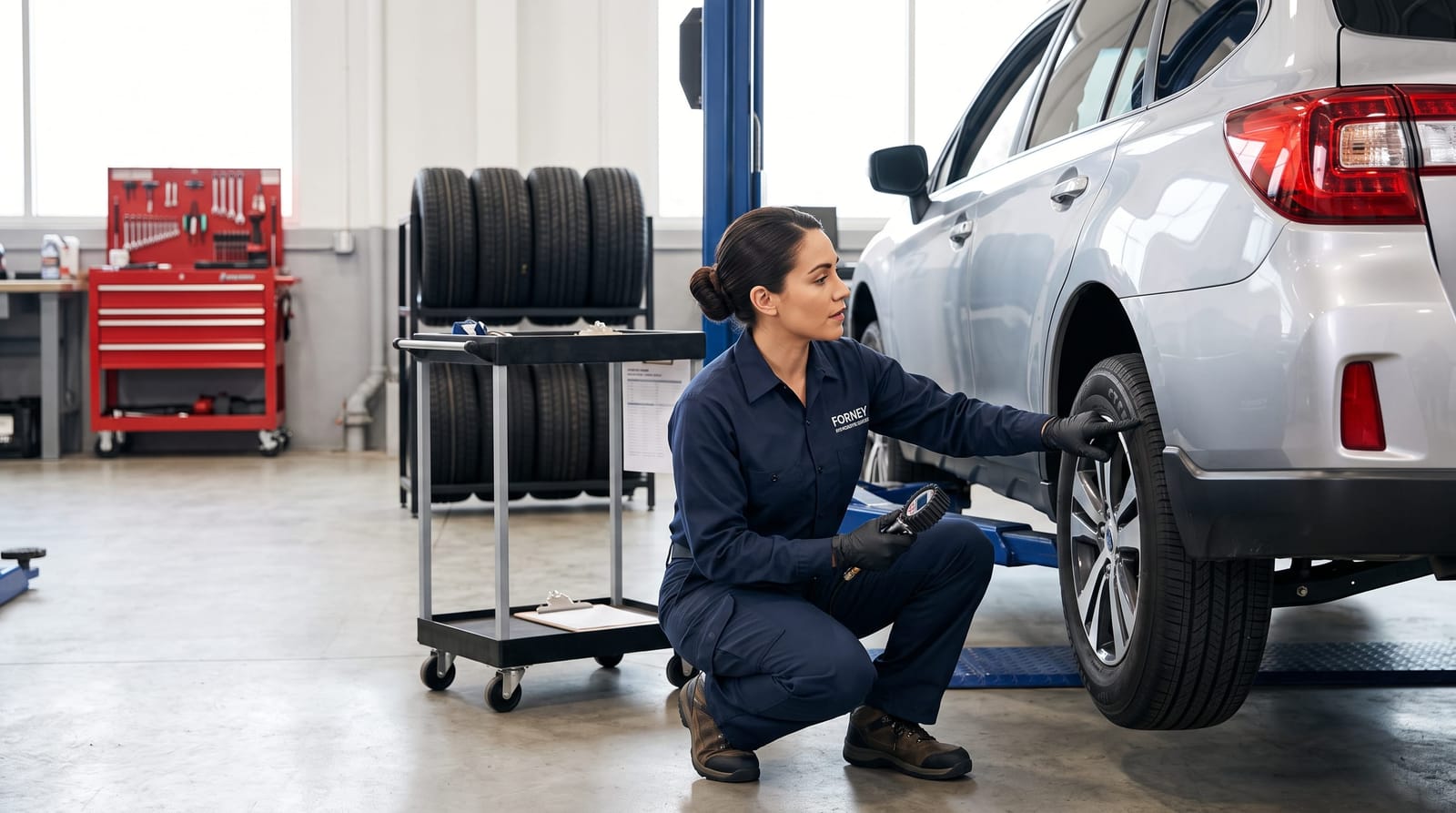
You don't need winter tires in North Texas, but you do need tires with adequate tread depth. The minimum legal tread depth is 2/32 of an inch, but most safety experts recommend replacing tires at 4/32 for wet and icy conditions. An easy check: place a quarter in a tread groove with the top of the head pointing in. If you can see the top of the head, your tread depth is below 4/32. Also remember that tire pressure drops approximately 1 PSI for every 10°F drop in temperature, so a tire that's properly inflated at 75°F may be underinflated when temperatures plunge into the 30s overnight.
What to Keep in Your Vehicle
For the rare but real possibility of being stranded during a winter weather event, Kaufman County emergency preparedness resources recommend keeping extra blankets, water, and non-perishable food in your vehicle. From an automotive standpoint, add a small ice scraper, a bag of sand or kitty litter for traction, and jumper cables or a portable jump starter. These items take up minimal space and can make a significant difference if you're stuck or helping someone else who is.
Suspension and Steering in Icy Conditions
Ice doesn't just affect how you brake: it changes how your entire vehicle handles during steering inputs. Components that are already worn, including tie rod ends, ball joints, and shocks, will behave less predictably on slick roads. Our post on ice storm suspension and steering effects for drivers in Mesquite, TX covers this in detail, but the takeaway for Kaufman County drivers is simple: if your vehicle already has a shimmy, pull, or unusual steering feel, resolve it before winter weather arrives rather than after.
Related Topics Worth Knowing
Winter prep doesn't happen in isolation: it's part of a broader seasonal rhythm for your vehicle. As you're thinking through cold-weather readiness, it's worth reviewing what Texas summers do to your car as well. The heat stress your battery, tires, and cooling system experienced in July and August often sets the stage for the problems that show up in December. Our summer car maintenance checklist for Forney and Kaufman County TX drivers covers those warm-weather issues in depth, and understanding that cycle helps you stay ahead of problems year-round rather than reacting to them.
Your Winter Car Prep Action Plan
To wrap up, here's a practical summary of what winter car preparation in Kaufman County, TX actually looks like when you account for the local climate rather than assuming generic national advice applies:
- Have your battery load-tested, especially if it's 3 or more years old
- Verify antifreeze concentration is at the correct 50/50 ratio
- Replace worn wiper blades and switch to winter-rated washer fluid
- Get a brake inspection that includes pad thickness, rotor condition, and fluid quality
- Check tire tread depth and adjust tire pressure for colder temperatures
- Keep a basic emergency kit in your vehicle through winter months
- Address any existing steering or suspension concerns before an ice event arrives
Ready to Get Your Vehicle Set for Winter?
Winter in Kaufman County may be shorter and milder than in other parts of the country, but it's still worth taking seriously, especially when an ice event can materialize with very little warning along the Forney-Terrell corridor. The good news is that a focused pre-winter inspection covers most of what you need, and most of these items are straightforward to address when you catch them early.
If you'd like to have your vehicle inspected before cold weather settles in, the team at Gregg Automotive is here to help. We understand the specific conditions East Texas drivers face and can walk you through exactly what your vehicle needs, without pressure and without unnecessary services. Give us a call or stop by to schedule your winter prep visit.