Summer Heat Car Preparation Checklist for Forney and Kaufman County TX Drivers
Texas summers are no joke, and if you've driven through Forney or anywhere in Kaufman County between June and September, you already know what we mean. Temperatures regularly climb past 100°F, pavement gets hot enough to accelerate tire wear, and your vehicle's most critical systems are working overtime just to keep up. As part of a broader approach to seasonal car maintenance in Forney TX, getting your vehicle ready before summer arrives is one of the smartest things you can do as a vehicle owner. This checklist covers the six most important areas to inspect before the heat peaks, your AC system, cooling system, battery, tires, belts and hoses, and fluids. Work through each one, and you'll head into summer with a lot more confidence behind the wheel.
1. Test Your Air Conditioning System Before It Fails on a 105°F Day
Your AC system doesn't just make the drive comfortable, in extreme Texas heat, it's genuinely important for driver alertness and safety. The problem is that most people don't discover their AC is struggling until they're already sitting in gridlock with hot air blowing at their face.
AC systems lose refrigerant gradually over time, and after a Texas winter of limited use, you may notice your system blowing air that's cool but not cold. If it's taking 10 minutes to bring the cabin temperature down on a hot day, or if the air smells musty when you first turn it on, those are early signs worth paying attention to.
What to Check
- Cabin air filter: A clogged cabin filter restricts airflow and forces your AC to work harder. These are typically recommended for replacement every 15,000 to 25,000 miles, but dusty Texas roads can shorten that interval.
- Refrigerant level: Low refrigerant is one of the most common reasons AC systems underperform in summer. A technician can check this with proper equipment: it's not something to eyeball.
- Condenser and evaporator: These components can accumulate debris and affect cooling efficiency over time.
- Compressor operation: Listen for unusual noises when the AC kicks on, which can signal that the compressor clutch is wearing.
If you're noticing warm air coming from your vents even after the system has had time to cool down, that's worth a dedicated look. We actually cover that specific issue in detail in our post about car AC warm air after winter Forney TX, which explains why this happens and what's typically behind it.
2. Inspect Your Cooling System: Your Engine's Heat Defense
Your engine produces an enormous amount of heat just by running. The cooling system, made up of the radiator, water pump, thermostat, coolant reservoir, and hoses, is what keeps that heat from building to damaging levels. In a Texas summer, that system is under more stress than it would be almost anywhere else in the country.
Studies from automotive research groups have found that engine overheating accounts for roughly 40% of vehicle breakdowns in hot climates. That's a significant number, and most of those situations are preventable with a basic inspection before summer starts.
Coolant Condition and Level
Coolant (also called antifreeze) doesn't last forever. Over time it becomes acidic and less effective at transferring heat. Most manufacturers recommend a coolant flush every 30,000 to 50,000 miles, though your owner's manual will have the specific interval for your vehicle. Check that your coolant reservoir is filled to the proper level and that the fluid looks clean, not brown or rusty.
Radiator and Hoses
Look for visible cracks, soft spots, or bulging in the radiator hoses. Hoses that look fine when the engine is cold can still be deteriorating internally. If a hose fails while you're driving in summer heat, you'll lose coolant quickly and your temperature gauge will spike. Catching this in a pre-summer inspection is far better than catching it on the side of I-20.
Thermostat and Water Pump
A stuck thermostat or a failing water pump won't always announce themselves loudly, but they will show up as inconsistent temperature gauge readings or slow warm-up times. A technician can check these as part of a cooling system inspection.
3. Test Your Battery: Heat Is Its Biggest Enemy
Most people think cold weather is the main threat to car batteries. And while it's true that cold temperatures affect battery performance, heat is actually what shortens battery life. Internal heat accelerates the chemical reactions inside the battery, causing the fluid to evaporate and the internal components to degrade faster.
According to data from the Battery Council International, extreme heat can reduce a battery's lifespan by up to 33% compared to moderate climates. In Texas, where summer heat is sustained for months at a time, this matters more than it would in cooler states.
Signs Your Battery May Not Survive the Summer
- Slow engine cranking when you start the car, especially in the morning
- Dimming headlights or interior lights
- A battery that's 3 or more years old (the average lifespan in hot climates is 3 to 4 years, compared to 4 to 6 years in cooler regions)
- Visible corrosion or buildup around the battery terminals
- The battery warning light appearing on your dashboard
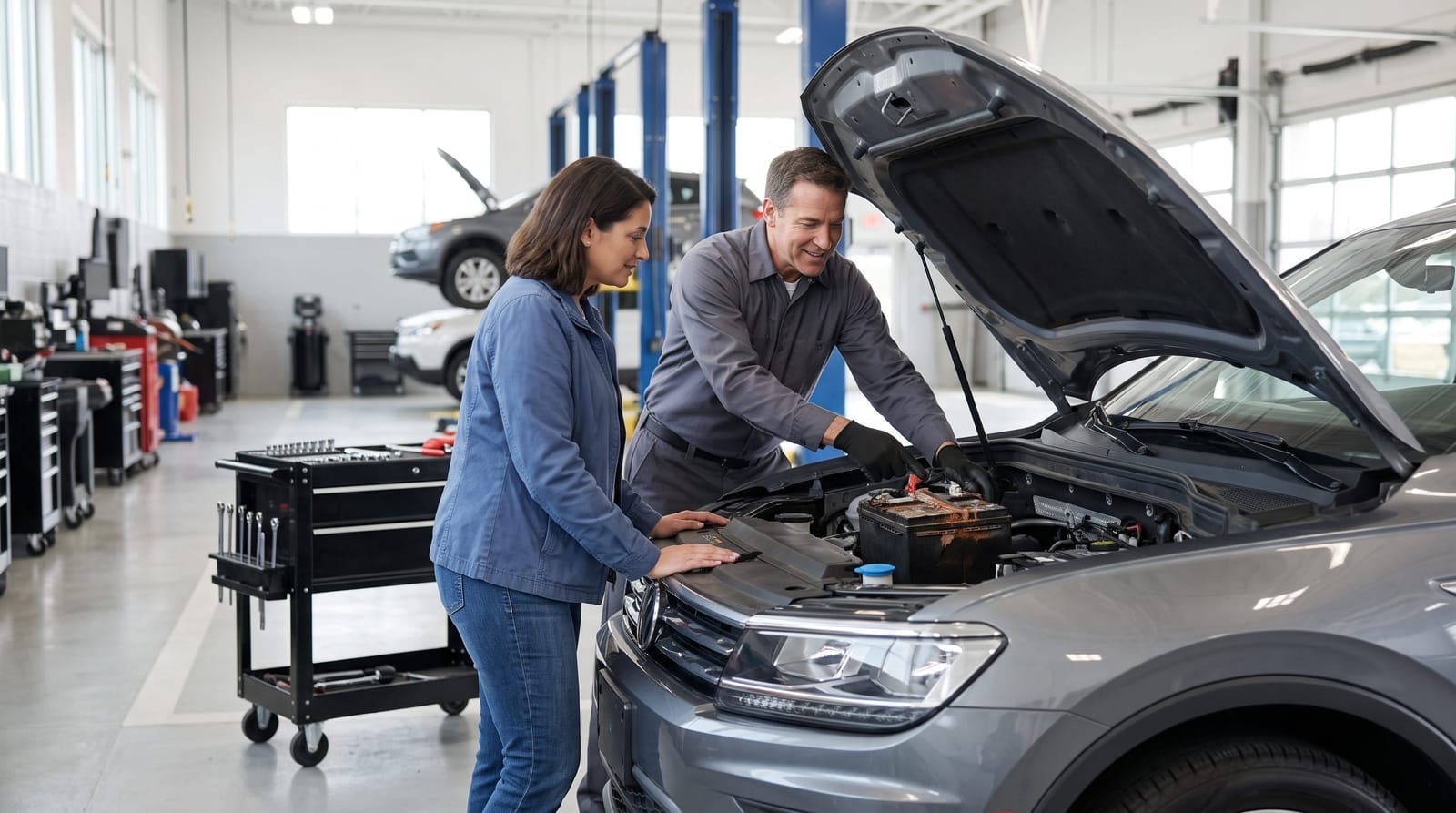
A battery load test can tell you exactly where your battery stands. It takes just a few minutes and gives you a clear answer about whether you can count on it through the summer or whether replacement makes sense now rather than later.
4. Check Tire Pressure and Condition: Heat Changes Everything
Here's something many drivers don't realize: for every 10°F increase in air temperature, tire pressure increases by approximately 1 to 2 PSI. When Forney goes from a mild spring day at 65°F to a July afternoon at 105°F, that's a 40-degree swing: meaning your tires can be 4 to 8 PSI above where they started the season.
Overinflated tires have a smaller contact patch with the road, which reduces traction and makes the ride harsher. But the bigger concern in Texas summers is the combination of high pressure and hot pavement, which increases stress on the tire and can accelerate wear on the center tread.
What to Look For
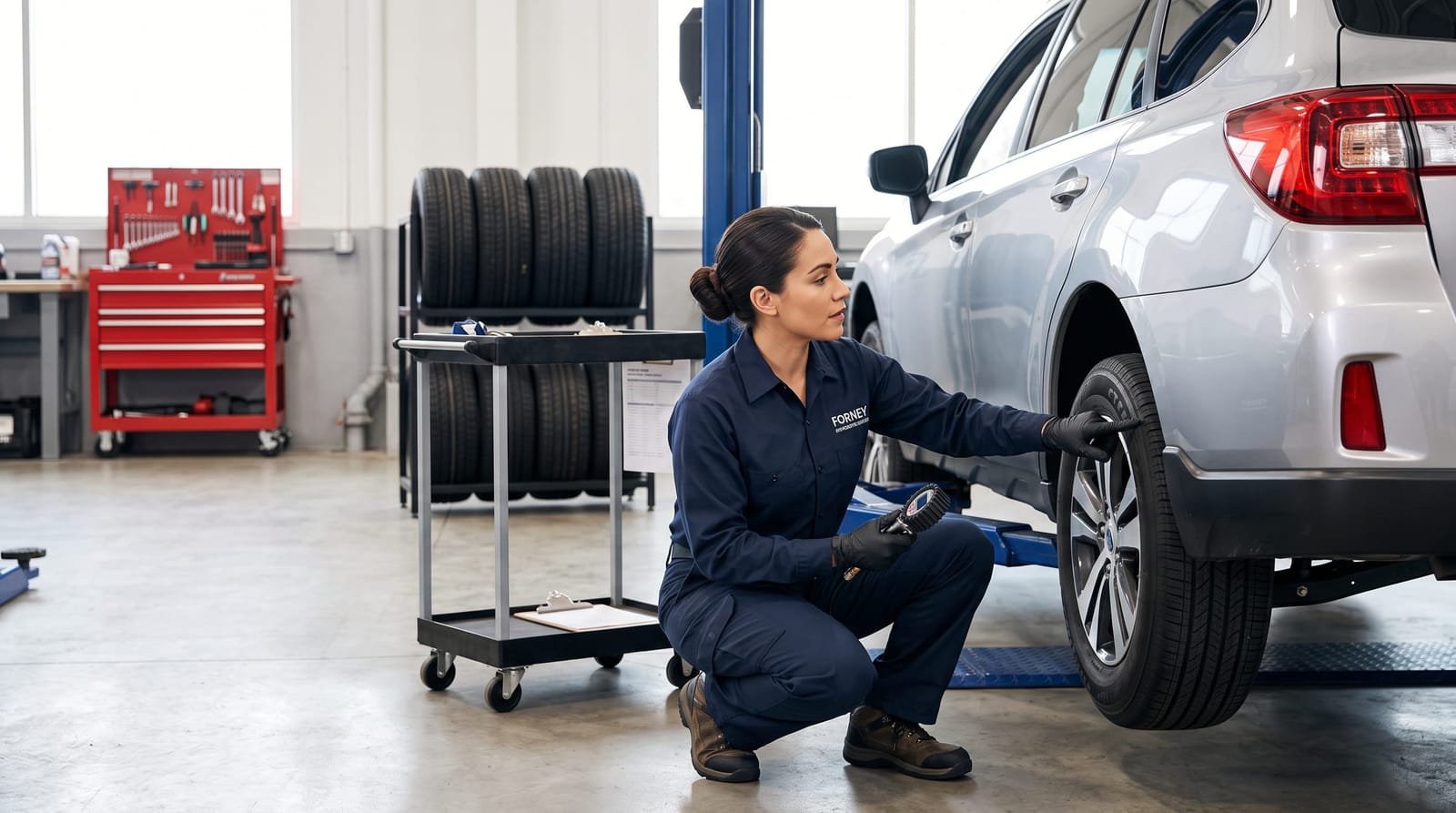
- Pressure: Check tire pressure when the tires are cold (before driving or after sitting for at least 3 hours). Use the PSI listed in your owner's manual or on the sticker inside the driver's door, not the number printed on the tire sidewall.
- Tread depth: Texas summer roads, especially with afternoon thunderstorms, demand adequate tread. The penny test is a common reference point: if you can see the top of Lincoln's head when you insert a penny into the tread, it's time to think about replacement.
- Uneven wear: Wear that's heavier on one edge than the other usually points to an alignment or inflation issue worth addressing.
- Sidewall cracks or bulges: Heat and age can cause the rubber to deteriorate. Bulges especially should be addressed promptly.
5. Inspect Belts and Hoses: Small Parts, Big Consequences
Belts and hoses are easy to overlook because they don't come with dashboard warning lights. But they play essential roles in keeping your engine running, your alternator charging, your power steering functioning, and your AC compressor spinning.
Heat and age are the two main enemies of belts and hoses. Rubber becomes brittle and prone to cracking when it's repeatedly exposed to high temperatures: exactly what happens under the hood during a Texas summer when ambient temperatures are already 100°F before you factor in engine heat.
Serpentine Belt
The serpentine belt drives multiple engine accessories at once. Most last 60,000 to 100,000 miles, but heat exposure can shorten that lifespan. Inspect it for glazing, fraying, cracking, or missing chunks. A belt that's showing age is worth replacing proactively: a belt failure while driving will quickly affect your power steering, charging system, and AC.
Radiator and Heater Hoses
Squeeze the hoses when the engine is cold. They should feel firm but slightly pliable, not rock hard (which can indicate brittleness) or squishy (which can indicate internal softening). Look for cracks, leaks at the clamps, or any swelling. These hoses carry pressurized hot coolant, so a failure is messy and can cause the engine to overheat within minutes.
6. Verify Fluid Levels Across All Systems
Your vehicle runs on multiple fluids, and summer heat increases the stress on most of them. A quick fluid check before summer arrives is one of the simplest things you can do to protect your investment.
Key Fluids to Check
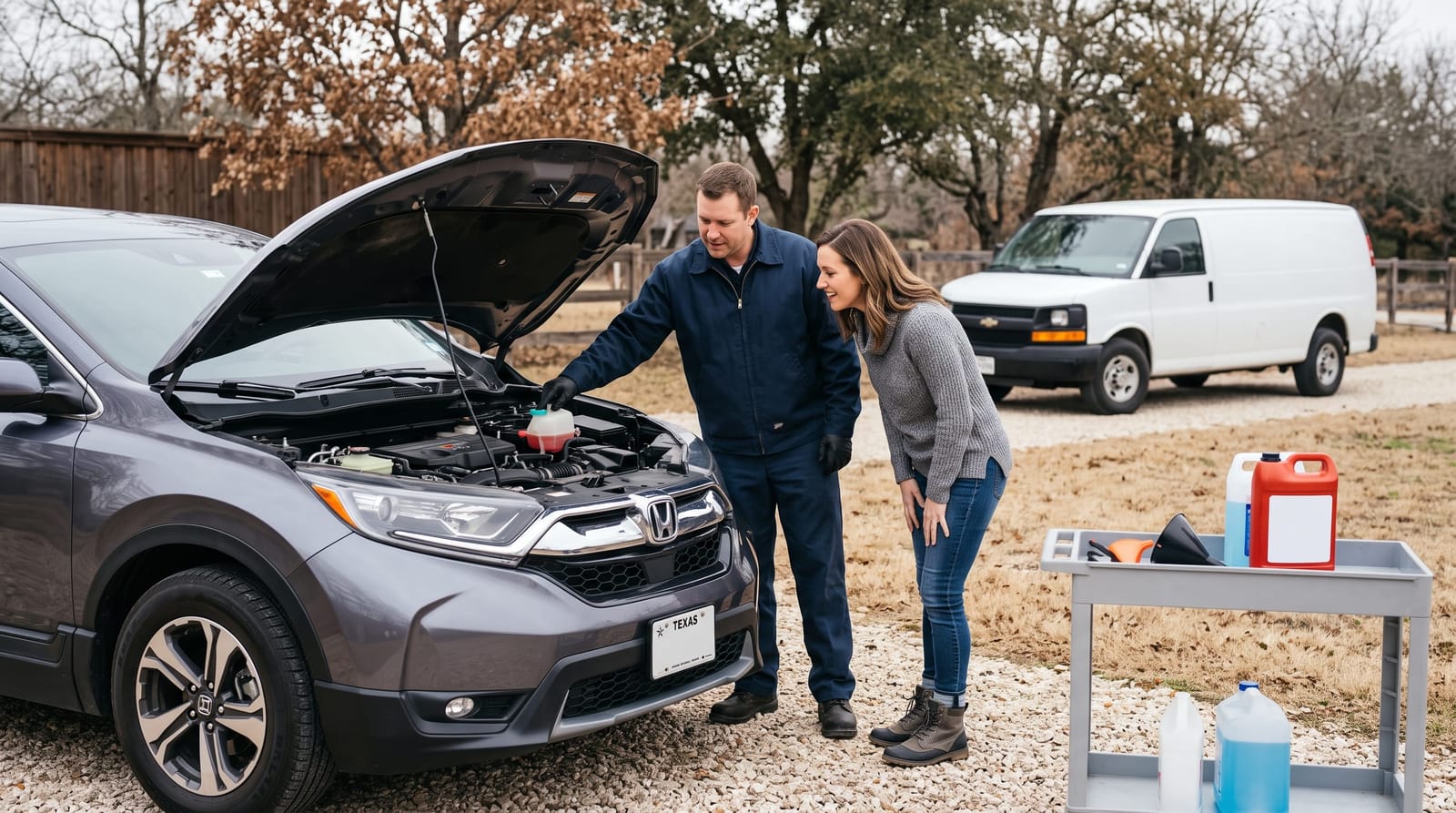
- Engine oil: Oil lubricates moving parts and helps carry heat away from the engine. Check both the level and the condition: dark, gritty oil is overdue for a change. Most modern vehicles recommend an oil change every 5,000 to 7,500 miles, though this varies by vehicle and oil type.
- Brake fluid: Brake fluid absorbs moisture over time, which lowers its boiling point. In stop-and-go summer traffic, brakes that generate more heat can be affected by degraded fluid.
- Transmission fluid: Transmission fluid helps keep this complex system cool and lubricated. Low or degraded transmission fluid is especially hard on the system in hot weather.
- Power steering fluid: Low power steering fluid can make your steering feel heavy and unresponsive.
- Windshield washer fluid: Texas summer means dust, bugs, and haze: a full washer reservoir matters more than you'd think.
If you're planning a summer road trip from Kaufman County, it's worth going a little deeper on this topic. Our guide on car fluids summer road trip Kaufman County covers exactly what to check and top off before you hit the highway in hot weather.
Related Summer Car Care Topics Worth Exploring
This checklist covers the essentials, but summer vehicle care has a few more layers worth knowing about. Within this topic cluster, we also dive into specific issues like diagnosing AC problems that developed over winter, understanding how to protect your vehicle's interior from UV damage, and planning fluid maintenance around summer road trips. Each of these posts goes deeper into individual areas so you can get as much detail as you need.
Ready for Summer? Here's How to Get Started
Texas summers put real demands on your vehicle, and Kaufman County's combination of heat, dust, and long highway miles makes pre-season preparation genuinely worthwhile. Working through this summer car maintenance checklist in Forney TX, whether on your own or with a trusted shop, means you're less likely to deal with a breakdown when temperatures are at their worst.
At Gregg Automotive, we offer summer prep inspections that cover everything on this list in one visit. Our team is familiar with what Texas heat does to vehicles, and we'll give you a straight, honest assessment of where your vehicle stands. No pressure, no unnecessary upsells, just practical information so you can make the best decision for your car and your budget. Give us a call or stop by to schedule your summer inspection before the heat peaks. A little preparation now goes a long way toward a trouble-free summer on Kaufman County roads.