Hard Steering Wheel Problems: What's Causing It and How to Fix It
If you've ever noticed that your steering wheel suddenly feels heavier than usual, like it takes more effort than it should to turn, you're not imagining things. A hard steering wheel problem is one of the more common complaints drivers bring into the shop, and it's worth understanding because it can affect how safely and comfortably you control your vehicle. As part of our complete guide to suspension symptoms, diagnosis, and repair for Kaufman County drivers, this post focuses specifically on stiff or hard steering: what causes it, how it gets diagnosed, and what repair typically looks like. Whether you're just starting to notice something feels off or you've been dealing with it for a while, this beginner's guide will walk you through everything you need to know in plain language.
What Does a Hard Steering Wheel Problem Actually Feel Like?
Before diving into causes, it helps to know what you're looking for. A hard steering wheel problem doesn't always feel the same way in every vehicle. For some drivers, it shows up as resistance when turning at low speeds, like maneuvering in a parking lot or making a U-turn. For others, it might feel like the wheel has some stiffness throughout the turn, or like it doesn't return to center as smoothly as it used to.
Here are a few specific signs that your steering effort has changed:
- Turning feels noticeably heavier than it did before
- You hear a whining or groaning noise when you turn the wheel at slow speeds
- The steering wheel feels stiff when the vehicle is sitting still or just starting to move
- The wheel doesn't spring back to center on its own after completing a turn
- Stiffness gets worse in cold weather and slightly improves when the vehicle warms up
If any of these sound familiar, it's a good idea to get the vehicle looked at. A hard steering wheel problem that's ignored doesn't typically improve on its own, but the good news is that most causes are very fixable once properly diagnosed.
Common Causes of a Hard Steering Wheel Problem
There are several different systems involved in making your steering feel effortless, and a problem in any one of them can result in stiff or heavy steering. Here's a breakdown of the most common culprits.
Low or Leaking Power Steering Fluid
Most vehicles on the road today use a power steering system, either hydraulic or electric, to assist with turning the wheels. In hydraulic systems, power steering fluid is what makes that assistance possible. When fluid levels drop (usually due to a slow leak somewhere in the system), there's less hydraulic pressure available to help you turn, and steering becomes noticeably harder.
Low power steering fluid is often the first thing a technician checks when a driver reports a hard steering wheel problem. It's a relatively quick diagnostic step, and if fluid is low, it points directly toward a leak somewhere in the system. Refilling the fluid might offer temporary relief, but identifying and repairing the source of the leak is the real fix. You can learn more about what that process looks like in our post on power steering fluid leak repair cost.
A Failing Power Steering Pump
The power steering pump is what pressurizes the hydraulic fluid and sends it through the system. When the pump starts to wear out, it can't build adequate pressure, which means you lose steering assistance. The most telltale sign of a pump problem is a whining or squealing noise that happens specifically when you're turning the wheel, especially at slower speeds or when the wheel is turned all the way to one side.
A pump that's struggling may still function, just not as well. Over time, it will typically get worse. Replacing a power steering pump is a moderate repair, and costs vary based on the vehicle. Local shops in Kaufman County generally offer more competitive pricing on this type of repair compared to dealership rates, sometimes significantly so, without any difference in quality when the right parts are used.
Rack and Pinion Issues
The rack and pinion is the main mechanical component of your steering system: it's what translates your steering wheel movement into the actual left-right motion of your front wheels. When the rack develops internal wear, or when seals inside it start to fail, it can cause stiffness, inconsistent steering feel, or a steering wheel that feels like it has "tight spots" during a turn.
Rack and pinion problems can also lead to fluid leaks since the rack is part of the hydraulic circuit in many vehicles. If you notice fluid on the ground under the front of your vehicle, or if your steering feels unevenly stiff through different parts of a turn, the rack is worth inspecting. This is typically a more involved repair, but it's a common one that experienced local shops handle regularly.
Suspension Binding and Alignment Issues
Not every hard steering wheel problem traces back to the power steering system itself. Sometimes the issue is in the suspension: specifically, components like ball joints or tie rod ends that have worn out and are no longer moving freely. When these joints get dry, corroded, or worn, they resist movement rather than allowing it. That resistance transfers directly to your steering wheel.
Wheel alignment can also play a role. Incorrect caster or toe angles, both of which are set during an alignment service, can cause your wheels to fight against the direction you're trying to steer. This shows up as steering that feels heavy or resistant, particularly during turns. If you've recently had suspension work done and then noticed steering changes, or if it's been a while since your last alignment, that's worth mentioning to your technician.
For related context, our post on car pulls to one side causes covers how alignment and suspension components interact with steering feel in more detail.
How Is a Hard Steering Wheel Problem Diagnosed?
Diagnosing a hard steering wheel problem is a systematic process. A good technician won't just guess: they'll work through the system logically to identify the root cause before recommending any repairs.
Step 1: Check Fluid Level and Condition
The first step is almost always checking the power steering fluid level and looking at the condition of the fluid. Low fluid points toward a leak. Dark, dirty, or foamy fluid can indicate internal system problems. This simple check takes only a few minutes but gives a lot of useful information.
Step 2: Inspect for Leaks
If fluid is low, the technician will look for the source: common leak points include the pump, hoses, and the rack itself. A UV dye test can sometimes be used to make small leaks easier to spot.
Step 3: Test the Pump and Pressure
Using a pressure gauge tool, a technician can test whether the pump is building adequate hydraulic pressure. This quickly tells them whether the pump is performing as it should or is starting to fail.
Step 4: Inspect Steering and Suspension Components
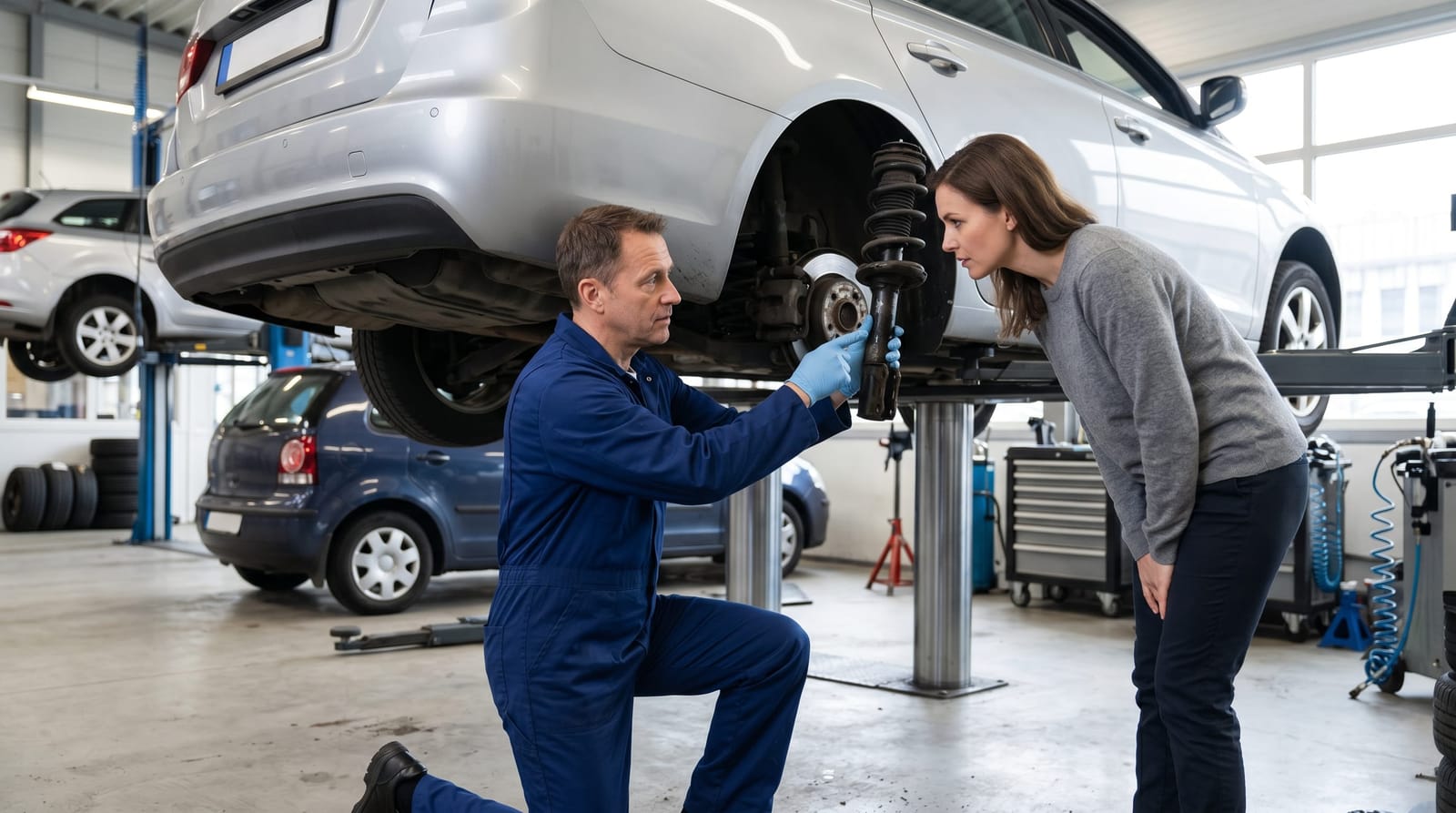
The technician will also physically inspect tie rod ends, ball joints, and other steering linkage components for wear or binding. Worn components often have noticeable play or feel stiff when moved by hand. Checking these is especially important when the hard steering wheel problem appears alongside other symptoms like pulling or vibration.
Speaking of vibration, if your steering wheel also shakes, that can be a separate but related issue. Our post on vibrating steering wheel suspension breaks down what different types of vibration typically mean.
What Does Repair Look Like: and What Does It Cost?
Repair costs for a hard steering wheel problem vary quite a bit depending on what's actually causing it. Here's a general overview:
- Power steering fluid top-off (with no leak): Minimal cost: mostly a maintenance item
- Power steering fluid leak repair: Depends on the source: a hose replacement is much less involved than a rack replacement
- Power steering pump replacement: Mid-range repair: typically less expensive at a local independent shop than at a dealership
- Rack and pinion replacement: One of the more significant steering repairs, but still very manageable at a local shop
- Tie rod or ball joint replacement: Moderate cost, and often recommended alongside an alignment service afterward
For Kaufman County drivers, one of the practical advantages of using a trusted local shop over a dealership is cost transparency. Independent shops like Gregg Automotive typically have lower labor overhead than dealerships, which can make a meaningful difference on moderate-to-major repairs like pump or rack replacement. You get the same quality repair at a price that reflects the local market, not the dealership's pricing structure.
It's also worth noting that addressing a hard steering wheel problem early is almost always less expensive than waiting. A small fluid leak left unattended can eventually damage the pump; a worn pump left running can put additional strain on other components. Fixing the root cause early keeps the repair scope (and cost) manageable.
How Hard Steering Relates to Other Suspension and Steering Symptoms
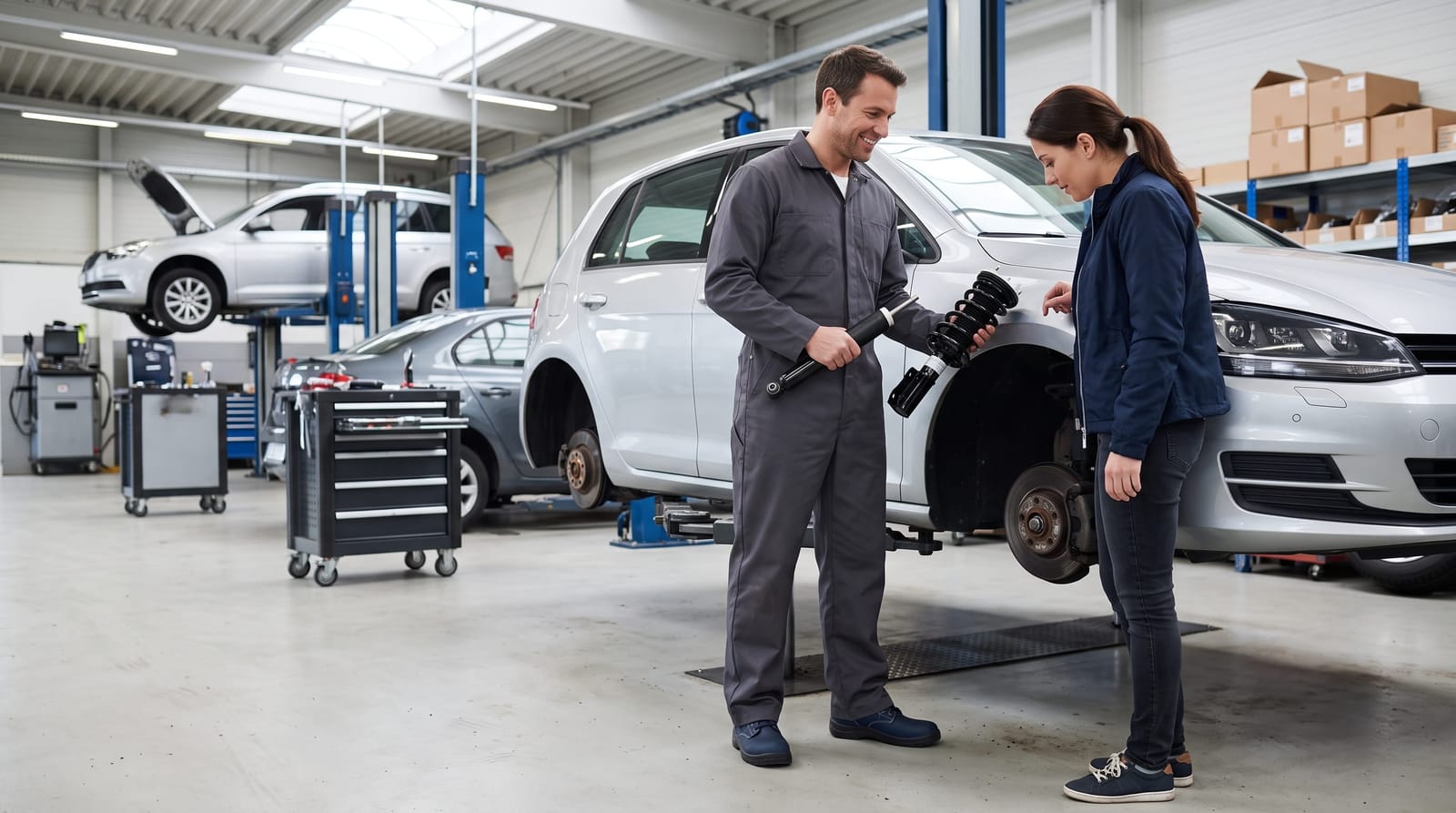
A hard steering wheel problem rarely exists in complete isolation. The steering and suspension systems are closely connected, which means a problem in one area often influences how other parts feel. For example, worn struts can affect steering precision and feel. Understanding the full picture of what's happening with your vehicle's front end is part of getting to the right diagnosis.
If you're also noticing bouncing, bottoming out, or a rough ride, our post on bad strut symptoms is a helpful companion read. And if you're unsure whether your vehicle has struts or shocks, two different components that sometimes get confused, our guide on struts vs shocks difference explains what each one does and how to tell which your vehicle uses.
Related Details Worth Exploring
If you're researching a hard steering wheel problem and want to dig into specific related topics, here are a couple of areas this cluster covers in more detail:
- Power steering fluid leaks, including how to spot a leak, what the fluid looks like, and what typical repair costs look like in the Kaufman County area
- Vibrating steering wheels, which can sometimes occur alongside stiffness and may point to different underlying causes
These detail posts are designed to help you go deeper on the specific symptom you're experiencing before you bring the vehicle in.
Key Takeaways for Kaufman County Drivers
A hard steering wheel problem is one of those issues that's easy to notice and important not to ignore. The most common causes, low power steering fluid, a failing pump, rack and pinion wear, or suspension binding, are all diagnosable and repairable with the right approach. Getting the vehicle inspected sooner rather than later gives you more options and typically keeps costs lower.
If your steering has started feeling heavier than it used to, or if you're hearing noises when you turn, Gregg Automotive is happy to take a look. We serve drivers throughout Kaufman County, including Forney, Terrell, and the surrounding area, and we're always straightforward about what we find and what it takes to fix it. Give us a call or stop by to schedule a steering inspection: we'll help you figure out exactly what's going on and get your vehicle feeling right again.