How Often Should I Change My Brake Fluid?
Brake fluid is one of those maintenance items that rarely makes it onto most people's radar, until something feels off when they press the pedal. But understanding your brake fluid change interval is an important part of keeping your vehicle's braking system working reliably. Whether you're trying to stay ahead of potential problems or just making sense of what your service advisor recommended, this guide will give you a straightforward, honest answer and help you figure out what's right for your specific vehicle.
The General Brake Fluid Change Interval Most Drivers Should Know
As a baseline, most automotive professionals recommend changing your brake fluid every 2 to 3 years, or roughly every 30,000 to 45,000 miles: whichever comes first. Some manufacturers, like Honda, lean toward a 3-year interval regardless of mileage. Others suggest 2 years or 20,000 miles as a more cautious benchmark.
Why the range? Because brake fluid change interval recommendations vary based on the type of fluid your vehicle uses, how your car is engineered, and how it's driven. The key takeaway is that brake fluid doesn't last indefinitely: it absorbs moisture from the air over time, and that moisture gradually reduces its effectiveness.
Unlike oil changes, there's no universal mileage sticker you'll slap on your windshield for brake fluid. This makes it easy to forget, but it doesn't make it any less important. The best starting point is always your owner's manual. That document reflects what your vehicle's manufacturer actually tested and recommends, and it's more reliable than general rules of thumb.
Why Brake Fluid Doesn't Last Forever
Brake fluid is what's called hygroscopic, which simply means it naturally absorbs moisture from the surrounding air. Even a sealed brake system isn't completely airtight, so over months and years, water slowly works its way into the fluid.
Here's why that matters: fresh brake fluid has a very high boiling point, typically well above 400°F for standard DOT 3 or DOT 4 fluid. But as moisture content increases, that boiling point drops significantly. When brake fluid gets too hot and boils, it can create vapor pockets in the brake lines. Vapor doesn't compress the way liquid does, so instead of firm braking, you might notice a spongy or soft pedal feel.
This isn't meant to alarm you: it's just how the chemistry works. Sticking to a consistent brake fluid change interval is one of the simplest ways to prevent this kind of degradation. It's basic preventive maintenance, the same way you change coolant or transmission fluid on a schedule.
Vehicles with ABS (anti-lock braking systems), which is most cars on the road today, are especially worth keeping on a regular brake fluid service schedule, since the ABS components involve additional valves and actuators that are sensitive to contaminated fluid.
Driving Conditions That Can Shorten Your Brake Fluid Change Interval
Standard manufacturer recommendations are based on average driving. But not everyone drives under average conditions, and that affects how quickly your brake fluid degrades.
Consider shortening your brake fluid change interval if any of the following apply to your situation:
- Frequent stop-and-go driving: Heavy traffic in areas like Dallas-Fort Worth means your brakes are working harder and generating more heat more often.
- Towing or hauling: Extra weight puts more demand on your braking system, which increases heat and speeds up fluid degradation.
- Hilly or mountainous driving: Extended downhill braking generates significant heat, even on occasional trips.
- Older vehicles: Brake systems on higher-mileage vehicles may have experienced more wear on seals and hoses, which can allow slightly more moisture intrusion over time.
- Infrequent use: Vehicles that sit for long periods still experience moisture absorption, so mileage-based intervals alone don't tell the full story.
If your driving life looks anything like the typical Texas commute, highway miles mixed with plenty of city traffic, staying closer to the 2-year end of the recommended brake fluid change interval is a sensible approach.
Signs Your Brake Fluid May Need to Be Replaced Sooner
Even if you're tracking your brake fluid change interval by the calendar, certain warning signs suggest your fluid may need attention before the scheduled service comes around.
Color and Clarity
Fresh brake fluid is typically clear to light yellow. Fluid that has darkened to a brown or nearly black color has likely absorbed significant contamination. You can sometimes check this yourself by looking at the brake fluid reservoir under your hood: it's a small translucent plastic container near the firewall. If the fluid looks dark, it's worth having it tested or replaced.
A Soft or Spongy Brake Pedal
If your pedal feels less firm than it used to, or if it seems to sink lower before the brakes engage, that's a sign worth investigating. While several things can cause a soft pedal, degraded brake fluid with a reduced boiling point is one of them.
Moisture Test Results
Many shops use a simple test strip or electronic tester to check the moisture content of your brake fluid on the spot. This takes less than a minute and gives a much clearer picture of whether your fluid is still performing properly. It's a straightforward way to remove the guesswork from your brake fluid change interval decision.
If you're uncertain about the condition of your brake fluid and haven't had it serviced in a few years, understanding what happens if you don't change your brake fluid can help you weigh the decision with full information.
What a Brake Fluid Change Actually Involves
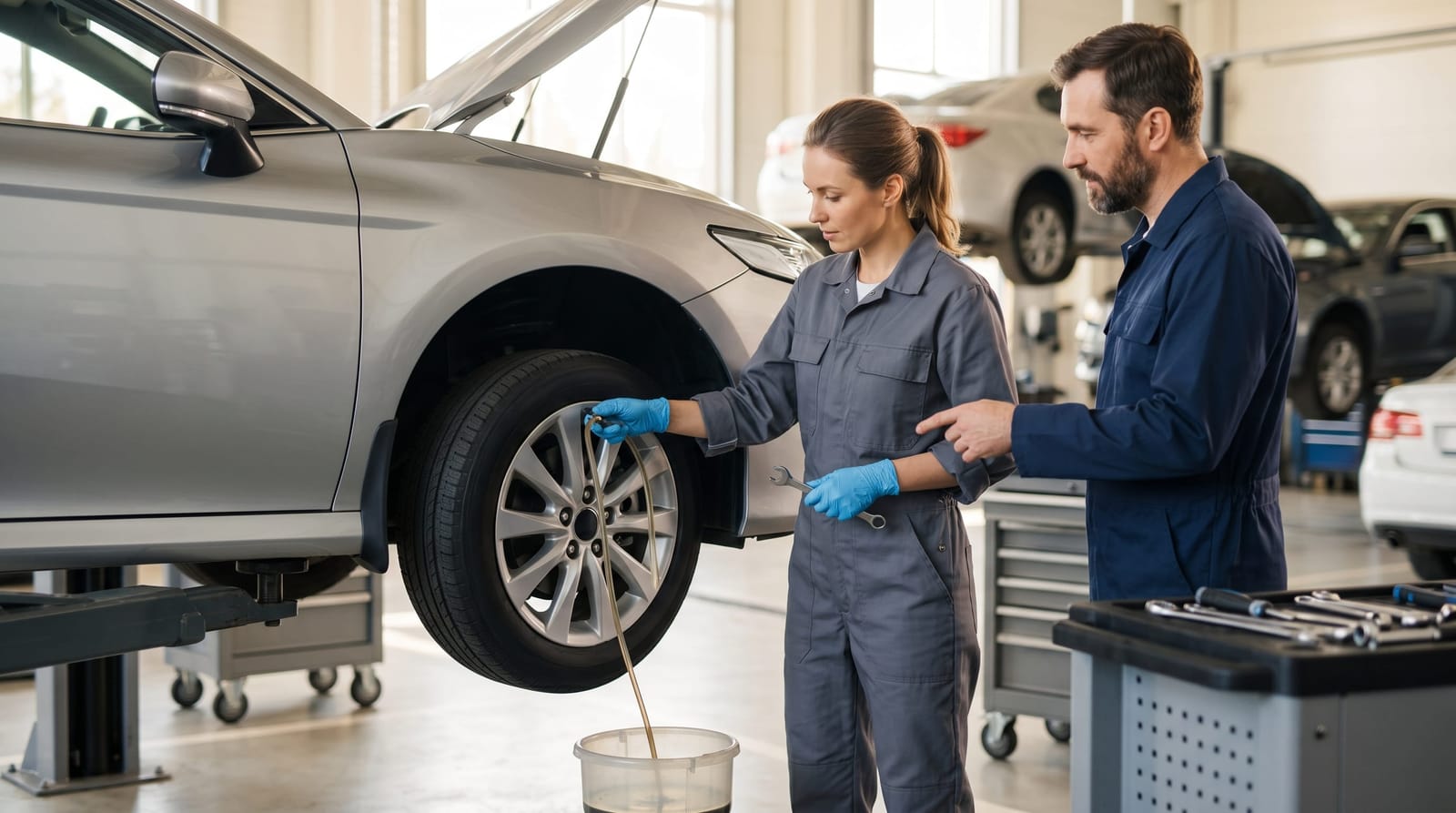
A brake fluid flush isn't a complicated service, but it does need to be done correctly. The process involves draining the old fluid from the system and replacing it with fresh fluid that meets your vehicle's specifications, whether that's DOT 3, DOT 4, or DOT 5.1.
It's not the same as just topping off the reservoir. Topping off adds a small amount of new fluid to old, degraded fluid, which doesn't address the contamination issue. A proper flush removes and replaces the fluid throughout the entire system, including the brake lines, caliper pistons, and master cylinder.
The service typically takes under an hour and is one of the more affordable fluid maintenance services for your vehicle. When you're already having brake work done, like pad or rotor replacement: it often makes sense to have the fluid checked at the same time, since the system is already being serviced.
Frequently Asked Questions About Brake Fluid Change Intervals
How often should brake fluid be changed as a general rule?
Most vehicles benefit from a brake fluid change every 2 to 3 years or every 30,000 to 45,000 miles, whichever comes first. However, your owner's manual has the most accurate recommendation for your specific vehicle make and model.
Can I check my brake fluid myself at home?
You can do a basic visual check by looking at the brake fluid reservoir under your hood. If the fluid appears dark brown or murky instead of clear or light yellow, it's likely due for a change. For a more accurate assessment of moisture content, a technician can use a test strip or electronic tester in just a minute or two.
Is a brake fluid flush the same as topping off the fluid?
No: they're different services. Topping off simply adds a small amount of fluid to the reservoir without removing the old, degraded fluid. A flush drains and replaces the fluid throughout the entire brake system, which is what's needed to properly address contamination and maintain braking performance.
Does the type of brake fluid affect how often it should be changed?
Yes, to some extent. DOT 3, DOT 4, and DOT 5.1 fluids all absorb moisture over time, though at slightly different rates. DOT 5 (silicone-based) is less hygroscopic but is only used in certain specialty vehicles. Most passenger cars use DOT 3 or DOT 4, and the 2-to-3-year brake fluid change interval applies to both. Always use the fluid type specified in your owner's manual: mixing types can cause problems.
Keeping Your Brake Fluid Fresh Is Simple Preventive Care
Staying on top of your brake fluid change interval doesn't require any special knowledge, just a general awareness of when it was last done and a willingness to check in with a trusted shop when the time approaches. For most drivers, that means once every 2 to 3 years. For those with higher demands on their braking system, a bit more frequently. It's one of the lower-cost maintenance items you can take care of, and it keeps an essential safety system working the way it should. If you're already thinking about your brakes, it's worth reviewing the broader picture of brake repair and maintenance to make sure everything else is in good shape too.