Tire Safety and Heat: What Forney TX Drivers Need to Know About Blowout Prevention
If you've spent any time driving Texas highways in July or August, you've probably seen the remnants of a tire blowout scattered across the pavement. It's more common than most people realize, and it's not just bad luck. Texas summers create a specific set of conditions that make tires work harder, wear faster, and fail more often than in cooler climates. For drivers in Forney and across Kaufman County, tire heat blowout prevention isn't just a seasonal concern: it's something worth understanding year-round. This guide covers exactly how heat affects your tires, what warning signs to watch for, and what you can do to keep your vehicle safer on hot Texas roads. It's part of our broader year-round vehicle maintenance guide for Texas drivers, which addresses the full range of climate-related car care challenges in this region.
Why Texas Heat Makes Tire Blowouts More Likely
Most drivers think of a tire blowout as a random event: something that just happens. In reality, blowouts almost always have a cause, and heat is one of the biggest contributors, especially in Texas.
Here's the basic physics: as air temperature rises, the air inside your tires expands. For every 10°F increase in ambient temperature, tire pressure increases by roughly 1 PSI. When Texas summer temperatures push into the upper 90s and triple digits, that pressure increase adds up fast. At the same time, hot asphalt, which can reach surface temperatures of 150°F or higher on a peak summer day, transfers additional heat directly into your tire's rubber and internal structure.
Tires are built to handle a reasonable amount of heat, but they have limits. When a tire runs overinflated due to heat expansion, underinflated due to a slow leak, or is already worn or damaged, the heat stress becomes too much. The rubber weakens, the internal structure (called the carcass) breaks down, and eventually the sidewall gives out. That's the blowout.
What makes this especially relevant for tire heat blowout prevention in Forney TX is that our local roads combine high ambient temps with extended highway driving on I-20 and US-80: both of which push tires harder and longer than short city trips. Speed generates additional heat from friction, so highway driving in summer is genuinely one of the highest-risk conditions for tire failure.
The Numbers Behind the Risk
According to the National Highway Traffic Safety Administration (NHTSA), tire-related crashes account for approximately 11,000 accidents per year in the United States. A significant portion of those occur in summer months, when heat stress is at its peak. Studies have also shown that tires underinflated by just 25% are three times more likely to be involved in a crash than properly inflated tires. These aren't rare edge cases: they're everyday risks that proper maintenance can meaningfully reduce.
The Critical Role of Tire Pressure
Tire pressure is the single most important factor in blowout prevention, and it's also the easiest thing to check. Yet surveys consistently show that a large percentage of vehicles on the road are running on tires that are improperly inflated: some estimates suggest as many as 1 in 4 vehicles has at least one significantly underinflated tire.
For Texas drivers, the seasonal pressure changes create an ongoing management challenge. In winter, cold temps cause pressure to drop. In summer, heat causes it to rise. Neither extreme is ideal, and both require attention.
Finding the Right Pressure for Your Vehicle
The correct tire pressure for your vehicle is listed on the sticker inside your driver's door jamb, not on the tire itself. The number printed on the tire's sidewall is the maximum pressure the tire can hold, not the recommended operating pressure. These are two very different numbers, and confusing them is a common mistake.
Most passenger vehicles run between 32 and 36 PSI, though trucks and SUVs may require higher pressure, especially when carrying loads. Check your door sticker for the exact specification for your vehicle.
When to Check Pressure and How Often
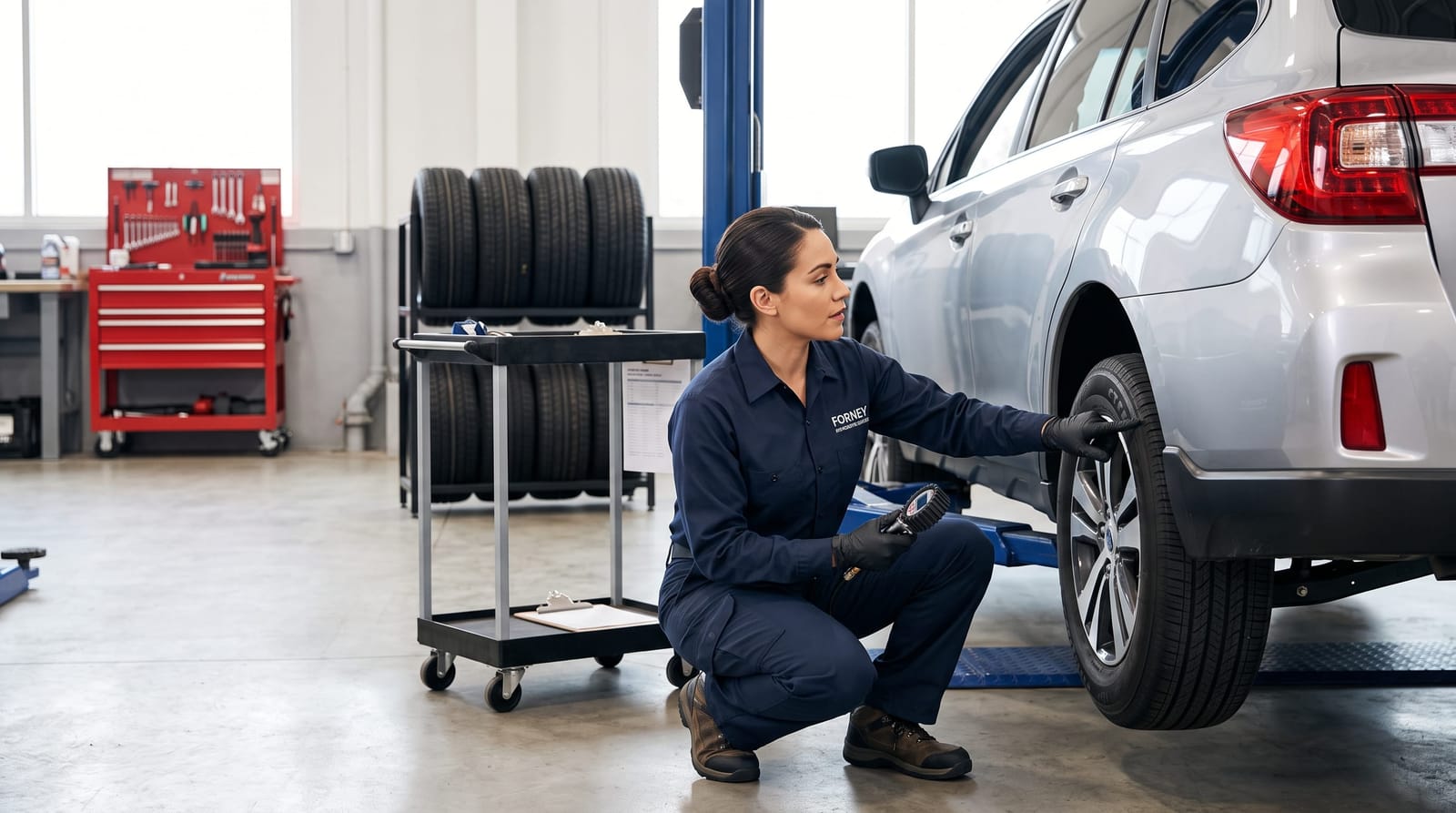
Tire pressure should be checked when tires are "cold": meaning the vehicle hasn't been driven more than a mile or two. Checking pressure after a long drive gives you an inflated reading due to heat buildup from driving. Early morning, before the day heats up, is the ideal time to get an accurate number.
During Texas summers, checking pressure at least once a month is a reasonable habit. If you're heading out on a longer road trip, check it before you leave. A quality digital tire gauge costs less than $15 and takes about two minutes to use. Our more detailed guide on tire pressure Texas summer Crandall TX covers seasonal inflation strategies in more depth if you want to go further on this topic.
Tread Depth and Tire Condition: What to Look For
Pressure is critical, but it's not the whole story. A tire's physical condition matters just as much, especially when heat is involved. Worn tires have less rubber between the road and the internal structure, which means less protection and less heat tolerance.
The legal minimum tread depth in Texas is 2/32 of an inch, but many tire safety experts recommend replacing tires at 4/32 of an inch, especially for wet weather performance. The classic "penny test" (insert a penny with Lincoln's head down; if you can see the top of his head, the tire is at or near the 2/32 minimum) is a useful quick check. For a more conservative benchmark, use a quarter, if you can see the top of Washington's head, you're around 4/32 and approaching the zone where replacement deserves serious consideration.
Other Visible Warning Signs
Beyond tread depth, walk around your vehicle occasionally and look at your tires with fresh eyes. Signs of trouble include:
- Sidewall bulges or bubbles: These indicate internal structural damage and are a serious blowout risk. A tire with a sidewall bulge should be replaced promptly: it's not safe to continue driving on it.
- Cracking or dry rot: Texas heat and UV exposure degrade rubber over time. Tires that are 6 years or older may show cracking even if tread depth looks adequate. Many manufacturers recommend replacing tires at 10 years regardless of appearance.
- Uneven wear patterns: Wear that's heavier on one edge, or appears choppy across the tread, often signals alignment or inflation problems that are accelerating tire deterioration.
- Embedded objects: Nails, screws, or glass can cause slow leaks that reduce pressure over time without you noticing.
Rotation and Alignment: The Maintenance Habits That Extend Tire Life
Even a perfectly inflated tire in good condition will wear unevenly over time if it stays in the same position on the vehicle. Front tires typically carry more of the vehicle's weight (especially on front-wheel-drive vehicles) and handle more steering stress, which causes them to wear faster than rear tires.
Regular rotation, moving tires from front to back and sometimes side to side depending on the pattern, evens out that wear and extends the life of the full set. Most shops recommend rotating tires every 5,000 to 7,500 miles. Many drivers tie this to every other oil change as an easy reminder.
Why Alignment Matters for Heat and Safety
Wheel alignment refers to the angle at which your tires contact the road. When alignment is off, often caused by hitting a pothole, curb, or rough road surface, tires scrub against the pavement at a slight angle rather than rolling straight. This creates uneven wear, shortens tire life, and also generates additional heat from friction.
In Texas, where road surfaces expand and contract with temperature extremes, alignment issues are common. If your vehicle pulls to one side, or you notice your steering wheel is off-center when driving straight, an alignment check is worth scheduling. This kind of maintenance connects directly to the broader seasonal upkeep covered in our summer car maintenance checklist Forney TX.
Knowing When It's Time to Replace Your Tires
One of the harder conversations in vehicle maintenance is knowing when tires have reached the end of their useful life, especially when they still look okay on the surface. Texas heat accelerates the aging process, so calendar age matters alongside tread depth.
Here are the primary indicators that tire replacement should be a near-term priority:
- Tread depth is at or below 4/32 of an inch (especially heading into rainy season)
- Any sidewall bulging or visible structural damage
- Significant cracking across the sidewall or tread area
- Tires are 6 years or older and showing signs of rubber degradation
- Tires are 10 years old regardless of visual appearance
- You've experienced a puncture or impact that was repaired but left you uncertain about the tire's integrity
Replacing tires before they fail is always less expensive, and far less dangerous, than dealing with a blowout at highway speed. If you're not sure about the condition of your tires, having a technician take a look during a regular service visit is an easy way to get a professional opinion without any guesswork.
Pre-Trip Checks: Five Minutes That Can Prevent a Bad Day
Before any road trip, whether it's a drive to Dallas or a longer summer vacation, a quick tire check is one of the most valuable things you can do. A five-minute inspection before you leave is far better than dealing with a blowout on I-20 at noon in August.
Here's a simple pre-trip tire checklist:
- Check all four tires for proper inflation (use your door sticker number as the target)
- Walk around the vehicle and visually inspect each tire for bulges, cracks, or embedded objects
- Do a quick tread depth check using a quarter or penny
- Make sure your spare tire is inflated and accessible (many spare tires are found flat when needed)
- Note how old your tires are, if you're uncertain, your technician can look up the manufacturing date from the DOT code on the sidewall
Texas heat creates real stress on tires, but that stress is manageable with consistent habits. Vehicle safety across all seasons is something our winter car preparation Kaufman County TX guide also addresses, because even though blowouts are primarily a summer risk, tire condition matters year-round.
Related Topics Worth Exploring
Tires are one of several vehicle components that Texas heat affects more aggressively than drivers expect. If you've found this guide useful, you may also want to read about how heat impacts your battery: covered in our post on car battery replacement heat damage Mesquite TX, since battery failure and tire problems are two of the most common causes of summer roadside breakdowns in this area.
Keep Your Tires in Good Shape: We Can Help
Tire blowouts are largely preventable. The combination of proper inflation, regular visual inspections, consistent rotation, and timely replacement covers the majority of blowout risk factors, especially in a climate like Forney's, where summer heat puts extra stress on every component of your vehicle.
At Gregg Automotive, we inspect tire condition as part of routine service visits and are happy to answer any questions you have about what you're seeing on your tires. If you're due for a rotation, want a second opinion on tread wear, or just want someone to take a look before a long trip, give us a call or stop by. Taking care of the small things before they become big problems is exactly what we're here for.