Truck Lift Kits and Vehicle Lowering: The Complete Modification Guide for Kaufman County Drivers
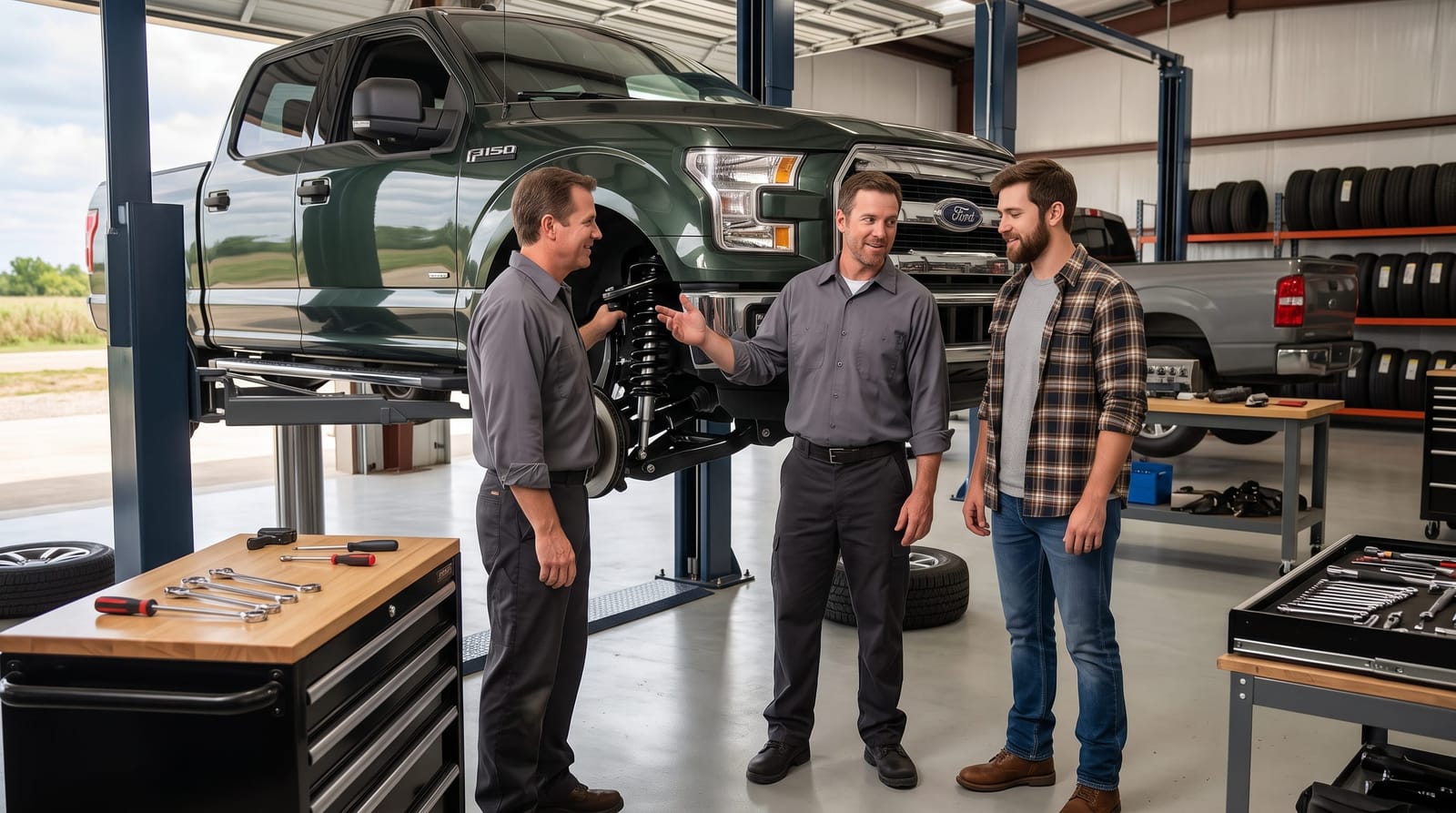
Whether you're sitting in the cab of a F-250 wondering how to get more ground clearance on the back roads of Forney, or you're driving a car through Terrell and thinking about dropping it a couple of inches for a cleaner look, vehicle height modification is one of the most popular, and most misunderstood, upgrades in Kaufman County. Before you commit to any modification, there's a lot worth knowing.
This lift kit selection guide for Kaufman County, TX drivers is built specifically for that decision-making phase, when you're asking real questions like "What size lift do I actually need?", "Will this void my warranty?", and "Is it even legal in Texas?" Those are the right questions, and they deserve straight answers from people who work on these vehicles every day.
At Gregg Automotive in Forney, we work with truck and car owners across Kaufman County on both lift and lowering projects. We've seen what works, what causes problems down the road, and what people wish they'd known before choosing a kit. This guide pulls all of that together in one place, covering lift types, lowering options, cost expectations, Texas road conditions, legality, warranty implications, and more, so you can make a confident, informed decision before your vehicle ever goes up on a lift.
Understanding the Basics: What Does Modifying Ride Height Actually Mean?
Before diving into specific kits and options, it helps to understand what's actually happening when you raise or lower a vehicle. Ride height refers to the distance between the ground and the underside of your vehicle's frame or body. When you modify that height, you're changing how the suspension, steering, and drivetrain components relate to each other, and that has consequences for how your vehicle drives, handles, and wears over time.
For trucks, lifting is the most common goal. Drivers want more ground clearance for off-road use, the ability to run larger tires, better visibility, or simply the look of a taller truck. For cars and some crossovers, lowering is the goal: bringing the center of gravity down for a sportier feel or achieving a specific visual style.
What makes vehicle height modification more complex than it might appear is that your suspension doesn't work in isolation. It connects to your steering geometry, your brake system, your driveshafts, and your tires. Change one thing, and everything else shifts too. A quality modification done correctly accounts for all of that. A shortcut that doesn't will show up in your alignment, your tire wear, and eventually your steering feel, often within a few thousand miles.
That's why the most important first step in any lift or lowering project isn't choosing a brand or a kit: it's understanding what you actually want to accomplish and finding a shop that can help you match a solution to that goal.
Lift Kit Types Explained: Leveling, Body, and Suspension
Not all lift kits are created equal, and the differences between them are significant. The three main categories each serve different purposes, fit different budgets, and require different levels of modification to install correctly.
Leveling Kits
Most trucks come from the factory with a slight forward rake: the front sits an inch or two lower than the rear. This is intentional, designed to compensate for the added weight of a payload in the bed. A leveling kit raises the front of the truck to match the rear height, giving the vehicle a more even, balanced stance.
Leveling kits typically provide 1 to 2.5 inches of lift at the front. They're generally the most affordable lift option, involve fewer components, and cause less disruption to factory suspension geometry. For drivers who want a cleaner look without a dramatic height change, or who want to run slightly larger tires without a full suspension overhaul, a leveling kit is often the right choice.
Body Lift Kits
A body lift raises the truck's body off the frame using spacers or blocks, without actually modifying the suspension. This creates clearance to run larger tires but doesn't improve ground clearance under the frame or change the suspension geometry. Body lifts are typically available in 1 to 3 inch ranges.
These kits are cost-effective for achieving the look of a taller truck or fitting bigger tires, but they're not suitable for serious off-road use because the frame and suspension components remain at stock height. They also require attention to detail during installation: things like brake lines, steering shaft extensions, and body panel gaps all need to be addressed properly.
Suspension Lift Kits
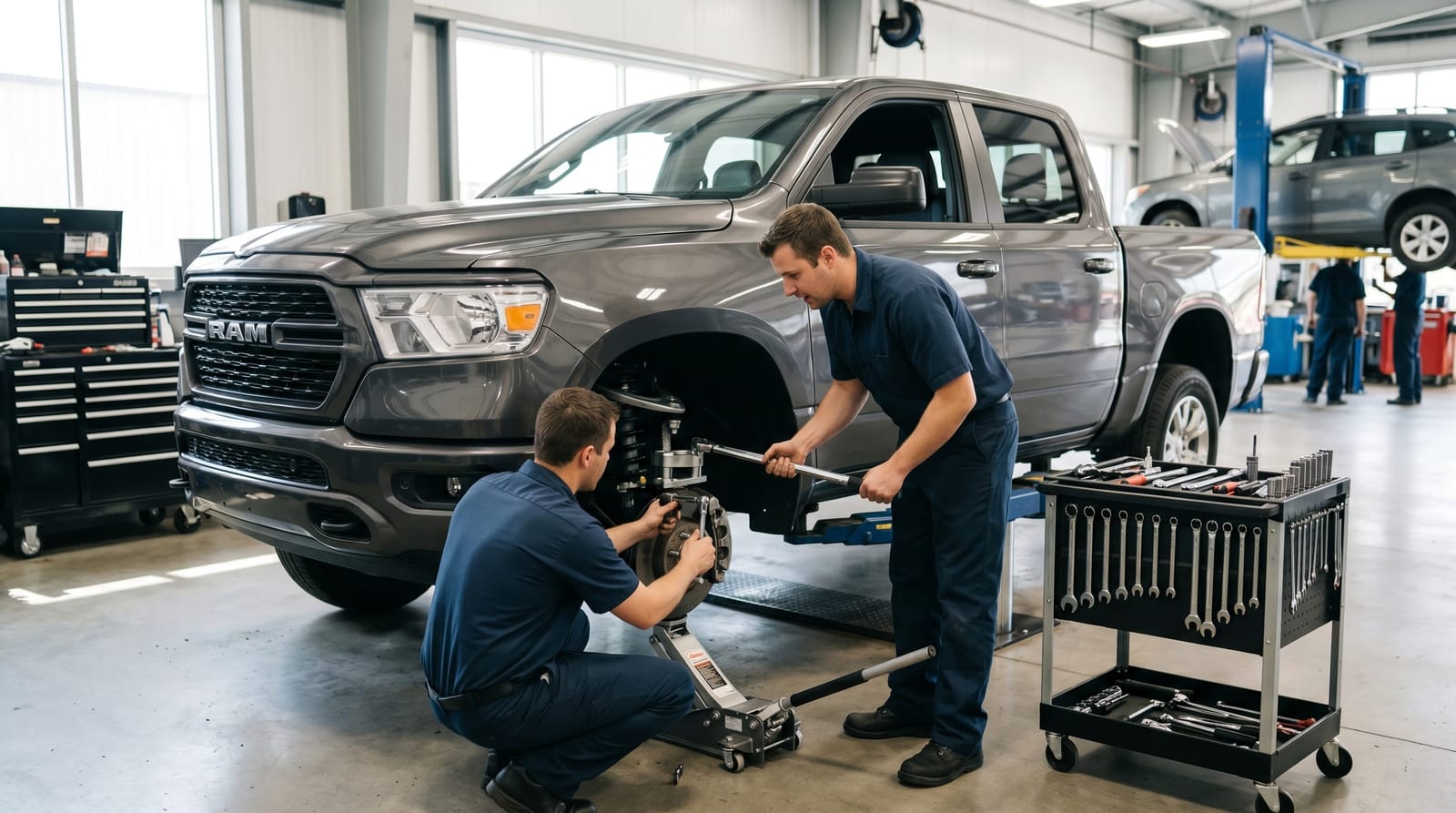
Suspension lifts are the most comprehensive option. They replace or modify the actual suspension components, struts, shocks, control arms, leaf springs, differential drop brackets, and more, to raise both the body and frame of the vehicle. Suspension lifts typically range from 2 inches to 6 inches or more, with some extreme builds going even higher.
This type of lift genuinely improves ground clearance, allows for significantly larger tires, and can improve off-road capability when done correctly. It also requires the most careful installation and follow-up alignment work. The more lift you add, the more components are affected, and the more important it becomes to have a shop that understands how to put all those pieces back together correctly.
How to Choose the Right Lift Size for Your Goals
One of the most common questions we hear is some version of "I want to lift my truck: how high should I go?" The honest answer is that it depends on what you want to do with the vehicle.
If you're primarily a daily driver who wants a more aggressive look and maybe a slightly larger tire, a 2-inch leveling kit or a 2-inch suspension lift is often all you need. It's a noticeable change, it fits within a manageable budget, and it doesn't dramatically affect how the truck behaves on the road. Most of the roads in Forney, Terrell, and Rockwall are paved, and a moderate lift works well for daily use on those surfaces.
If you're towing regularly or doing light trail work on some of the rural areas around Kaufman County, a 4-inch suspension lift starts to make sense. You get meaningful ground clearance, room for a larger tire that improves traction, and a more capable setup overall, without going so far that daily drivability suffers.
If you're running serious off-road terrain or want to run tires in the 35-inch range or larger, a 6-inch or greater suspension lift becomes the conversation. These builds require the most planning, the most components, and the most skilled installation. They can also have the most impact on your fuel economy, your steering feel, and your factory warranty, all things to weigh carefully before committing.
For a detailed breakdown of what changes at each level and how to match lift size to your specific goals, check out our guide on truck lift kit size selection: it walks through the 2-inch vs. 4-inch vs. 6-inch decision in depth.
Lowering Options: Springs, Coilovers, and What's Right for Your Vehicle
Vehicle lowering is less common in Kaufman County than lifting, but it's a growing category, especially among drivers who want better handling characteristics or a cleaner, lower profile look. The two main options for lowering a vehicle are lowering springs and coilover suspension systems.
Lowering Springs
Lowering springs replace your factory springs with shorter, stiffer units that bring the vehicle closer to the ground. They're generally the more affordable option and can work with your existing shocks, though pairing them with matched performance shocks is usually recommended for best results.
A quality set of lowering springs can drop a vehicle by 1 to 2 inches in most cases. They improve handling by lowering the center of gravity and reducing body roll, but they do increase ride firmness. On smooth roads, that's often a worthwhile tradeoff. On rougher surfaces, and Kaufman County has its share of them, the stiffer ride can become noticeable, especially over railroad crossings or patchy pavement.
Coilovers
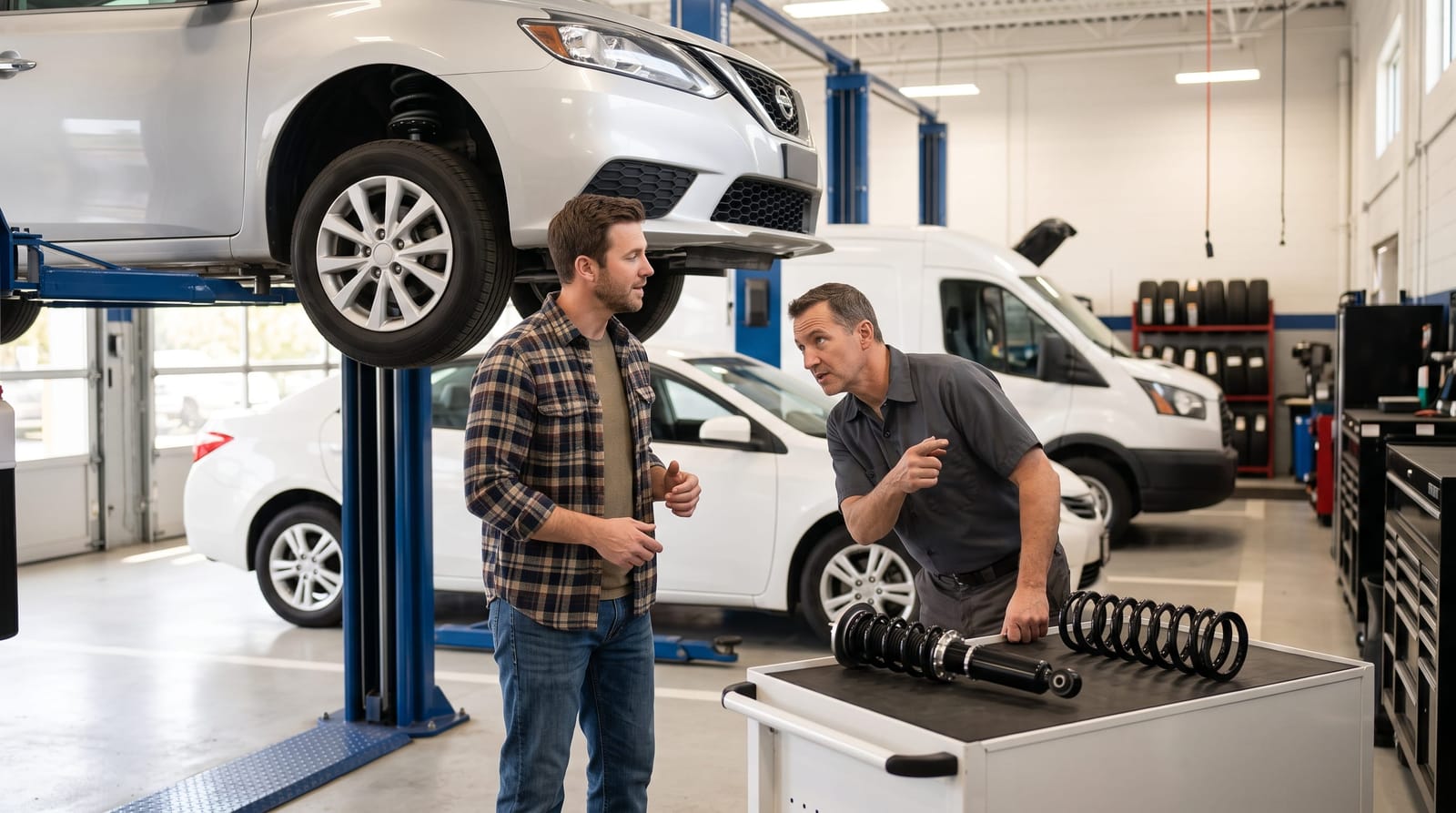
Coilovers combine the spring and shock absorber into a single adjustable unit. They allow you to fine-tune ride height, spring rate, and damping, sometimes even separately, which gives you far more control over how the vehicle sits and behaves. They're more expensive than lowering springs, but that adjustability is a genuine advantage for drivers who want to dial in a specific setup.
Coilovers are also more involved to install and adjust correctly. Getting the settings right matters, and a poor setup can actually make the ride worse rather than better. The technology is excellent when used properly, but it's not a plug-and-play solution that benefits from inexperienced installation.
If you're weighing these two options, our detailed comparison on lowering springs vs coilovers comparison covers the pros, cons, and cost differences in a way that makes the decision easier to navigate.
Texas Roads, Local Conditions, and What That Means for Your Build
Kaufman County isn't East Texas hill country, and it isn't a Houston freeway either. The roads here are a mix: well-maintained state highways, county roads that see limited maintenance, caliche and gravel paths that wind through rural areas, and the occasional low-water crossing that looks fine in summer and becomes a different story after heavy rain.
Texas weather also plays a role in how vehicle modifications wear over time. The heat here is serious, and components under stress from an improperly installed lift can degrade faster in extreme temperatures. Corrosion from heavy rain or occasional flooding can affect suspension hardware if the quality of components isn't considered up front.
For daily drivers in Forney or Terrell who spend most of their time on paved roads, a moderate lift (2 to 4 inches) or a quality lowering setup can work very well with minimal tradeoffs. For drivers who regularly travel unpaved county roads or access rural property, ground clearance matters more, and a better-equipped suspension lift makes sense.
One practical consideration specific to Texas: the summer heat radiates off pavement in ways that can affect tire pressure and performance. When you change to larger tires as part of a lift build, making sure you're running the correct pressure for that tire size becomes even more important in hot conditions. Your shop should help you understand the right tire specs for whatever size you're moving to.
Texas also has vehicle inspection requirements that include height-related standards. While we're not going to get into legal specifics here, that's a conversation worth having with your installer and the relevant authorities, it's worth knowing that Texas does have regulations around lift height, and your build should be done with those in mind. For more on what Texas law says about vehicle lowering specifically, see our article on vehicle lowering limits safety.
Warranty Implications: What Happens to Your Truck's Coverage?
This is one of the most searched and most misunderstood areas of vehicle modification. The short version: adding a lift kit or lowering modification doesn't automatically void your entire factory warranty, but it's more complicated than a simple yes or no.
The Magnuson-Moss Warranty Act provides some consumer protections in this area, but the specifics of how it applies to your situation depend on your vehicle, your warranty, and what modifications were made. Rather than interpret that for you, we'll say clearly: this is a conversation worth having with your dealer and your modification shop before you commit to a build, not after.
What we can say from experience is that dealerships vary widely in how they handle lifted trucks. Some are accommodating, some aren't. What matters most is documentation: knowing what was installed, how it was installed, and by whom. Reputable lift kit brands matter here too, because a well-known manufacturer with proper engineering behind their products is easier to defend in a warranty conversation than a budget kit from an unknown source.
Components that are unrelated to the modification are generally still covered by the factory warranty. If your transmission develops an issue that has nothing to do with your lift kit, that shouldn't affect your transmission warranty. But if your CV axles wear out prematurely after an aggressive lift that wasn't properly installed, that's a different conversation.
We've put together two dedicated resources to help you understand this area more fully. The first focuses specifically on what you should know before modifying: lift kit warranty implications. The second looks at what changes and what stays protected after a lift is installed: lift kit warranty implications. Both are worth reading before you make a decision.
Cost Expectations: What Should a Quality Modification Actually Cost?
There's a wide range in pricing for lift and lowering work, and understanding why helps you make a better decision, not just about what to spend, but about what you're getting for that money.
At the low end, a basic leveling kit with installation might run a few hundred dollars at a reputable shop. At the high end, a full 6-inch suspension lift with quality components, new shocks, a proper alignment, and any secondary work needed (like brake line extensions or steering upgrades) can reach several thousand dollars. Lowering projects vary similarly: basic spring swaps are relatively affordable, while full coilover systems on certain vehicles can be a significant investment.
Where people run into trouble is shopping purely on price. A lift kit sold for significantly less than comparable products usually costs less for a reason: thinner materials, less engineering, or fewer components that are actually needed for a complete and safe installation. When that kit fails or causes premature wear on connected components, the savings disappear quickly and then some.
Here's a general cost range to use as a reference when shopping:
- Leveling kit (parts + installation): $250-$600 for most trucks
- 2-inch suspension lift (parts + installation): $500-$1,200 depending on vehicle and kit quality
- 4-inch suspension lift (parts + installation): $1,000-$2,500 for most trucks
- 6-inch suspension lift (parts + installation): $2,000-$5,000+, especially on newer trucks with more complex suspension
- Lowering springs (parts + installation): $300-$800 depending on vehicle
- Coilovers (parts + installation): $800-$2,500+ depending on system quality and vehicle
- Post-modification alignment: $80-$150, always necessary after any height change
These are general reference ranges and will vary based on your specific vehicle, the brand of components chosen, and the labor rates in your area. What shouldn't vary is that alignment should always be included after any suspension work: it's not optional, it's part of completing the job correctly.
Finding the Right Shop: What to Look For in Kaufman County
Not every shop that will install a lift kit should install yours. The quality of the installation matters as much as the quality of the kit. Here's what to look for when choosing a shop for this kind of work in the Kaufman County area.
Experience with Your Vehicle Type
Different trucks and SUVs have different suspension designs, and a shop that has worked extensively on your make and model is going to do a better job than one that's figuring it out as they go. Ask about their experience with your specific vehicle before committing.
Willingness to Help You Choose
A good shop doesn't just install whatever you bring in. They ask questions about how you use the vehicle, what your goals are, and what tradeoffs you're comfortable with. If a shop pushes you toward the biggest or most expensive kit without understanding your actual needs, that's worth noting.
Alignment Capability
Every suspension modification requires a proper alignment after installation. A shop that handles both the modification and the alignment in-house is preferable: it means one team understands the full scope of the work.
Clear Communication About What's Included
Any shop worth working with will be upfront about what's included in the price, what components are being installed, and what, if anything, might come up during the job. Surprises mid-project are a sign of poor communication at the estimate stage.
At Gregg Automotive, we serve drivers throughout Kaufman County, from Forney and Terrell to Mesquite, Rockwall, and the surrounding communities. We take the time to understand what you're trying to accomplish before we recommend any modification, and we believe that an informed customer makes better decisions and ends up happier with their vehicle long-term.
Deep Dive Topics: Explore Each Subject in Detail
This guide gives you the foundation for making a smart vehicle modification decision. But each of the topics covered here deserves a deeper look on its own. Below are the dedicated resources we've created to help you go further on the subjects that matter most to your project.
- Lift Size Selection: Choosing between a 2-inch, 4-inch, and 6-inch lift involves more than just picking a number. Our guide on truck lift kit size selection walks through how each size changes your truck's capability, drivability, tire options, and long-term costs, so you can make the right call for your actual use case.
- Lowering Limits and Texas Law: Vehicle lowering has real restrictions in Texas, and understanding where those lines are matters before you choose a drop. Our article on vehicle lowering limits safety covers what's generally permitted, what the safety concerns are, and what Kaufman County drivers should know before going lower.
- Lowering Springs vs. Coilovers, If you're considering dropping your vehicle, the choice between these two systems affects your budget, your ride quality, and your long-term flexibility. Our lowering springs vs coilovers comparison lays out the differences clearly so you can choose the right system for your goals.
- Lift Kits and Warranty: Before You Modify, Before committing to a lift, understanding how it might affect your factory warranty is essential. Our guide on lift kit warranty implications covers what Kaufman County truck owners should know ahead of time, including what questions to ask your dealer and your shop.
- Lift Kits and Warranty: After You Modify: Already lifted or planning to be? Our article on lift kit warranty implications breaks down what typically changes after a lift is installed, what coverage usually stays intact, and how to protect yourself going forward.
Conclusion: Make the Right Decision for Your Truck and Your Roads
Vehicle height modification is one of the most personal upgrades a truck or car owner can make, and one of the most consequential. Done right, a quality lift or lowering job improves your vehicle's capability, look, and feel for years. Done poorly, it creates alignment problems, premature tire wear, handling issues, and headaches that cost more to fix than the original job was worth.
The best approach is always to start with clear goals, get good information before you commit, and work with a shop that takes the time to understand your vehicle and how you use it. Whether you're in Forney, Terrell, Kaufman, or anywhere else in the county, the roads and conditions here are worth factoring into your decision, and so are the practical realities of your daily driving life.
At Gregg Automotive, we're here to help you think through the options, ask the right questions, and get your truck or car set up the way it should be. If you're ready to talk through a lift or lowering project, or if you just want a professional second opinion before you commit to a direction, reach out to our team in Forney. We work on vehicles like yours every day, and we're happy to have an honest conversation about what makes sense for you.
Contact Gregg Automotive in Forney to schedule a consultation on your lift or lowering project: no pressure, just straight answers from a shop that knows what it's doing.