What Are Slotted and Drilled Brake Rotors? Do I Need Them in Kaufman County?
If you've been shopping for brake parts or researching upgrades, you've probably come across rotors that look dramatically different from the smooth discs you're used to seeing. Slotted and drilled rotors are marketed heavily, and the photos are eye-catching, but what do they actually do? And more importantly, do they make sense for your truck, SUV, or everyday vehicle here in Kaufman County? This post breaks down what these rotor styles actually accomplish, separates real benefits from marketing claims, and helps you figure out whether an upgrade makes sense for how you actually drive.
What Makes Slotted, Drilled, and Dimpled Rotors Different?
Standard brake rotors are smooth and flat on their braking surface. That design works well for most everyday driving because it gives brake pads maximum contact area. Modified rotors change that surface in specific ways, each with its own purpose.
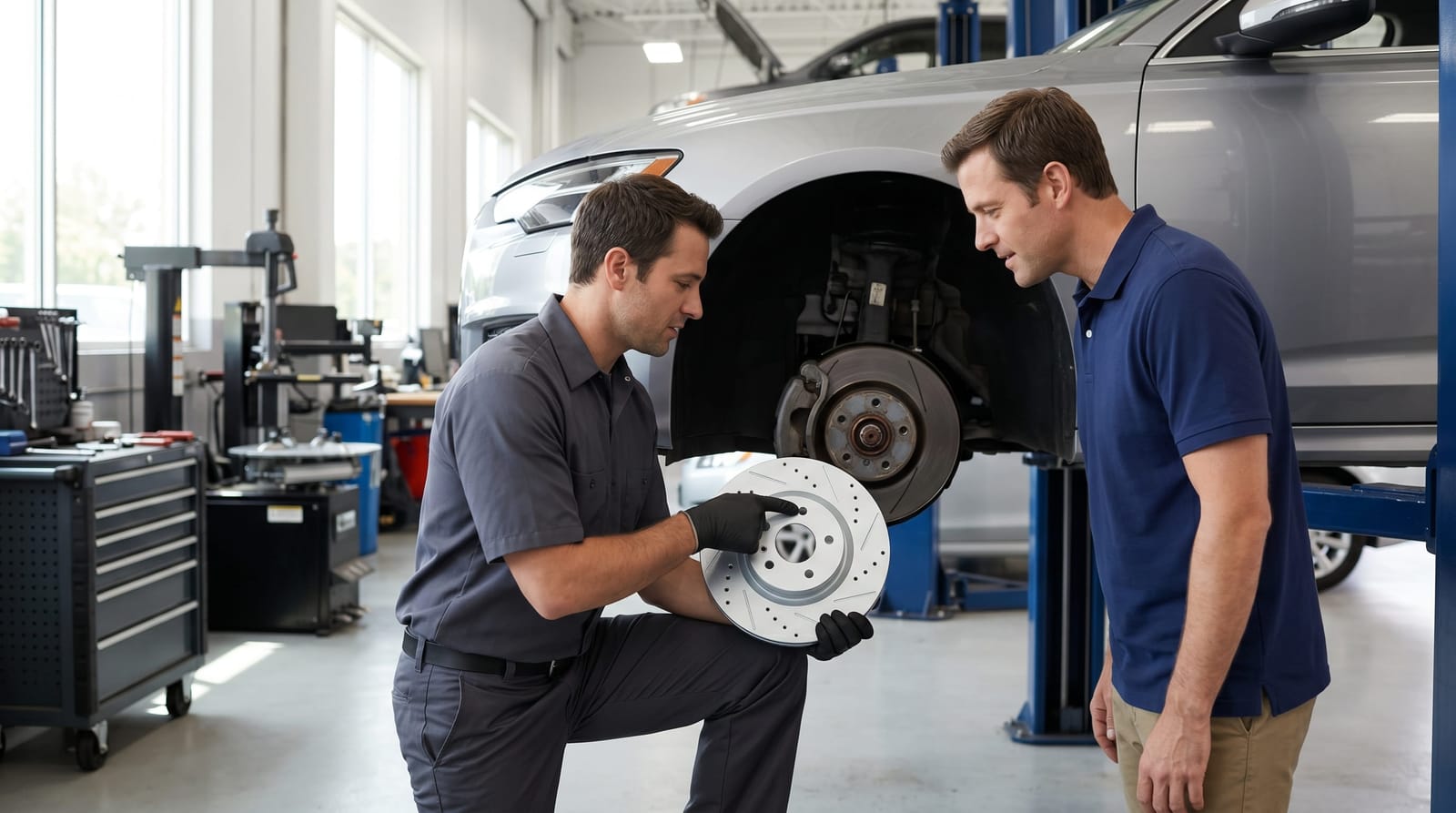
- Drilled rotors have holes bored through the rotor face. Originally developed for wet-weather performance, the holes allow water to escape quickly from between the pad and rotor surface, which can help restore braking response faster after driving through rain or standing water.
- Slotted rotors have channels machined into the surface that run across the face of the rotor. These slots help scrape away a thin layer of gas and dust that builds up between the pad and rotor during heavy braking. They also give the pad a slightly abrasive edge-clean as it passes over each slot, which can help maintain a fresh pad surface during extended or aggressive braking.
- Dimpled rotors are a middle-ground option: they have shallow depressions rather than full holes. This gives some of the gas and debris venting benefits without the structural trade-off that drilled holes can create in high-stress situations.
- Combination slotted and drilled rotors are common in the aftermarket and combine both features, which looks impressive and does offer some real benefit, but it's worth understanding what you're actually getting before spending the money.
The core idea behind all of these designs is to manage heat, gas buildup, and debris at the pad-rotor interface. Whether that matters for your specific vehicle depends entirely on how you use it.
Real-World Performance Differences vs. Marketing Claims
Here's where it's worth being honest: for most drivers doing everyday commuting around Forney, Terrell, or Kaufman, the performance difference between a quality smooth rotor and a slotted or drilled rotor is minimal. Standard smooth rotors, when paired with quality brake pads and properly maintained, stop the average passenger vehicle reliably and safely.
The benefits of slotted and drilled rotors become more real under two specific conditions: high heat and high frequency. If your brakes are getting hot repeatedly, during long downhill grades, heavy towing, frequent emergency stops, or repeated hard braking, then gas buildup and rotor glazing become genuine problems worth addressing. In those situations, slotted rotors in particular can help maintain consistent braking feel over time.
One honest trade-off worth knowing: fully drilled rotors can be more prone to cracking under extreme thermal stress than smooth or slotted rotors. The holes create stress points in the metal. For severe-duty applications, slotted or dimpled rotors are often a better structural choice than drilled-only designs. Many shops and enthusiasts who tow regularly actually prefer slotted rotors over drilled for exactly this reason.
Another consideration: slotted rotors typically wear brake pads slightly faster than smooth rotors. The slots do their job by constantly exposing fresh pad material, but that process isn't free. If you're upgrading to slotted rotors, pairing them with ceramic brake pads is often a good idea. Understanding how ceramic brake pads hold up in Texas heat and driving conditions is worth exploring if you're planning a more complete brake upgrade.
When Slotted or Drilled Rotors Actually Make Sense in Kaufman County
Kaufman County driving includes a mix of highway stretches, rural roads, and a lot of people hauling trailers, boats, campers, and equipment. That context matters when thinking about brake upgrades.
Here are the situations where upgraded rotors genuinely make sense for local drivers:
- Towing and hauling regularly: If you're pulling a boat to Lake Tawakoni, hauling a livestock trailer, or regularly towing heavy equipment, your brakes work significantly harder than a standard commuter's. Slotted rotors paired with quality pads can help maintain more consistent stopping power under that added thermal load.
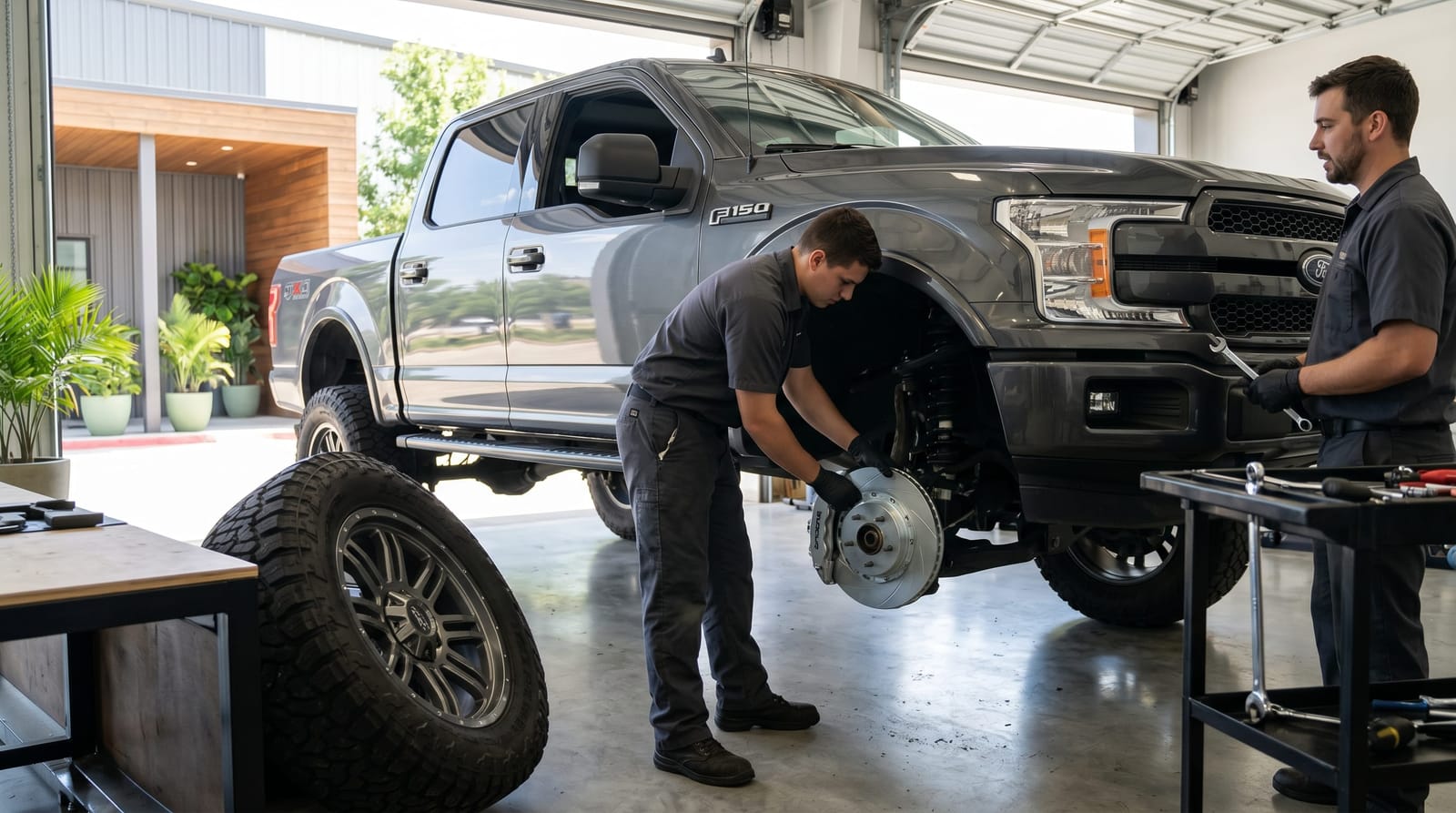
- Lifted trucks and large SUVs: Lifted vehicles often carry more weight and have different brake dynamics than stock vehicles. If your truck has been lifted and you've added larger tires and heavier components, reviewing your entire brake system, including rotor choice, is a reasonable step.
- Vehicles that sit heavy: Overloaded work trucks or vehicles consistently near their payload limit generate more braking heat. Upgraded rotors can help manage that over time.
- Drivers who notice brake fade: If you've experienced a soft or spongy feeling in your brakes after extended use, especially downhill or while towing, that's brake fade, and it's a sign your braking system is being pushed. Rotor upgrades are one part of addressing that.
For the typical Kaufman County driver who commutes locally, makes school runs, and doesn't tow regularly, a quality smooth rotor replacement is honest, reliable, and cost-effective. There's no reason to spend more for features you won't use.
What to Look for When Considering a Rotor Upgrade
If you've decided an upgrade makes sense for your situation, here are a few practical things to keep in mind:
- Match the rotor to your use case. Slotted rotors are generally the better choice for towing and work vehicles. Drilled or combination rotors can work well for moderate performance use. Dimpled rotors split the difference nicely if you want some venting benefit without the structural concerns of full drilling.
- Don't upgrade rotors without looking at your pads. Rotors and pads work as a system. Installing upgraded rotors on worn or low-quality pads won't give you the results you're hoping for.
- Consider the full brake system. Rotors are one component. For lifted or modified vehicles, brake lines, caliper condition, and brake fluid quality all play a role in overall stopping performance.
- Have a trusted shop do the installation. Rotor installation involves torque specs, proper bedding procedures, and making sure everything is fitted and adjusted correctly. Getting a professional set of eyes on your brake system during installation is always worthwhile.
At Gregg Automotive, we can assess your specific vehicle and driving habits to help you decide whether a slotted drilled rotors Kaufman County TX upgrade is genuinely the right call, or whether a quality standard rotor replacement will serve you better without the added cost.
Frequently Asked Questions
Are drilled and slotted rotors louder than standard rotors?
They can be slightly louder, particularly during the first few hundred miles while the pads bed in to the new rotor surface. Slotted rotors may produce a faint scrubbing sound that some drivers notice, especially at low speeds. This typically decreases as the pads seat properly. It's not a sign of a problem, but it's worth knowing about before the upgrade.
Do slotted rotors really help when towing in Texas heat?
Yes, to a real degree, though they're not a complete solution on their own. Slotted rotors help manage heat and maintain pad contact during extended braking, which matters when you're slowing a heavy trailer on a long descent or making frequent stops while towing. Pairing slotted rotors with quality pads rated for higher heat ranges is the smarter combined approach.
How long do slotted or drilled rotors last compared to standard rotors?
It depends on the rotor quality and how the vehicle is used. In general, slotted rotors have a similar lifespan to standard rotors for most drivers. Drilled rotors can be slightly more susceptible to cracking under extreme repeated heat cycles. Combination drilled and slotted rotors from a reputable manufacturer typically perform well for the applications they're designed for. Budget-grade versions from unknown brands tend to wear faster and crack more easily.
Can I install slotted or drilled rotors on any vehicle?
In most cases, yes: there are aftermarket options for most common vehicles. The more important question is whether the upgrade fits your vehicle's brake system design and your driving needs. It's worth having a shop confirm that the rotor you're considering is a proper fit and that your calipers and pads are in good condition before making the switch.
The Bottom Line for Kaufman County Drivers
Slotted and drilled rotors do offer real performance advantages, but for a specific type of driver with a specific type of need. If you're towing regularly, driving a lifted or heavy vehicle, or noticing brake fade under load, a rotor upgrade is worth considering as part of a broader brake system review. For everyday driving around Kaufman County, a quality smooth rotor and a reliable pad are often the smarter, more cost-effective choice. When you're ready to make that call, Gregg Automotive is here to help you think it through honestly and get the right parts on your vehicle the right way.