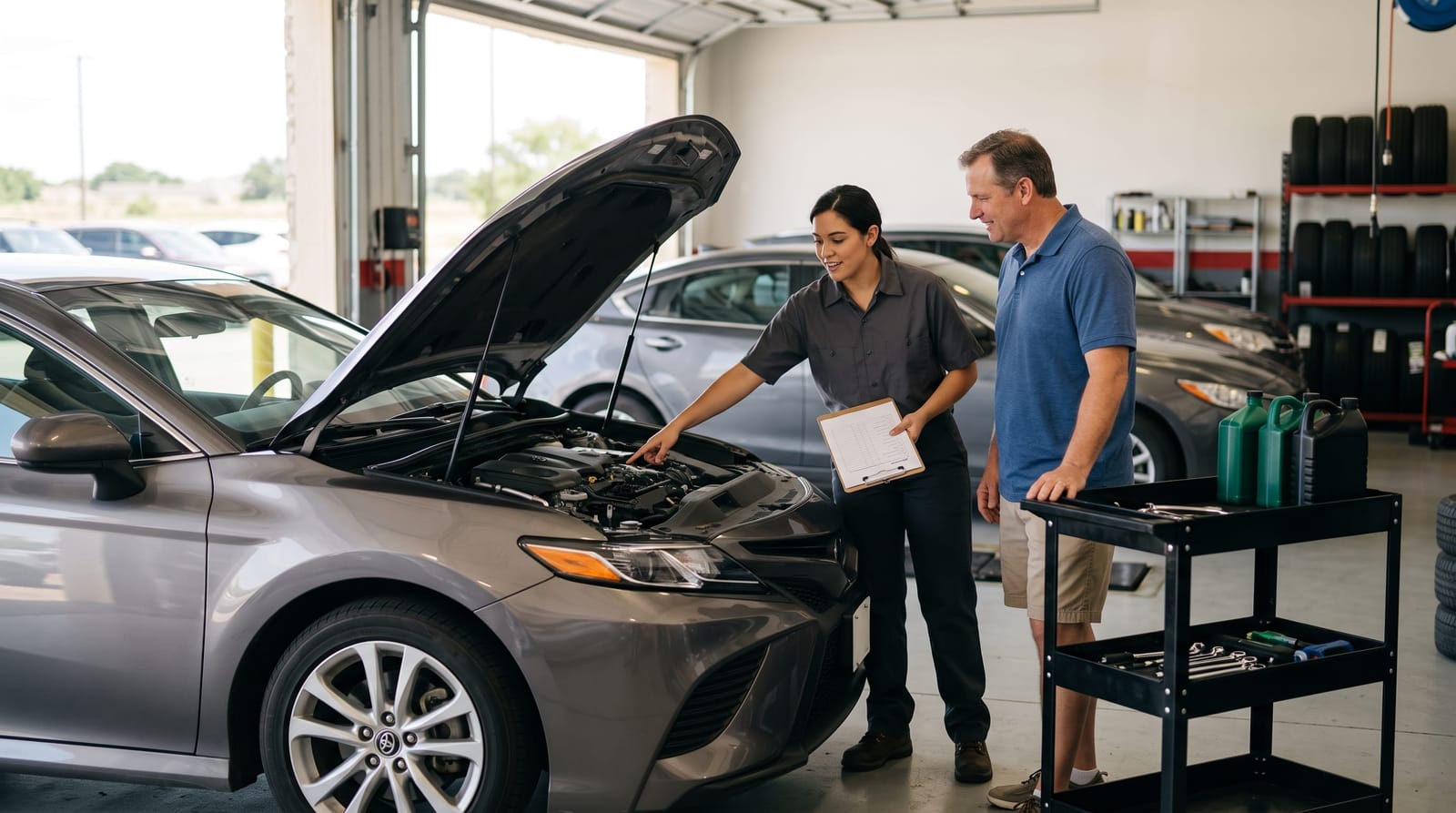
What Car Fluids Should I Check Before a Summer Road Trip from Kaufman County?

Planning a summer road trip from Kaufman County is exciting, whether you're headed to the Gulf Coast, the Texas Hill Country, or beyond. But before you load up the car and hit the highway, there's one category of pre-trip prep that deserves more attention than most drivers give it: your vehicle's fluids. For a car fluids summer road trip Kaufman County checklist, you'll want to cover six key systems before you leave the driveway. Here's a beginner-friendly guide to exactly what to check, what to look for, and why summer in East Texas makes these checks more important than ever.
Why Summer Heat Makes Fluid Checks More Urgent in East Texas
Texas summers are genuinely demanding on vehicles. Kaufman County regularly sees temperatures climb above 95°F, and pavement temperatures on I-20 or US-80 can exceed 140°F on a typical July afternoon. That level of heat accelerates fluid breakdown, increases evaporation rates, and puts extra stress on every system that depends on liquid to function properly.
According to AAA, high temperatures are a leading cause of summer vehicle breakdowns: heat is actually harder on car batteries, cooling systems, and fluids than cold weather is. When fluids are low, old, or contaminated heading into a long drive, the heat amplifies those problems quickly. A two-hour drive through East Texas in July is a very different stress test than the same drive in October. Checking your fluids before you leave isn't just a good habit: it's one of the most practical things you can do to avoid an unplanned roadside stop.
The Six Fluids to Check Before You Leave
1. Engine Oil
Engine oil is the foundation of your car's health. It lubricates moving parts and helps carry heat away from the engine. In summer, oil thins out faster under high temperatures, and old oil that's already broken down offers much less protection than fresh oil does. Pull out the dipstick with the engine off and cooled down: wipe it clean, reinsert it fully, and pull it out again. The oil level should fall between the two marks on the dipstick, and the oil itself should look amber-brown, not black or gritty. If your oil is due for a change within the next 1,000 to 1,500 miles, consider changing it before your road trip rather than after.
2. Coolant (Antifreeze)
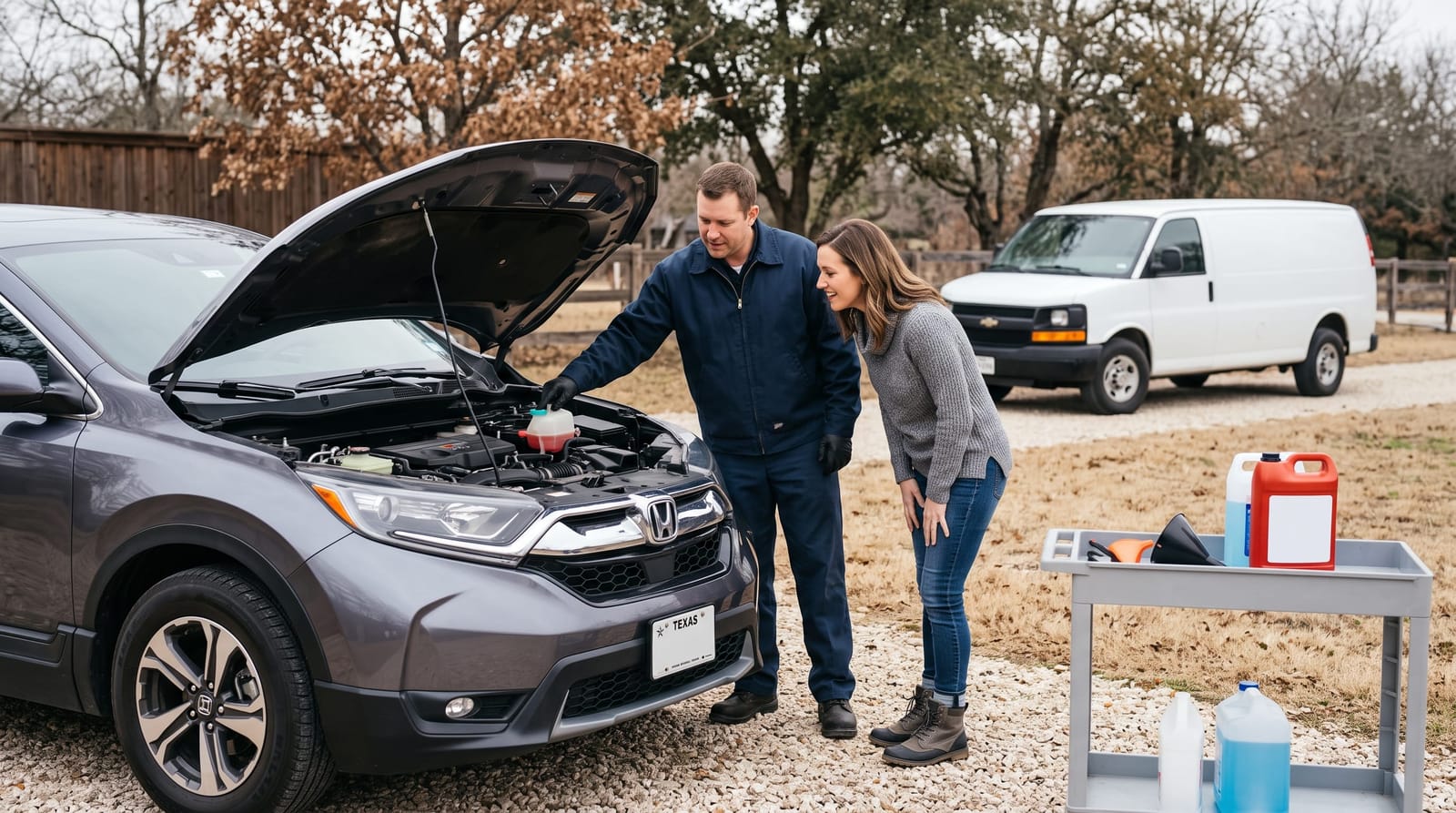
Coolant is what keeps your engine from overheating, and it's the fluid most directly challenged by summer driving. Your cooling system works overtime when outside temperatures are high and you're running the AC at full blast for hours at a time. Check the coolant reservoir (never open the radiator cap on a hot engine) and make sure the level sits between the MIN and MAX lines. The coolant itself should be green, orange, or pink depending on your vehicle, not rusty, cloudy, or brown. Most manufacturers recommend a coolant flush every 30,000 miles or every 5 years, so check your owner's manual if you're not sure when yours was last serviced.
3. Brake Fluid
Brake fluid operates under intense heat and pressure every time you slow down. One thing many drivers don't realize is that brake fluid absorbs moisture over time, and that absorbed water lowers the fluid's boiling point. During a long summer drive with repeated braking, especially on hills or in traffic, degraded brake fluid can lose effectiveness. Check the brake fluid reservoir (usually a small translucent container near the firewall on the driver's side) and confirm the level is between MIN and MAX. Brake fluid should be nearly clear or light yellow. Dark, murky fluid is a sign it may be time for a flush.
4. Transmission Fluid
Your transmission generates significant heat on its own, and summer driving adds to that load, especially if you're towing anything, driving in stop-and-go traffic, or climbing grades with a full car. Transmission fluid lubricates the internal components and helps regulate temperature. Many vehicles have a transmission dipstick (some newer models require a shop check), and the fluid should appear red or pink and smell slightly sweet. If it smells burnt or looks dark brown, have it evaluated before a long drive. Low transmission fluid or degraded fluid in summer heat is a combination worth taking seriously.
5. Power Steering Fluid
If your vehicle has traditional hydraulic power steering (rather than electric power steering), there's a small reservoir under the hood that keeps that system running smoothly. Low power steering fluid can cause stiff, difficult steering, not something you want to deal with on a highway. Check the reservoir level and look at the color: it should be clear to light amber. Foamy or dark fluid can indicate a problem worth having inspected before your trip.
6. Windshield Washer Fluid
This one often gets overlooked, but summer road trips through East Texas mean bugs, dust, and road grime hitting your windshield constantly. Running out of washer fluid on a long stretch of I-20 with the sun in your eyes is a visibility issue, not just an inconvenience. Top off your washer fluid reservoir before you leave, and consider carrying a backup bottle in the trunk. Use a formula rated for warm temperatures: some winter-specific fluids aren't designed for summer heat.
What to Do If You Find a Problem
If any fluid is low, topping it off is a reasonable first step, but a fluid that's consistently low often signals an underlying issue like a leak or a failing component. For example, coolant that keeps dropping may point to a slow leak in a hose or the radiator. Brake fluid that looks very dark may benefit from a flush before a long drive. If you're finding problems during your pre-trip check, it's worth having a local shop take a look before you're 200 miles from home.
If your car's AC has also been acting up, a common companion issue in summer, check out our guide on car AC warm air after winter Forney TX for help diagnosing why your cooling system may not be keeping up.
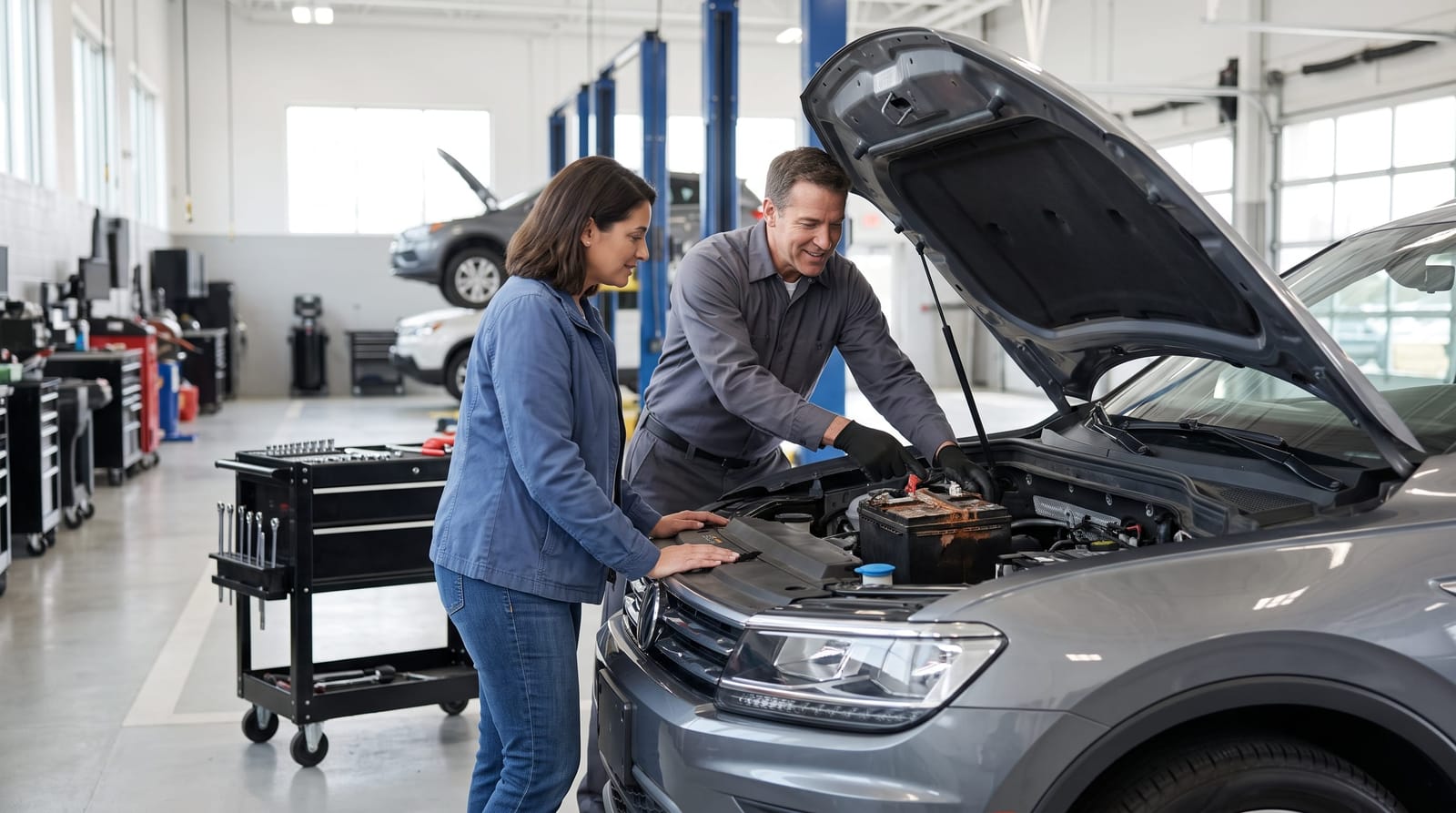
A simple rule of thumb: if you're unsure what you're looking at, or if a fluid is significantly low with no obvious explanation, have a mechanic check it out. A quick pre-trip inspection takes less than an hour and gives you confidence on the road.
Frequently Asked Questions
How often should I check my car's fluids?
A general best practice is to do a quick fluid check about once a month and always before any long road trip. Your engine oil is the most important to monitor regularly. Many mechanics suggest checking oil every time you fill up with gas if you're driving an older vehicle or one that tends to burn oil. For other fluids like coolant and brake fluid, a monthly visual check of the reservoir levels takes just a few minutes.
Can I check all these fluids myself, or do I need a mechanic?
Most of these fluid checks are beginner-friendly and only require opening the hood. Engine oil, coolant, power steering fluid, brake fluid, and windshield washer fluid all have visible reservoirs or dipsticks that any driver can inspect. Transmission fluid is more involved on some vehicles and may require a mechanic to check properly. If anything looks off, wrong color, strong smell, or unexplained low levels, that's when it's worth bringing the car in.
What happens if I drive with low coolant in the Texas summer heat?
Driving with low coolant is one of the faster ways to overheat an engine, especially in summer conditions. Coolant carries heat away from the engine, without enough of it, engine temperatures can spike quickly, especially during long highway drives or when sitting in traffic. Overheating can cause damage to engine components over time. If your temperature gauge starts climbing toward the red zone, find a safe place to pull over and let the engine cool before continuing.
Is it normal for fluids to get low between oil changes?
Some minor variation in fluid levels is normal, but most sealed systems, like your coolant and brake fluid, shouldn't drop significantly without reason. Engine oil can decrease slightly over time through normal operation, especially in higher-mileage vehicles. If you're consistently finding a fluid low between checks, that's worth mentioning to a mechanic, as it may indicate a slow leak or a component that needs attention.
Ready to Hit the Road? Start with Your Fluids
A car fluids summer road trip Kaufman County checklist doesn't have to be complicated. Run through these six systems, oil, coolant, brake fluid, transmission fluid, power steering fluid, and windshield washer fluid, and you'll have a much clearer picture of whether your vehicle is truly road-trip ready. East Texas summers are hard on vehicles, and a little preparation before you leave is far easier than dealing with a breakdown in the heat. If you'd rather have a professional set of eyes on everything, a pre-trip inspection at a local shop is a smart, low-stress option that gives you peace of mind for the miles ahead.