What Happens If You Go Too Long Without an Oil Change?
It's easy to let an oil change slip down the priority list: life gets busy, the dashboard light doesn't seem urgent, and the car still feels like it's running fine. But understanding the too long without oil change consequences can help you see why this particular service matters more than most. Engine oil does a critical job every single mile you drive, and when it breaks down, the effects build quietly until they become expensive. Here's a straightforward look at what's actually happening inside your engine when oil service gets delayed.
How Engine Oil Works: and Why It Wears Out
Engine oil has one primary job: keep moving metal parts from grinding against each other. Inside your engine, dozens of components move at high speed and extreme temperatures. Oil creates a thin protective film between those parts, reducing friction, carrying heat away from critical areas, and suspending tiny contaminants so they can be filtered out.
The problem is that oil doesn't last forever. Every mile driven, every cold start, and every hot engine cycle slowly degrades the oil's chemical makeup. Additives that help oil resist heat and protect against wear get used up. The oil itself begins to thicken and darken. By the time oil is significantly overdue for a change, it's no longer doing its job well: it's just dark, contaminated fluid doing its best to keep up.
Most conventional oil recommendations fall between 3,000 and 5,000 miles, while many full synthetic oils are rated for 7,500 to 10,000 miles or more depending on the manufacturer and driving conditions. Going significantly beyond those intervals is where real problems begin to develop.
The Damage Timeline: What Happens Mile by Mile
The consequences of skipping or delaying an oil change don't usually happen all at once. They build progressively, and understanding that timeline helps explain why catching up on service sooner rather than later always makes sense.
Early Stage: Increased Friction and Wear
As oil breaks down past its recommended service interval, it becomes less effective at lubricating engine components. Metal parts experience slightly more friction than they should with every revolution. This increased wear is microscopic at first, but it accumulates. Engine bearings, camshafts, and cylinder walls are particularly vulnerable to this kind of gradual damage. Studies on engine wear show that friction-related damage accounts for a significant portion of premature engine failures, and the majority of those cases trace back to inconsistent lubrication maintenance.
Middle Stage: Sludge Buildup
Old, degraded oil doesn't just thin out: it thickens and forms deposits. This sticky, tar-like material is called engine sludge, and it's one of the more serious consequences of going too long without an oil change. Sludge can:
- Block narrow oil passages that feed critical engine components
- Coat oil pickup screens, reducing the amount of oil circulating through the engine
- Accumulate around valve train components, affecting engine timing and performance
- Reduce overall oil pressure, triggering warning lights or causing component failure
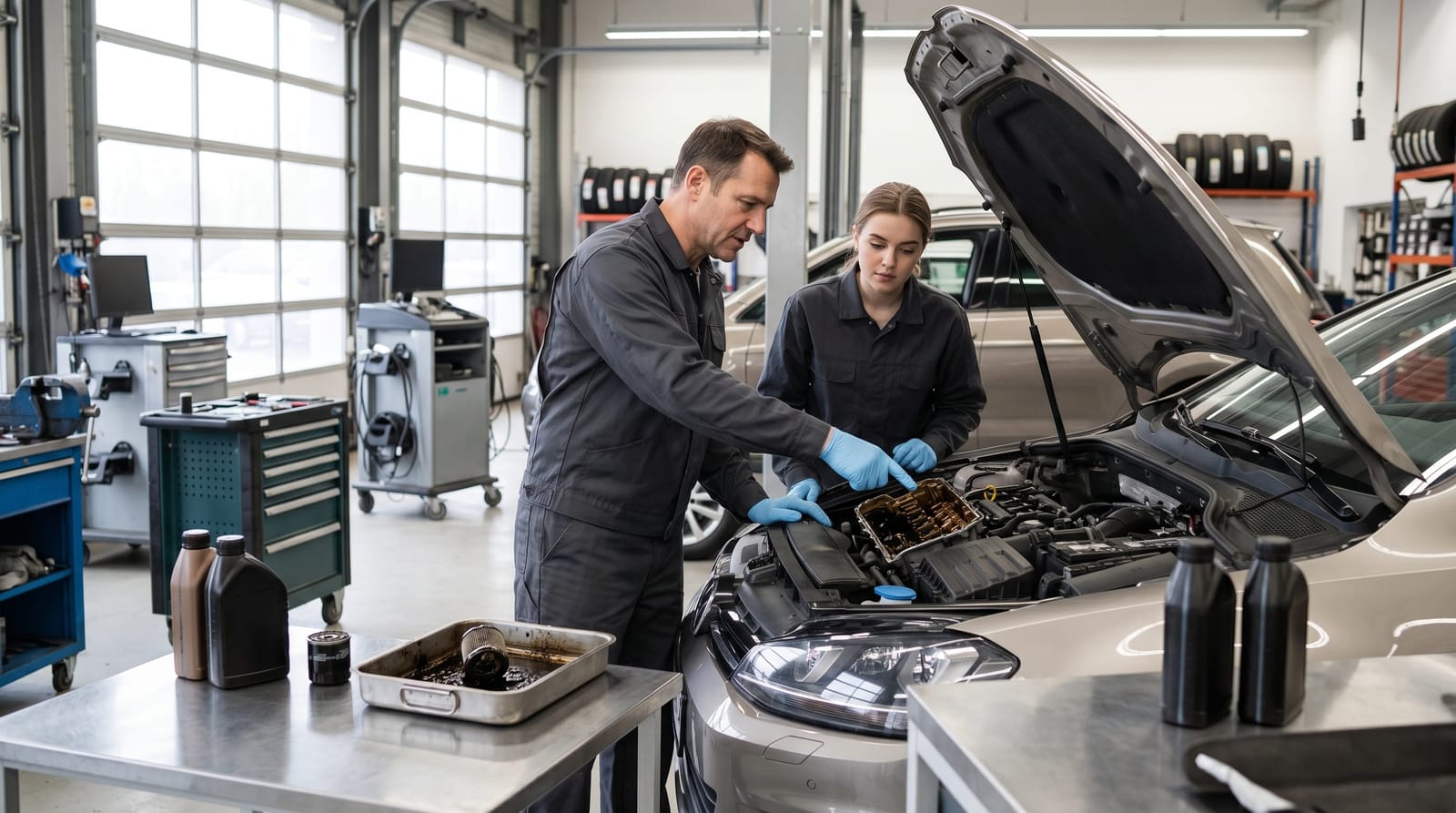
Once sludge is present, it's not always easy to reverse. In some cases, engines require professional cleaning treatments or, in severe situations, internal component replacement.
Later Stage: Overheating and Accelerated Wear
Oil also plays a meaningful role in managing engine temperature. When oil degrades or oil levels drop due to consumption from a poorly lubricated engine, the cooling burden falls more heavily on the coolant system alone. The result can be higher operating temperatures and increased risk of overheating, especially during summer driving in areas like Kaufman County where heat is already a factor for several months of the year.
The Real-World Cost of Waiting Too Long
Here's where the numbers tell a clear story. A standard oil change at a trusted local shop typically runs between $40 and $100 depending on the oil type and vehicle. Compare that to what delayed service can eventually cost:
- Engine flush or sludge cleaning service: $100-$200+
- Timing chain or camshaft repair from wear damage: $500-$2,500+
- Engine bearing replacement: $1,500-$3,000+
- Short block or full engine replacement: $3,000-$8,000 or more depending on the vehicle
It's not about scaring anyone into a service appointment: it's just math. Regular oil changes are among the least expensive things you can do to protect a vehicle that costs tens of thousands of dollars to replace. Most engine failures that result from neglected oil maintenance were entirely preventable with routine service.
Signs Your Oil May Be Overdue Right Now
If you're not sure where you stand on your oil service schedule, there are a few signs worth paying attention to:
- Oil change reminder light or low oil pressure warning displayed on your dashboard
- Dark, thick oil on the dipstick: fresh oil is amber and translucent; old oil is dark brown or black
- Louder engine noise: a ticking or knocking sound, especially at startup, can indicate reduced lubrication
- Burning oil smell inside or outside the vehicle while driving
- Reduced fuel economy: a struggling engine works harder and burns more fuel
If you're unsure how to interpret what your vehicle is telling you, learning how to read your car's oil life monitor can give you a much clearer picture of where your oil service actually stands rather than relying on guesswork or mileage stickers alone.
What to Do If You're Already Overdue
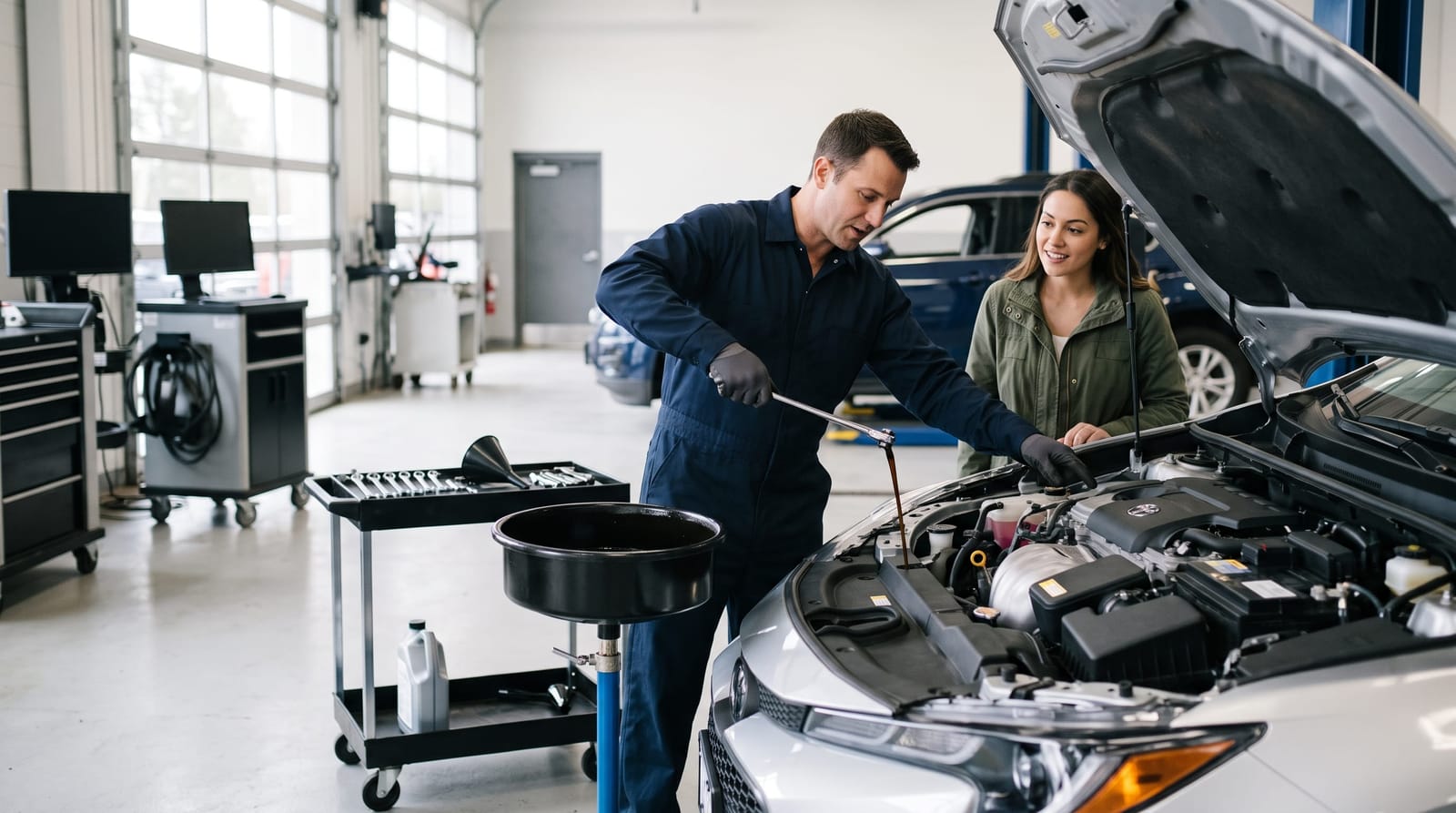
If you've gone longer than recommended between oil changes, the good news is that getting caught up sooner rather than later almost always helps. For most drivers who are moderately overdue, say, a few thousand miles past the recommended interval, a professional oil change with the correct oil type for your vehicle is the right first step. A technician can also check your oil level, inspect for signs of early sludge buildup, and let you know if anything else warrants attention.
Going forward, building a simple reminder into your routine makes staying current much easier. Whether you rely on your vehicle's oil life monitoring system, a mileage-based schedule, or a seasonal service visit, consistency is what protects your engine over the long run.
Frequently Asked Questions
How many miles over an oil change is too many?
There's no single number that applies to every vehicle, but going more than 1,000-2,000 miles past your recommended interval with conventional oil, or more than 2,000-3,000 miles past with synthetic, starts to put additional strain on your engine. The sooner you catch up, the better. Consistently pushing well past the recommended mileage over months and years is where cumulative wear damage becomes a real concern.
Can old oil damage my engine permanently?
Yes, in cases where oil is severely degraded or has formed significant sludge deposits, some internal engine wear can be permanent. However, most drivers who are simply a bit overdue, not months and thousands of miles past due, will not see lasting damage from a single delayed change. The issue becomes serious when delayed oil changes become a repeated pattern over time.
Does the type of oil affect how long I can go between changes?
Absolutely. Full synthetic motor oil is engineered to maintain its protective properties significantly longer than conventional oil. Many vehicles using full synthetic can safely go 7,500 to 10,000 miles between changes, and some manufacturers approve even longer intervals under specific conditions. Conventional oil typically performs best with changes every 3,000 to 5,000 miles. Always follow your vehicle manufacturer's recommendation for oil type and change interval.
Is it okay to just top off old oil instead of changing it?
Topping off oil that's low is better than letting the level drop dangerously, but adding fresh oil to old, degraded oil doesn't reset the quality of what's already in the engine. Old oil that has broken down and lost its protective additives will still perform poorly regardless of the oil level. A full oil change, draining the old oil and replacing it with fresh oil and a new filter, is the proper service.
Staying Ahead of the Problem
Understanding the too long without oil change consequences isn't about creating worry: it's about making confident, informed decisions for your vehicle. The pattern is straightforward: fresh oil protects, degraded oil wears, neglected oil damages. Staying on schedule with oil service is one of the simplest and most cost-effective ways to keep your vehicle running reliably for years. If you have questions about what oil type your vehicle needs or when your next service is due, the team at Gregg Automotive is always happy to help Kaufman County drivers get the right answers.