What's the Difference Between Lowering Springs and Coilovers?
If you're exploring ways to lower your vehicle's ride height, you've likely come across two popular options: lowering springs and coilovers. Both can give your vehicle a cleaner, more grounded look and change how it feels on the road, but they work differently, cost differently, and suit different types of drivers. This guide breaks down the lowering springs vs coilovers comparison in plain language, so you can figure out which option actually makes sense for your vehicle and your budget.
How Each System Works
To understand the difference, it helps to know what each system is actually doing under your vehicle.
Lowering Springs
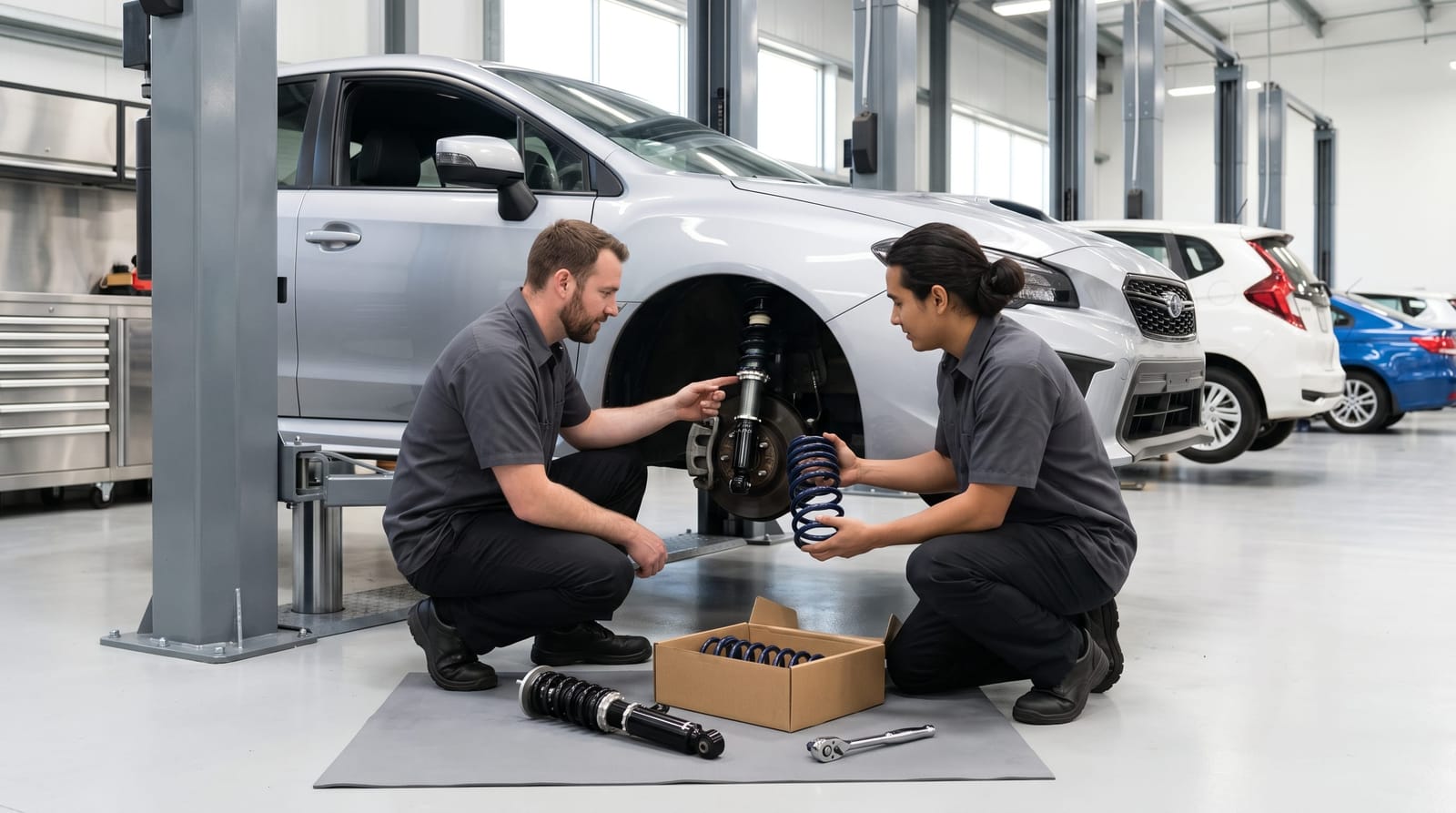
Your vehicle already has coil springs as part of its suspension. Lowering springs are simply replacement springs that are shorter and stiffer than your factory springs. When installed in place of your stock springs, they sit lower, which brings your vehicle's body closer to the ground. The rest of your suspension, including your existing shocks or struts, stays in place. This is what makes lowering springs the more straightforward of the two options.
Coilovers
Coilovers are a more complete suspension upgrade. The name comes from the design itself: a coil spring wrapped around a shock absorber as one integrated unit. Instead of just swapping out springs, you're replacing the entire shock-and-spring assembly. This all-in-one design means the spring and damper are engineered to work together from the start, which can result in more consistent performance. Coilovers also include threaded collars that let you raise or lower the ride height by adjusting the spring seat: something lowering springs simply can't do once they're installed.
The Key Differences: Adjustability, Ride Quality, and Performance
This is where the lowering springs vs coilovers comparison really starts to matter for everyday drivers.
Adjustability: Lowering springs drop your vehicle to a fixed height determined by the spring design. Once they're on, that's the height you have. Coilovers give you the ability to dial in your exact ride height after installation, and many setups also allow you to adjust damping stiffness: meaning you can tune how firm or soft the suspension feels. If you want flexibility, coilovers offer it. If you know the height you want and you're happy with it long-term, lowering springs are simpler.
Ride Quality: Lowering springs are generally stiffer than stock springs, and since they're used with your existing shocks or struts, there can be a mismatch between the spring rate and the damper. This sometimes leads to a bouncier or slightly harsher ride. Coilovers avoid this issue because everything is designed together. That said, coilover ride quality varies quite a bit depending on the brand and how they're set up.
Handling: Both options lower the vehicle's center of gravity, which generally improves cornering stability. Coilovers tend to provide a more refined handling feel because of the matched components and adjustability.
Cost Differences and What You're Paying For
Budget is usually a deciding factor in the lowering springs vs coilovers comparison, and the price gap between the two is significant.
Lowering springs are the more affordable route. Depending on your vehicle, a quality set of lowering springs typically runs anywhere from $150 to $400 for the parts alone. Since your existing shocks and struts stay in place, there's less hardware involved, and installation time is generally shorter.
Coilovers cost more, often starting around $500 for entry-level sets and climbing well past $1,500 for higher-end options. You're paying for the complete assembly, the engineering that goes into matching the spring and damper, and the adjustability built into the design. Installation is also more involved, which adds to the labor cost.
One thing worth considering: if your factory shocks or struts are already aging, pairing new lowering springs with worn-out dampers can lead to a rough, poorly controlled ride. In that situation, the cost savings from choosing springs over coilovers can narrow considerably once you factor in replacing those components separately.
Which Option Is Right for Your Situation?
Neither option is the automatic right answer: it depends on what you're looking for and how you use your vehicle.
Lowering springs may be a better fit if:
- You want a modest drop in ride height with a simpler, lower-cost installation
- You're happy with a fixed height and don't need to make adjustments later
- Your existing shocks and struts are in good condition
- You want to improve the look of your vehicle without a major suspension overhaul
Coilovers may be a better fit if:
- You want the ability to fine-tune your ride height after installation
- You're replacing aging shocks or struts anyway and want to upgrade the whole system
- You prefer a more precisely matched spring-and-damper setup
- You want to adjust how stiff or soft your ride feels depending on conditions
It's also worth thinking about how low you actually want to go. If you're unsure what a safe and practical drop looks like for your specific vehicle, understanding vehicle lowering limits safety is an important first step before committing to either option.
Installation: Why Professional Help Matters for Both
Lowering springs are generally considered easier to install than coilovers, but neither is a simple bolt-on project for most vehicles. Both require compressing suspension components, which involves tools and safety precautions that matter more than most DIY guides suggest. Coilovers, with their additional adjustability and more complex assembly, require more time and experience to set up correctly.
Getting the installation wrong, or skipping a post-installation wheel alignment, can lead to uneven tire wear, pulling while driving, and handling that feels off. A proper wheel alignment after any suspension change isn't optional. It's what ensures your vehicle drives straight and your tires wear evenly. Having a professional handle the installation and alignment together saves you from diagnosing problems down the road that could have been avoided from the start.
Frequently Asked Questions
Will lowering springs wear out my stock shocks faster?
They can. Lowering springs are typically stiffer than factory springs, and if your existing shocks or struts aren't designed to work with a stiffer spring rate, they may wear more quickly than expected. If your shocks are already older, it's worth discussing a full replacement at the same time rather than mixing aging components with new ones.
Can I switch from lowering springs to coilovers later?
Yes. Coilovers replace the entire spring-and-shock assembly, so if you start with lowering springs and decide to upgrade later, switching to coilovers is possible. Just keep in mind that it's essentially a full suspension replacement at that point, so it's worth considering which direction you want to go from the beginning.
Do both options require a wheel alignment after installation?
Yes, both do. Any time your vehicle's ride height changes, even modestly, the alignment angles shift. A four-wheel alignment after installation is important for tire wear, straight tracking, and making sure the vehicle handles the way it should.
Is one option better for daily driving on regular roads?
For a typical daily driver on normal roads, lowering springs are often the more practical choice. They offer a noticeable drop without a major overhaul and keep costs reasonable. Coilovers are a worthwhile investment if you value the ability to adjust things over time, but the added cost and complexity may not be necessary for straightforward everyday use.
The Bottom Line
The lowering springs vs coilovers comparison comes down to what you need from your suspension. Lowering springs are a cost-effective way to drop your ride height with a simpler installation. Coilovers offer more adjustability and a better-matched system, but at a higher price point and with more involved installation. Both are legitimate options: the right one depends on your budget, your goals, and how your vehicle will be used. If you're unsure which direction fits your situation, talking through the options with an experienced shop is the best way to make a confident, informed decision.