Why Is My Car AC Blowing Warm Air After Winter in Forney TX?
You made it through another East Texas winter, and now that temperatures are climbing back into the 80s and 90s, you reach for the AC: only to get a blast of warm air. If your car AC is blowing warm air after winter in Forney TX, you're not alone. This is one of the most common springtime complaints our shop hears from drivers across Kaufman County. The good news is that there are clear, identifiable reasons this happens, and most of them are fixable before the brutal Texas summer heat arrives. This guide walks you through exactly what to look for and why an early inspection makes a real difference.
What Actually Happens to Your AC System During Winter
Your vehicle's air conditioning system is designed to run year-round, but most Forney drivers simply don't use it much between November and March. That extended period of inactivity isn't harmless: it can create a handful of issues that show up the moment you switch the system back on in spring.
Here's what's happening inside the system while it sits:
- Refrigerant slowly migrates or leaks. AC systems are sealed, but they're not perfectly airtight forever. Over months of non-use, small amounts of refrigerant can seep past aging seals and O-rings. Studies from automotive industry sources suggest that a typical vehicle AC system can lose up to 15% of its refrigerant charge per year even without a visible leak, and a system that was already low going into winter may cross the threshold into "not cooling" territory by spring.
- Rubber seals and hoses dry out. Refrigerant itself contains lubricant that keeps seals pliable. When the system isn't cycling, those seals sit dry, which accelerates wear and can cause small leaks to develop.
- Moisture enters the system. Any small leak point is also a point where atmospheric moisture can work its way in during temperature swings. Moisture inside an AC system mixes with refrigerant to form mild acids that corrode internal components over time.
- The compressor sits idle. The AC compressor is driven by a belt and has internal moving parts that need lubrication. Extended inactivity can leave those parts dry, making the first startup after winter a stressful event for the compressor.
None of this means your AC is ruined: it means it needs attention before you're stuck in 100-degree traffic on US-80 with no cold air.
The Most Common Reasons Your Car AC Blows Warm Air After Winter
When Forney drivers bring their vehicles in after winter with an AC complaint, the diagnosis typically falls into one of four categories:
1. Low Refrigerant From a Slow Leak
This is the number one culprit. Refrigerant is what actually transfers heat out of your cabin air. When the level drops, even slightly, cooling performance drops fast. A system that's 20% low on refrigerant can go from blowing cold air to blowing marginally cool or warm air, especially on a hot day. Refrigerant doesn't "wear out," so if your system is low, there's always a leak somewhere, even if it's tiny.
2. A Faulty or Seized Compressor
The compressor is the heart of the AC system. It pressurizes refrigerant and keeps the cycle moving. After sitting unused for several months, a compressor that was already showing wear can seize or fail to engage when you turn the system on in spring. You may hear a clicking or grinding noise, or notice the system doesn't seem to do anything at all when switched on.
3. Moisture Contamination
Moisture inside the AC system can freeze at the expansion valve, completely blocking refrigerant flow. When this happens, you'll notice the AC works intermittently: cold for a while, then warm, then cold again. The freeze-thaw cycle in the system creates that inconsistent pattern. This is more common in systems that have a leak that went unrepaired through winter.
4. Clogged or Restricted Cabin Air Filter
This one is easy to overlook. The cabin air filter prevents dust, pollen, and debris from entering your HVAC system. Texas cedar, oak pollen, and road dust are tough on these filters. A clogged cabin air filter restricts airflow so significantly that even a fully charged, fully functional AC system can feel like it's barely working. Cabin air filters are typically recommended for replacement every 12,000 to 15,000 miles, but Kaufman County's dusty rural roads can shorten that interval considerably.
Why Forney Drivers Specifically Should Check AC in Early Spring
Forney and the surrounding Kaufman County area sit in a climate zone that doesn't give you a long runway before heat becomes a real daily problem. Average high temperatures in Forney reach the mid-80s by April and regularly exceed 95°F by June. By July and August, triple-digit heat is common, and the humidity makes it feel worse.
That matters for one practical reason: an AC system that's struggling in mild 85-degree weather in April will completely fail in 100-degree weather in July. The demand on the system doubles as ambient temperature rises. Finding a refrigerant issue or a weak compressor in March or April, when the fix is a manageable repair, is far better than discovering the failure on a 104-degree afternoon on the way home from work.
Early spring is also a smart time to handle several vehicle systems together. If you're planning a summer road trip out of Kaufman County, checking your AC is one piece of a larger pre-summer inspection that includes fluids, belts, and cooling system components. That kind of combined approach is covered in detail when discussing what car fluids you should check before a summer road trip from Kaufman County: a worthwhile companion to AC prep as summer approaches.
What a Pre-Summer AC Inspection Actually Involves
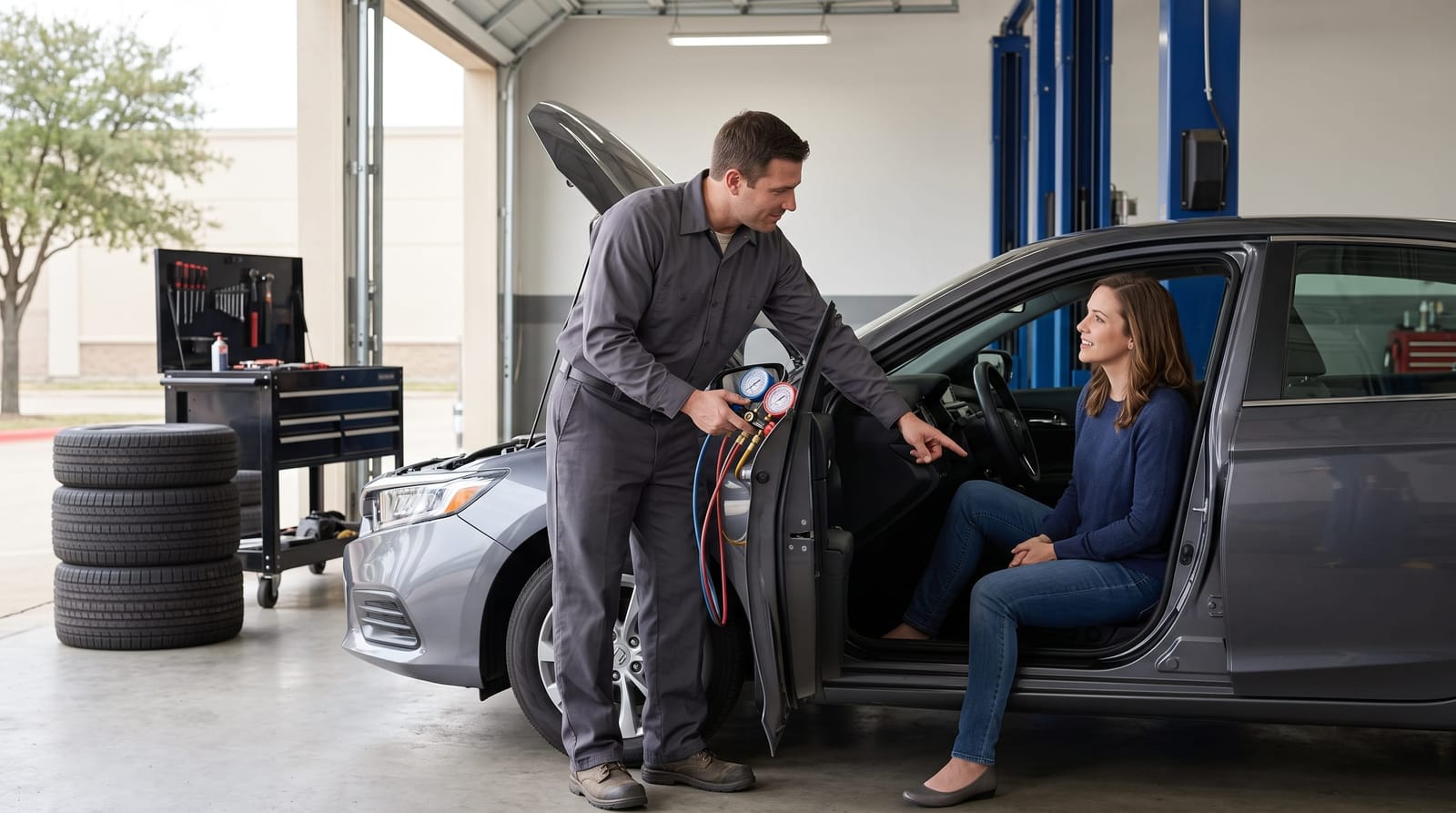
An AC inspection at a qualified shop isn't just a recharge. Here's what a thorough inspection should cover:
- Refrigerant level and leak check: Using specialized equipment to measure the charge and identify leak points
- Compressor operation check: Verifying the compressor engages properly and runs without unusual noise
- Condenser and evaporator inspection: Checking for blockages, corrosion, or physical damage
- Cabin air filter condition: Replacing a clogged filter if needed
- Belt and pulley check: Confirming the belt that drives the compressor is in good condition
- Vent temperature measurement: Verifying the system is actually producing cold air at the correct temperature after service
A properly functioning AC system should produce air at the vents somewhere between 35°F and 45°F on a moderate day. If yours is blowing air in the 60s or 70s, the system needs attention before summer arrives.
Frequently Asked Questions
Is it normal for car AC to stop working after sitting all winter?
It's not unusual, but it's not something to ignore either. AC systems that sit unused for several months can develop minor refrigerant leaks, dried-out seals, or compressor issues. The good news is that these problems are often caught early with a simple spring inspection before they turn into larger repairs.
Can I just recharge my own AC with a kit from the auto parts store?
DIY recharge kits can temporarily improve cooling, but they don't identify why the refrigerant was low in the first place. If there's a leak, the refrigerant will escape again, and the moisture-absorbing dye in some kits can sometimes complicate a proper repair later. A professional leak diagnosis gives you a real answer rather than a temporary fix.
How long does an AC inspection take?
A standard AC inspection typically takes about 30 to 60 minutes for the initial diagnostic check. If a recharge or minor repair is needed, same-day service is common for straightforward cases. More complex repairs like compressor replacement or evaporator work take longer and may require parts to be ordered.
What if my AC worked fine when I turned it off in the fall but blows warm air now?
This is very common. A system that was "fine" in October may have been borderline on refrigerant or had a slow leak that worsened over winter. The fact that it worked before is actually helpful information for a technician: it suggests the core system is intact and the issue is likely refrigerant loss or a seal failure rather than a major component failure.
The Bottom Line for Forney and Kaufman County Drivers
If your car AC is blowing warm air after winter in Forney TX, the cause is almost always one of a handful of well-understood issues: low refrigerant, a leak, compressor trouble, moisture contamination, or a clogged filter. None of these are mysterious, and all of them are diagnosable with the right equipment. The key is addressing the problem in early spring, not in the middle of a July heat wave when every shop in the county is backed up. At Gregg Automotive, we work with Forney and Kaufman County drivers every spring to make sure their AC systems are ready before Texas heat makes a weak system a real problem. Give us a call and let's get your system checked out before you need it most.