Buying a Used Truck in Kaufman County TX: What to Inspect Before You Commit

Before buying a used truck in Forney or elsewhere in Kaufman County, give the frame, towing equipment, four-wheel-drive system, brakes, and suspension as much attention as the engine. A clean interior and smooth idle tell you little about how the truck handled trailer loads, rough roads, or years of maintenance.
Start with the truck’s identity and service records, inspect it before the engine warms up, and arrange a professional mechanical assessment before committing. The goal is to separate routine upkeep from repairs that need a clear diagnosis, especially structural damage, transmission symptoms, and four-wheel-drive problems.
Start With the Exact Truck, Not Just the Model Name
Two pickups with the same badge can have different engines, transmissions, payload limits, and towing equipment. Before comparing them, gather:
- Vehicle identification number, or VIN: Match it to the vehicle records and use it to help identify the configuration.
- Engine and drivetrain: Confirm gasoline or diesel, two-wheel drive or four-wheel drive, and the transmission.
- Maintenance records: Look for dated entries with mileage, especially for engine oil, transmission service, cooling-system work, and drivetrain fluids.
- Previous use: Ask what it towed, how often, and whether it spent substantial time idling or driving off pavement.
Arrange to see a cold start when possible. A truck already warmed up on arrival gives you less opportunity to notice startup noises, smoke, or difficult starting.
A general pre-purchase inspection checklist for Forney drivers covers the basics. The checks below add the truck-specific areas that deserve closer attention.
Frame Rust: Distinguish Surface Corrosion From Metal Loss
Where to look
Light surface rust is different from corrosion that flakes away in layers or creates holes. Pay particular attention to the frame rails, crossmembers, cab mounts, suspension mounts, and the area where the hitch attaches. Metal loss around these attachment points matters more than surface discoloration.
Ask where the truck spent its earlier years, not just where it is being sold. A local listing can still be for a truck with a history of exposure to road salt, standing water, or coastal conditions.
A ground-level walkaround has limits. A truck supported only by a jack is not safe to crawl beneath. Structural, brake, or steering concerns need professional assessment before a road test; a qualified repair professional can examine the underside on a lift.
Clues that need closer examination
- Heavy scaling or holes near suspension and hitch mounting points.
- Cracks, bends, unusual welds, or repair plates on the frame.
- Uneven gaps between the cab and bed, especially alongside other damage.
- Fresh undercoating that prevents a clear view of the underlying metal.
New undercoating and visible welds are reasons to ask about prior work, not automatic proof of a bad repair. Repair records and a close examination help distinguish sound work from a concern that affects the buying decision.
Trailer Hitch Wear and Evidence of Heavy Use
Inspect the whole towing setup
A worn hitch shows use, but it cannot tell you how much weight the truck pulled. Examine the receiver, pin hole, mounting hardware, trailer wiring, and nearby frame together.
Elongated holes, cracked welds, loose mounting points, or a visibly bent receiver deserve attention. Heavy wear inside the receiver can reflect frequent towing. Spliced or damaged trailer wiring adds a separate electrical item to evaluate.
Look in the bed for gooseneck or fifth-wheel mounting equipment, holes left by removed hardware, and damage around attachment points. Compare those clues with the seller’s description of how the truck was used.
Match capacity to your intended load
The receiver’s rating applies to the hitch, not the whole truck. The truck’s towing limits depend on its engine, axle ratio, cab, bed, drivetrain, and factory equipment.
Use the truck’s loading labels and configuration-specific manufacturer information when comparing it with your trailer. The maximum advertised for a model lineup may apply to a different configuration. Trailer tongue weight, the weight resting on the hitch, also uses payload capacity along with passengers, cargo, and added equipment.
For example, a family towing a camper needs enough payload for the trailer’s tongue weight plus people and supplies. That is a different requirement from occasionally pulling an empty utility trailer. A larger-looking pickup is not automatically the better match.
Four-Wheel Drive: Check Operation, Not Just the Switch
First identify the system. Part-time four-wheel drive, automatic four-wheel drive, and full-time systems have different operating instructions. The owner’s manual explains the engagement conditions for each mode. Part-time 4H and 4L are generally not intended for dry, high-traction pavement.
A useful evaluation includes:
- Mode engagement: Does the selected mode engage without a persistent warning or flashing indicator?
- Mechanical condition: Are there grinding sounds, repeated clunks, or leaks around the transfer case, which distributes power between the axles?
- Front driveline: Are protective rubber boots torn, with grease escaping around joints?
- Tire compatibility: Do the tires match the vehicle’s specifications and have reasonably consistent wear?
A steady indicator is only one part of the check. The evaluation also needs to establish that the system engages and operates correctly. If suitable testing conditions are unavailable, engagement testing belongs in the mechanical inspection rather than an improvised test in a paved parking lot.
A seller’s statement that four-wheel drive “never gets used” is not a substitute for checking it.
Brakes, Suspension, and Tires: Look for Connected Symptoms
Towing and carrying loads increase the work brakes and suspension perform. Wear also reflects mileage, road conditions, and ordinary aging, so no single symptom proves overload.
Walkaround checks
Compare the truck’s stance on level ground with the bed empty. Look for a pronounced lean, broken leaf springs, damaged suspension bushings, and visibly leaking shocks. Bushings are the cushioning pieces at suspension connections.
Check tire tread across the full width, look for sidewall cracks or bulges, and include the spare. Uneven wear can point toward alignment, suspension, tire-pressure, or rotation issues. The wear pattern helps guide the inspection, but it is not a diagnosis by itself.
Road-test observations
During normal, controlled driving, note:
- A pull or vibration when braking.
- Grinding, scraping, or repeated clunks.
- Excessive bouncing after a bump.
- Steering looseness or a tendency to wander.
- Vibration that appears at a particular road speed.
Record when each symptom happens. A vibration during braking raises different questions from one that occurs while cruising without the brakes applied.
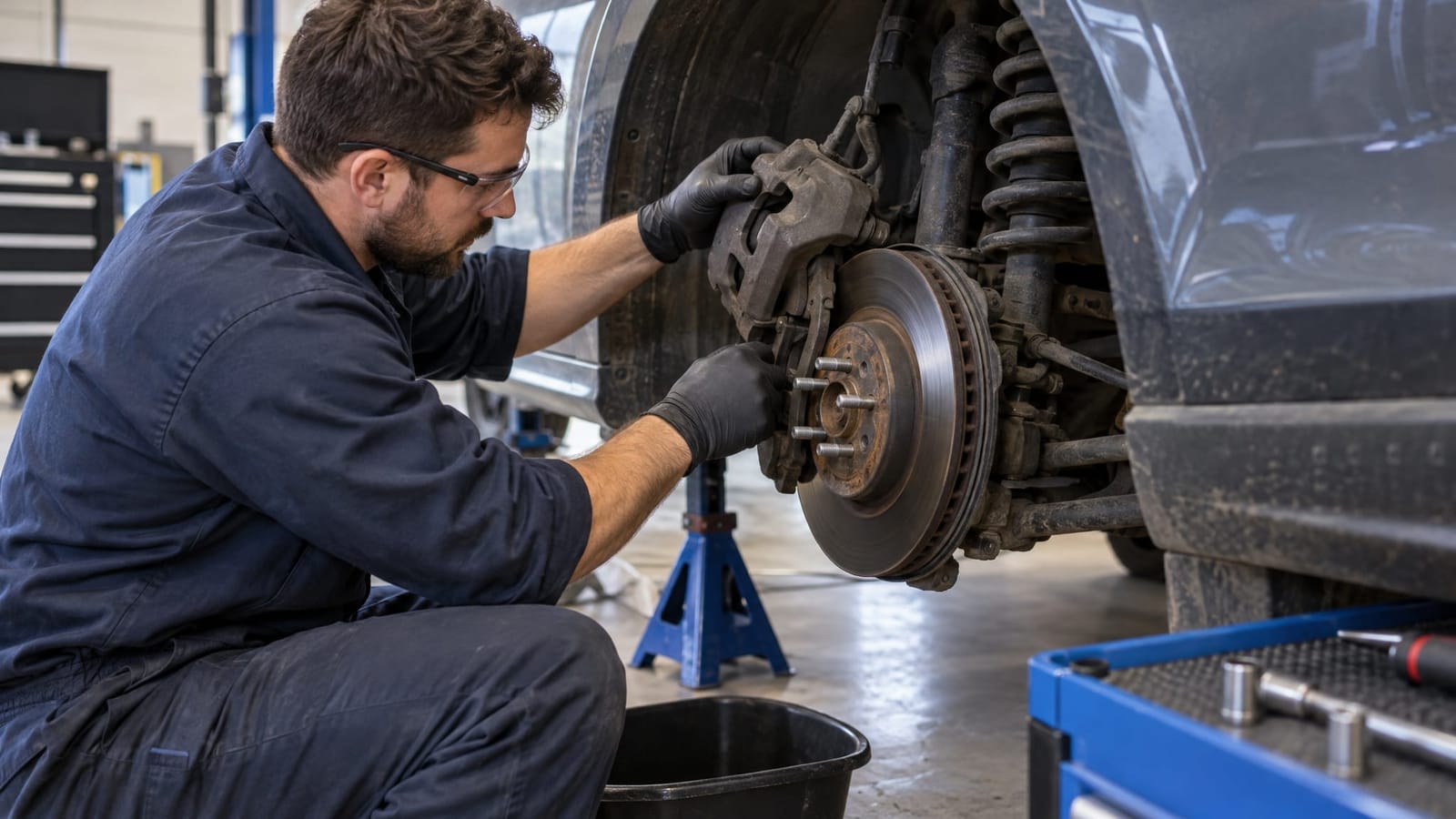
At Gregg Automotive in Forney, we work on brakes and suspension. These symptoms call for diagnosis, not an automatic parts list. Our explanation of hidden brake and suspension problems in used vehicles helps distinguish warning signs from the questions a mechanical inspection needs to answer.
Engine and Transmission: Observe Them Cold and Warm
Listen at startup, watch the instrument panel, and note whether the engine settles into a steady idle. Persistent rattling, ticking, rough running, smoke, or warning lights deserve investigation. Brief water vapor from the exhaust on a cool morning is different from persistent smoke.
During the drive, pay attention to delayed engagement into drive or reverse, harsh shifts, shuddering, and engine speed repeatedly flaring between shifts. Repeat ordinary observations after the truck warms up because some symptoms change with temperature.
A diagnostic scan adds information, but a trouble code identifies a system or detected condition, not necessarily the failed part. A scan can also show whether the truck has completed its built-in emissions-system checks, called readiness monitors. Incomplete monitors can follow a battery disconnect or code clearing. Ask about recent battery work and repairs rather than treating that finding as proof of deception.
Match the inspection to the engine and equipment
For trucks such as the Ford F-150, Chevrolet Silverado, GMC Sierra, Ram, Toyota Tacoma, and Toyota Tundra, the model year and powertrain narrow the inspection much more than the badge alone. One engine’s reputation does not apply to every version of a truck.
- Turbocharged gasoline engines: On an F-150 or another turbo-equipped pickup, include intake connections, hoses, fluid leaks, and hesitation under ordinary acceleration in the inspection.
- V8 gasoline engines: On an equipped Silverado, Sierra, Ram, F-150, or Tundra, pair maintenance records with checks for persistent ticking, rough running, and low oil levels. A noise alone does not identify an internal engine fault.
- Trucks with air suspension: Check for uneven ride height, suspension warnings, and difficulty reaching the selected height.
- Trucks with a strong reliability reputation: A Tacoma or Tundra still needs the same frame, cooling-system, transmission, and maintenance checks as other pickups.
The useful question is not just what can go wrong with that model. It is whether the individual truck shows symptoms, what testing explains them, and what its maintenance records document.
Diesel Trucks Need Additional Checks
A diesel inspection includes the ordinary truck checks plus fuel-system, turbocharger, and exhaust-treatment evaluation. Choosing diesel for its heavy-duty reputation alone can overlook the condition and service needs of the individual truck.
Cold starting and service history
Note extended cranking, uneven running, persistent smoke, and warning messages. Fuel-filter records matter alongside oil-change records. If the truck displays engine hours, consider them with mileage: substantial idling adds running time without adding road miles.
Visible smoke or vapor at the oil-fill opening is not a reliable stand-alone test of engine health. Proper diagnostic testing is more useful than an informal pass-or-fail demonstration.
Exhaust-treatment equipment
On equipped trucks, check for diesel particulate filter and diesel exhaust fluid warnings. The particulate filter captures soot and burns it off during a cleaning cycle called regeneration. Diesel exhaust fluid helps reduce nitrogen oxide emissions through a separate exhaust-treatment process.
Repeated regeneration problems, reduced-power messages, or evidence of altered equipment deserve assessment by a technician familiar with that diesel system.
Include your expected driving pattern in that evaluation. Frequent short trips can interrupt particulate-filter cleaning cycles, while regular highway use gives the truck different operating conditions. The truck’s service history and intended use both matter when deciding whether diesel is a good fit.
Turn the Findings Into a Buying Decision
A useful written assessment separates observed symptoms from diagnosed faults and identifies which concerns affect driving safety. Organize the remaining findings into three groups:
- Routine ownership work: Scheduled fluid services, filters, and other maintenance coming due.
- Repairs with a defined scope: Diagnosed fluid leaks, worn suspension parts, brake repairs, tire replacement, or a warning light with an identified cause.
- Major decision points: Structural deterioration, questionable frame repairs, persistent transmission symptoms, or a four-wheel-drive system that does not operate correctly.
A truck with worn tires and clear service records presents a different decision from one with structural concerns and unexplained drivetrain symptoms. A lower asking price does not resolve a mechanical concern. A clear diagnosis helps you understand what owning that particular truck would involve.
Mileage belongs in that assessment, but it is not the whole assessment. Our discussion of whether a 200,000-mile truck is worth buying looks more closely at condition, maintenance history, and expected use.
If you decide to buy, turn the findings into an ownership plan. Keep completed repair records and use the manufacturer’s maintenance schedule and documented service history to identify what is due next. The first 1,000 miles maintenance checklist provides a practical way to organize that transition without replacing parts or fluids simply because the truck is new to you.